

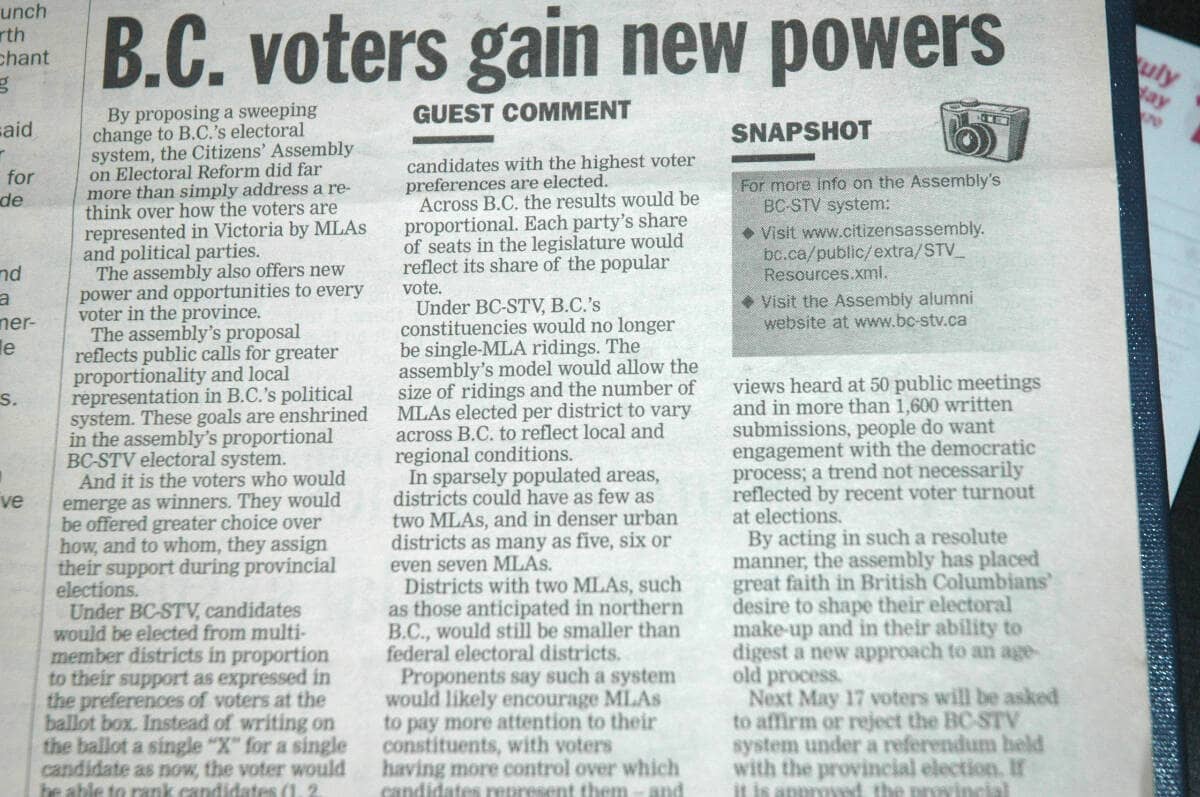

History of Unsuccessful Referendum Attempts
The political landscape in British Columbia has been defined by a persistent struggle over electoral reform. Since 2005, three separate referendums have failed to adopt a proportional representation voting system for the province.
A provincial referendum held in May 2005 specifically proposed switching from the traditional first-past-the-post method to a form of proportional representation. The threshold required for such a change was significant; the measure needed 60 percent support among voters to pass and implement the new system.
Despite these efforts, the initiative did not achieve the necessary majority in that initial vote or subsequent attempts over the following years. Consequently, the traditional first-past-the-post voting system remains the standard mechanism used for electing representatives in B.C., although it faced a near-complete replacement nearly two decades ago.
Under the current rules of the existing system, victory is determined by raw numbers rather than percentages or districts alone. In this framework, the candidate who secures the most votes within a specific riding wins that seat and represents their constituents in the legislature. This method has persisted despite repeated calls from various groups to alter how British Columbians select their government.
Advocacy Efforts by Independent Groups
The push for electoral reform was not solely driven by political parties but also by independent organizations dedicated to non-partisan civic engagement. The Citizens’ Assembly on Electoral Reform, an independent and non-partisan group of citizens, actively advocated for the adoption of proportional representation.
On April 5, 2005, a guest column was published in the Nanaimo News Bulletin by representatives from this assembly. The publication served as part of their broader campaign to encourage voters to support a form of proportional representation during the provincial referendum scheduled for May of that same year.
The group argued that changing the voting system would better reflect the diversity of opinions within the electorate. Their goal was to replace the traditional method where only the plurality winner takes all seats, with a system ensuring that parties win seats in proportion to their share of the popular vote.
Public Response and Voting Thresholds
The outcome of the May 2005 referendum highlighted the difficulty of achieving broad consensus on such structural changes. The Citizens’ Assembly on Electoral Reform, which promoted the measure as an independent entity, found that their campaign could not secure the required six out of ten votes in favor.
Since then, two additional referendums have been held with similar results. Each attempt to switch away from first-past-the-post has ended without reaching the 60 percent approval mark necessary for implementation. This pattern suggests that while support may exist among certain demographics or groups within specific regions of British Columbia, a majority across the entire province remains skeptical or opposed to changing the electoral framework.
Robert Barron noted in coverage from July 17, 2026, that these three unsuccessful referendums represent significant milestones in B.C. history but have ultimately failed to alter the voting laws. The article emphasized that while the traditional system almost ended over two decades ago due to high support for reform at one point, it was stopped short of the necessary threshold.
The persistence of this debate indicates ongoing interest from citizens and groups who believe proportional representation offers a fairer way to conduct elections. However, without crossing the 60 percent hurdle in any single referendum, the status quo remains intact. The Citizens’ Assembly on Electoral Reform continues to operate as an independent body separate from political parties, maintaining its stance that reform is necessary for democratic health.
Implications of Maintaining Status Quo
The continued use of first-past-the-post means that candidates with the highest vote totals in each riding are elected regardless of whether they received a majority or even a plurality. This contrasts sharply with proportional representation, which would allow smaller parties to gain seats based on their overall performance across the province.
Advocates for change argue that maintaining the current system risks leaving portions of the electorate feeling unrepresented if no single candidate in a riding captures enough votes to win outright while others receive substantial support. Critics suggest this dynamic can lead to political polarization or wasted ballots where second-choice candidates do not influence outcomes under first-past-the-post rules.
Opponents of reform often cite concerns about stability, complexity, and the potential for increased fragmentation in government coalitions if proportional representation were adopted. These arguments have contributed to repeated rejections of referendum proposals since 2005.