

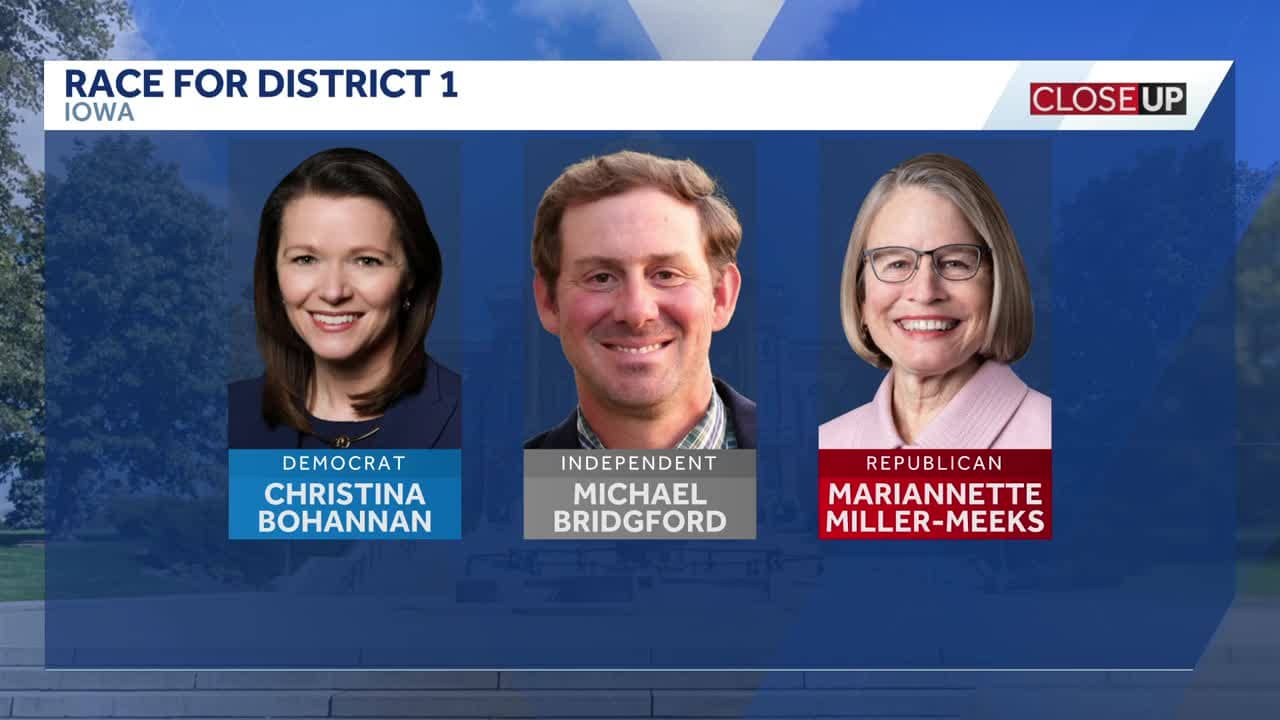

Bohannan Returns for Third Congressional Bid
Iowa Democrat Christina Bohannan has launched her third campaign to win the congressional seat representing Iowa's 1st District. The candidate is seeking to unseat Republican Rep. Mariannette Miller-Meeks, who defeated Bohannan in both the 2022 and 2024 election cycles. This marks Bohannan's third consecutive attempt to secure the pivotal seat, underscoring the persistent challenge Democrats face in a district that has historically leaned Republican.
Bohannan, a university professor from Iowa City, acknowledged the inherent difficulties of re-entering the race after two previous losses. She described her current effort as part of a "long learning curve" for Democratic candidates striving to gain traction and build a durable base of support in the region. The race is currently considered pivotal by political analysts, with its outcome holding potential implications for the delicate balance of power in the U.S. House of Representatives.
Campaign Strategy and Rural Outreach
Bohannan’s current campaign strategy involves extensive travel through the rural areas of the district, a deliberate effort to connect with voters beyond her traditional base. She has emphasized that building name recognition and trust among a diverse electorate requires significant time and direct engagement, particularly given the expansive geographic size of the constituency. During a recent campaign stop in Columbus Junction, a small town nestled in Louisa County, Bohannan addressed a group of voters at a roadside bar and grill, illustrating her commitment to this grassroots approach.
"It's a big district. It takes a lot of time to get around, get people to know you and trust you," Bohannan told the attendees. The choice of location for her event highlighted the stark contrast between her political base in the liberal enclave of Iowa City and the more conservative rural counties, where Republican President Donald Trump won overwhelmingly in the previous election cycle. This strategic focus on rural outreach aims to bridge the political divide and expand her appeal.
District's Political Geography and Voter Base
The 1st Congressional District of Iowa presents a complex political landscape. While cities like Iowa City offer a robust Democratic voter base, the vast majority of the district encompasses rural counties that have consistently shown strong support for Republican candidates, particularly at the presidential level. Bohannan's campaign recognizes that overcoming this demographic challenge requires a sustained presence and a tailored message for communities that may not traditionally align with the Democratic party. Her efforts in areas like Louisa County are designed to foster personal connections and demonstrate a commitment to addressing the concerns of all constituents, regardless of their past voting patterns.
Key Issues Driving the Campaign
The Bohannan campaign aims to capitalize on specific political dynamics it identifies as vulnerabilities for the incumbent and the broader Republican party. According to her campaign strategy, these factors include perceived weaknesses in Donald Trump's popularity, ongoing healthcare issues, and general economic concerns. By focusing on these areas, Bohannan seeks to draw a contrast with her opponent and appeal to voters who may be disaffected by current national political trends or directly impacted by specific policy challenges.
Bohannan is banking on these issues to help secure a victory in a district that has historically leaned Republican. Her approach focuses on connecting with voters in rural communities who may be particularly affected by the economic and healthcare topics she prioritizes in her platform. The campaign believes that by highlighting practical concerns and offering solutions, it can sway undecided voters and energize its base, ultimately shifting the district's political trajectory.
Miller-Meeks Responds to Challenge
Rep. Mariannette Miller-Meeks is preparing for a difficult campaign cycle as Christina Bohannan returns to the race for the third time. The Republican incumbent has characterized Bohannan as a candidate who does not align with the values and priorities of her constituents. Miller-Meeks has consistently defended her legislative record and her approach to representation, positioning herself as the voice of the district's majority.
Miller-Meeks is digging in for the upcoming election, actively challenging Bohannan's qualifications and political suitability for the seat. Her campaign is expected to emphasize her experience and her alignment with the conservative values prevalent in much of the district. The contest represents a significant hurdle for Democrats seeking to gain ground in Iowa's first congressional district, which has remained under Republican control during Bohannan's previous two attempts in 2022 and 2024.
Electoral Significance
The outcome of this race carries weight beyond the local level, extending to the national political arena. Political analysts and campaign officials from both parties note that the contest in Iowa's 1st District could influence the overall composition and control of the U.S. House of Representatives. In a closely divided Congress, every seat gained or lost holds magnified importance, making this race a focal point for national campaign committees and political observers.
For Democrats, winning a seat in Iowa would provide a crucial foothold in a region where they have struggled to maintain representation in recent election cycles. It would signal a potential shift in voter sentiment and offer a pathway for future Democratic gains in Midwestern states. For Miller-Meeks, securing a third term would solidify her position in a district that has consistently voted for Republican presidential candidates by large margins, reaffirming the district's conservative leanings. Both campaigns continue to focus intensely on voter outreach and policy distinctions as the election date approaches, understanding the high stakes involved.
National Implications for House Control
The race in Iowa's 1st Congressional District is frequently cited as one of the key battleground contests that could determine which party controls the U.S. House. With the House often decided by a handful of seats, races like this one attract significant national attention and resources. The ability of either party to flip or hold this seat could have ripple effects across the country, influencing legislative agendas, committee assignments, and the broader political narrative. The intense competition reflects the broader struggle between Democrats and Republicans for legislative power, making Bohannan's third bid a critical test for both parties' strategies in a swing district.