


Historical Precedents and Current Requirements
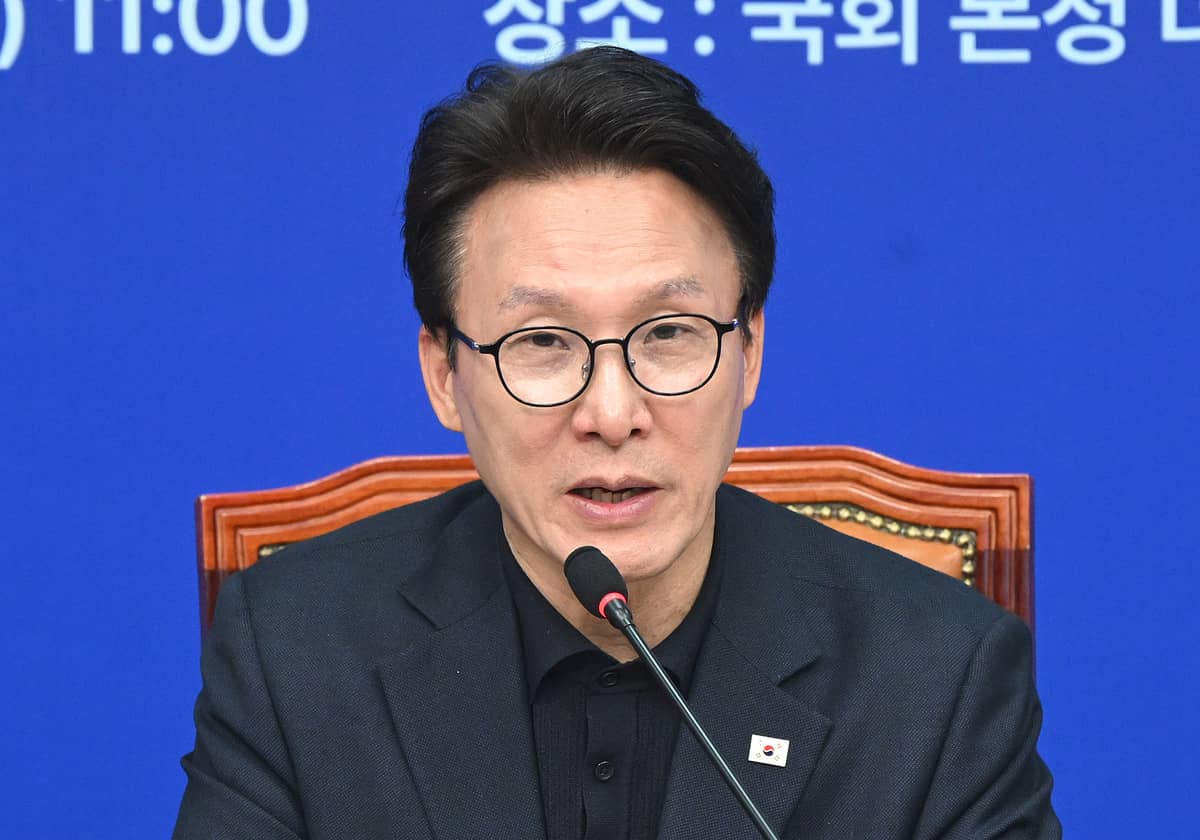
Kim Min-seok, leader of the Democratic Party, has publicly questioned the Rebuilding Korea Party's proposal to reduce the minimum number of members required to form a negotiating bloc in the National Assembly from 20 to 10. Speaking on "Minti 07" via the Democratic Party's YouTube channel, Democratic Party TV, Kim outlined his opposition to the lower threshold by citing long-standing legislative standards.
Kim noted that the current requirement of 20 seats has been in place since the system was first introduced in 1949. This standard has served as a foundational element of parliamentary operations for over seven decades, providing a consistent framework for how political groups organize and exert influence within the legislature. He emphasized that this standard has remained consistent for decades, suggesting that a sudden reduction to 10 members would represent a significant departure from established parliamentary tradition and potentially alter the dynamics of legislative power distribution.
The Democratic Party leader further contextualized the proposed change by referencing historical data regarding the composition of the legislature. Kim explained that the lowest historical ratio for a negotiating bloc has always been set at 5% of the total number of lawmakers. He pointed out that under previous assembly configurations, specifically when the National Assembly consisted of 200 seats, 10 seats equated to exactly 5% of the total membership. This historical benchmark underscores a principle of proportional representation in the formation of these crucial legislative groupings.
By highlighting this historical metric, Kim suggested that the current legislative body's size and structure differ significantly from the era in which the 5% baseline was originally calculated. The implication is that a flat number of 10 members today, without considering the current total number of lawmakers, would represent a much smaller percentage than the historical 5%. His remarks indicated that applying a flat number of 10 members without accounting for changes in assembly size might not align with the intent of the original threshold design, potentially undermining the proportional representation it was meant to ensure.
The Role of Negotiating Blocs in Legislative Function
Negotiating blocs are pivotal to the functioning of the National Assembly, acting as key conduits for legislative debate, policy formulation, and the allocation of resources. These blocs are typically afforded specific rights and privileges, including guaranteed representation on standing committees, the right to propose bills, and a voice in setting the legislative agenda. The size of a negotiating bloc directly impacts its influence and capacity to effectively participate in these processes.
The 20-seat threshold, maintained since 1949, has historically ensured that only parties or coalitions with substantial electoral backing could form such blocs, thereby centralizing legislative power among larger political entities. Proponents of maintaining a higher threshold argue that it promotes stability and efficiency by reducing fragmentation and facilitating more coherent policy-making processes. Conversely, those advocating for a lower threshold often argue it would empower smaller parties and enhance the diversity of voices within the Assembly, potentially leading to a more representative legislative body.
Committee Assignments and Alternative Proposals
Kim Min-seok proposed an alternative threshold of 15 members, arguing that this number would provide a more robust basis for legislative operations. He specifically cited the logistical requirements of committee assignments as a primary factor in his recommendation. The ability of a negotiating bloc to effectively staff and participate in the numerous standing committees is crucial for its functionality and influence.
The Democratic Party leader explained that forming a negotiating bloc is closely tied to the ability to assign lawmakers to standing committees. According to Kim, there are currently 14 standing committees and three concurrent standing committees operating within the National Assembly structure. These committees are the workhorses of the legislature, where detailed policy analysis, bill review, and oversight functions are performed. Ensuring adequate representation on these committees is essential for any bloc to effectively advocate for its policy positions and contribute meaningfully to the legislative process.
He noted that these operational necessities, particularly the need to distribute members across multiple committees, have led some legislators to suggest a range of 14 to 17 seats as a more practical minimum for effective participation. A bloc with too few members might struggle to provide consistent attendance and expertise across all relevant committees, thereby diminishing its overall impact and potentially creating operational bottlenecks within the committee system.
Kim stated that a threshold of 15 members would allow for stronger representation and committee placement compared to the proposed 10-seat limit. He argued that ensuring adequate numbers for committee work requires a higher baseline than what the Rebuilding Korea Party has advocated. This higher number would enable a bloc to assign members with specific expertise to relevant committees, ensuring more thorough review and robust debate on legislative matters.
In addition to domestic structural arguments, Kim referenced international comparisons during his broadcast. He mentioned that other countries utilize similar systems for defining negotiating blocs, implying that South Korea's current or proposed standards should be evaluated against broader legislative norms rather than arbitrary reductions. This international perspective suggests that a certain minimum size is often considered necessary for effective parliamentary group functioning globally.
Political Dynamics and Exclusions
The debate over the bargaining bloc threshold occurs against a backdrop of shifting political alliances within the National Assembly. Kim Min-seok recently held a lunch meeting with representatives from progressive parties to discuss legislative strategies and coalition building. This meeting signals efforts by the Democratic Party to consolidate support and coordinate legislative approaches with like-minded groups.
Notably, the Rebuilding Korea Party was excluded from this gathering. This exclusion underscores the political friction surrounding the proposal to lower the threshold, as the Rebuilding Korea Party is the primary advocate for the 10-seat requirement. The decision to exclude them from discussions on legislative strategies highlights a clear divergence in approach and priorities between the Democratic Party and the Rebuilding Korea Party, particularly on this contentious issue.
The Democratic Party's stance contrasts sharply with the Rebuilding Korea Party's push for the reduction. While the Rebuilding Korea Party seeks to facilitate the formation of smaller blocs, potentially to enhance the influence of parties that might not meet the current 20-seat threshold, Kim Min-seok maintains that such a move could undermine the structural integrity of committee assignments and historical precedents established since 1949. The Democratic Party's position appears rooted in a desire to preserve what it views as a stable and effective parliamentary system.
As discussions continue regarding the future of National Assembly rules, the disagreement highlights diverging views on how legislative power should be distributed among smaller political groups. The Democratic Party leader's preference for 15 seats remains his official position as he challenges the Rebuilding Korea Party's initiative to cut the requirement to 10 members, setting the stage for further debate on the fundamental operational principles of the National Assembly.