

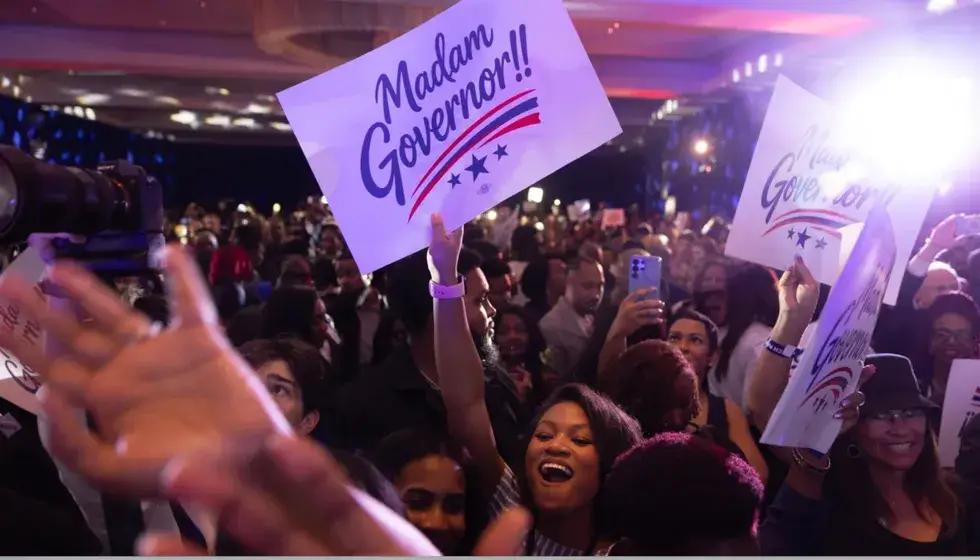

Historic Firsts Define Democratic Gains
Democratic candidates secured significant electoral victories in recent midterm elections, with multiple winners making history as the first individuals from their demographic groups to hold specific offices. The results spanned several states, including Texas, California, Georgia, New Hampshire, and New Mexico.
In Texas, Gina Hinojosa was elected as the first Latina governor. In California, Xavier Becerra became the first Latino governor of the state. Georgia voters re-elected their first Jewish senator and also elected Jasmine Clark, an Emory University microbiologist with a science Ph.D., as the first Black woman with such a degree to serve in Congress.
Other historic milestones included the election of Abdul El-Sayed as the first Muslim-American in the U.S. Senate from New Hampshire and Chris Pappas as the first openly gay man in the U.S. Senate, also from New Hampshire. In New Mexico, Deb Haaland was elected as the first female Native American governor.
Keisha Lance Bottoms was elected as the first Black female governor of Georgia. The elections also saw Nevada and Wisconsin each choose their first Black governors. In Alabama, a Democratic software engineer became the first transgender woman elected to the state legislature. Arizona selected its first Native American woman for statewide office.
Analysis of Cultural Shifts and Political Commentary
The National Memo reported that the Democratic triumph marked the end of the MAGA culture war, representing a sweeping cultural rejection of Donald Trump, Congressional Republicans, and the movement. The publication stated that voters repudiated Trump’s attempted restoration of white supremacy, routine misogyny, appeals to nativist bigotry, and worship of money.
Joe Conason, founder of The National Memo, wrote that Election 2026 reminded Americans they can transcend the politics of the current president. He described the defeat of Trump and Congressional Republicans as historic, noting that the movement suffered a sweeping cultural rejection beyond just electoral losses.
Trump political adviser Roger Stone offered a contrasting perspective on political motivation, stating that "hate is a stronger motivator than love." This comment was made in the context of the election's aftermath, highlighting differing views on the drivers of political engagement.