


Manager Cites Gradual Reintegration Strategy
The Los Angeles Dodgers implemented a planned rest period for Shohei Ohtani, removing him from their lineup on Tuesday. This decision follows his recent return to play after a four-day absence. Manager Dave Roberts explicitly stated that the move is part of a deliberate effort to "build him up slowly," according to reports, including those from the Killeen Daily Herald. This strategy underscores the team's cautious approach to managing the workload of their star player, prioritizing his long-term health and sustained performance over immediate, continuous availability.
Ohtani had been absent from the team for four days prior to rejoining the roster on Monday. His subsequent absence from the Tuesday game represents a continuation of this carefully managed approach to his availability. It is a strategic decision, rather than an injury-related sidelining or a performance-based penalty. Such phased reintegration is a common practice in professional sports, especially for high-value athletes, designed to prevent overexertion, reduce the risk of injury, and ensure peak performance throughout a demanding season.
Performance in Return Game
Ohtani’s return to the active roster occurred on Monday during a contest against the Cincinnati Reds. In that game, he recorded three at-bats without reaching base, finishing with an 0 for 3 record. He struck out twice during his time at the plate, a performance that, while not stellar, is not uncommon for a player reacclimating to competitive play after a break.
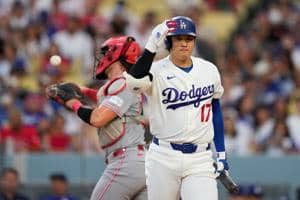
Despite Ohtani's individual statistics in his return, the Dodgers secured a 6-3 victory over the Reds in that same matchup. Associated Press photographer Mark J. Terrill captured an image of Ohtani walking back to the dugout after striking out during the third inning in Los Angeles on Monday, Sept. 7, 2026. This visual documentation places his return within the broader context of the team's ongoing season, highlighting the immediate follow-up rest as a pre-emptive measure rather than a reaction to his single-game performance.
Ohtani's Absence and Phased Reintegration
The sequence of events leading to Ohtani’s Tuesday sit-down began with a four-day break from the lineup, a period intended for rest and recovery. This planned absence preceded his appearance on Monday. Following that single game return, where he faced two strikeouts, the team opted to keep him out of the subsequent day's roster. This immediate follow-up rest on Tuesday, directly after his Monday return, clearly demonstrates the Dodgers' commitment to a gradual, measured approach, reinforcing the idea that his workload is being meticulously managed rather than rushed.
Manager Roberts’ comments regarding the intention to "build him up slowly" provide the official rationale for the Tuesday absence. This explanation has been consistently reported across various media outlets, including the Winnipeg Free Press and Chronicle Online, all citing the manager's clear directive for the player's status. The uniformity in reporting underscores the transparency of the Dodgers' strategy, assuring fans and stakeholders that the decision is part of a well-considered plan for Ohtani.
No Immediate Return Date Specified
The reports do not specify a date for Ohtani’s next appearance in a game. This lack of a fixed timeline is a critical aspect of the "build him up slowly" strategy. It signifies that the team retains flexibility, allowing them to assess Ohtani's physical condition day-by-day without the pressure of a predetermined schedule. Such an open-ended approach enables the Dodgers to make decisions based on real-time feedback and Ohtani's readiness, rather than adhering to a rigid timetable that might compromise the long-term objective.
The focus remains squarely on the gradual reintegration process outlined by the Dodgers' management. The team’s decision to rest him immediately following his return game, and the absence of a specified return date, collectively underscore the highly cautious approach taken with his workload. This strategy aims to ensure that when Ohtani is fully integrated back into the lineup, he is in optimal condition, minimizing risks and maximizing his impact over the entirety of the season.
Dodgers' Strategic Management of Star Talent
The Dodgers' decision to manage Shohei Ohtani's playing time with such deliberate care reflects a broader organizational strategy for high-profile athletes. For a player of Ohtani's caliber and importance to the team, safeguarding his health and ensuring his peak performance throughout the season is paramount. This involves not only reacting to potential issues but also proactively implementing rest periods and phased returns, even after short breaks, to maintain physical conditioning and mental freshness.
This strategic workload management is particularly significant for players who are central to a team's success. By taking a long-term view, the Dodgers aim to keep Ohtani, a key offensive asset, effective and available for the most critical stretches of the season. The "build him up slowly" mantra, therefore, is not merely a statement about Ohtani's immediate status but an insight into the team's comprehensive philosophy for sustaining elite performance from its most valuable players.
Impact of Managed Availability
While Ohtani's absence from the lineup, even for planned rest, means the team temporarily operates without one of its most potent hitters, the Dodgers' management clearly weighs this against the benefits of his long-term health. The decision to rest him on Tuesday, immediately after his return, sends a strong signal about the team's commitment to this philosophy. It indicates that the organization is willing to make short-term adjustments to the lineup to secure greater long-term stability and performance from its star player. This approach is designed to ensure that Ohtani remains a formidable presence throughout the entire season, contributing consistently when it matters most, rather than risking burnout or injury from an overly aggressive return schedule.