

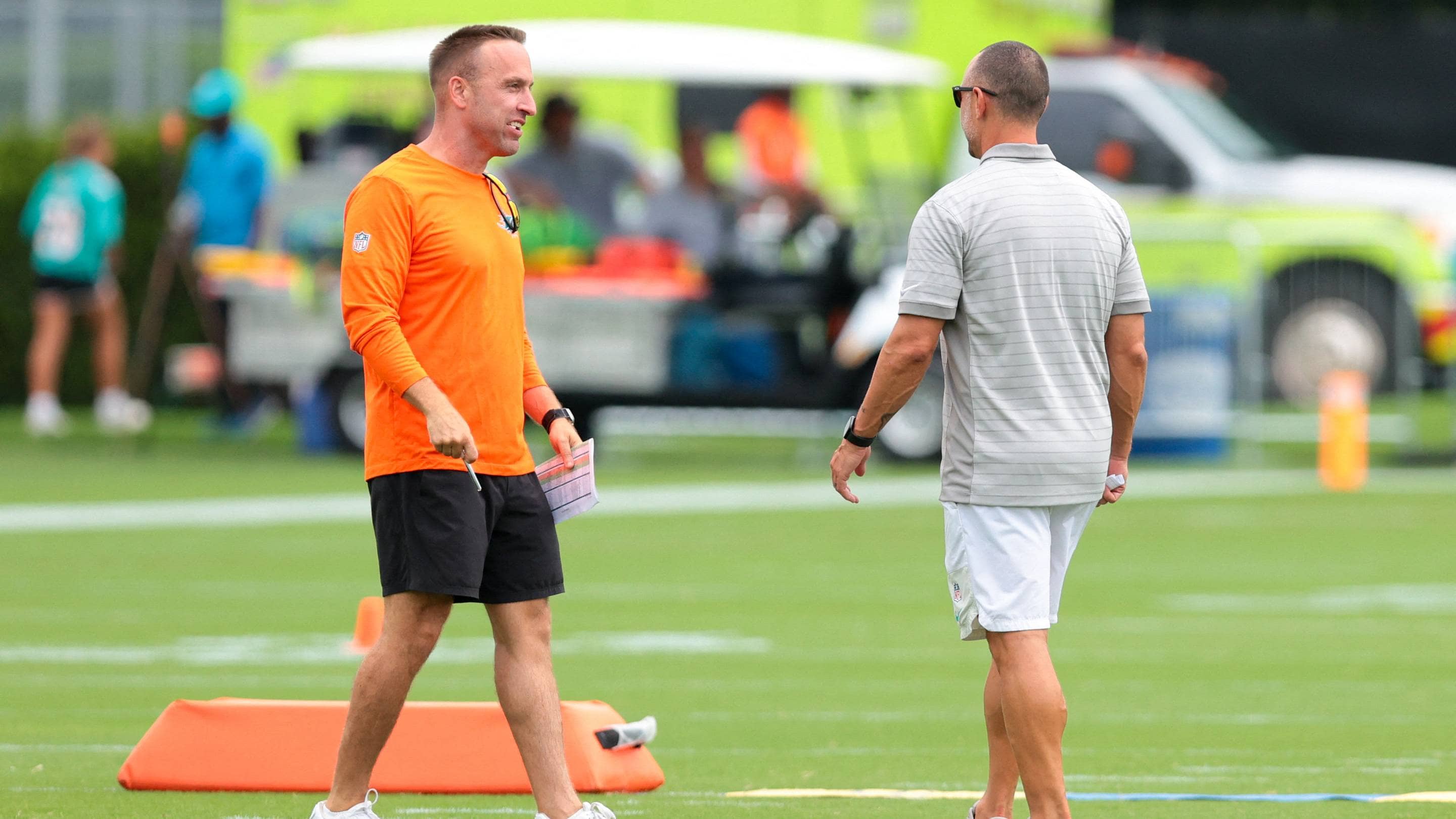

Leadership Alignment at Baptist Health Training Complex
Miami Dolphins head coach Jeff Hafley and general manager Jon-Eric Sullivan were recently observed in a focused conversation during a team practice session at the Baptist Health Training Complex. This visible interaction between the organization’s two most critical football operations figures underscores the ongoing, collaborative effort between the coaching staff and the front office. Such exchanges are fundamental in professional sports, signaling a unified approach to team building and strategic decision-making.
The image of Hafley speaking to Sullivan provides a tangible representation of the internal discussions and strategic planning currently underway as the Dolphins navigate a crucial phase of roster construction. According to reporting by Alain Poupart for SI.com, the Dolphins are actively implementing a clear, defined strategy to address their personnel needs. The publication highlighted that while the necessity for significant roster upgrades is widely acknowledged across the league and among fans, the specific methods and criteria by which the team intends to achieve these improvements are firmly established within the organization’s operational blueprint.
Addressing Widespread Roster Deficiencies
The Miami Dolphins have been identified as having significant and pervasive needs across their current squad. Reports indicate that the roster could benefit from enhancements at nearly every position on the team, suggesting a foundational requirement for improvement rather than isolated adjustments. This widespread demand for personnel upgrades points to a comprehensive approach to roster management, moving beyond targeted fixes in specific areas to a more holistic re-evaluation of the team's composition.
Despite the broad scope of required improvements, the organization is described as possessing a distinct and methodical blueprint for how it will proceed with these upgrades. The existence of such a detailed plan implies a strong alignment between the front office and the coaching staff regarding the team’s strategic direction and long-term vision. This strategy is characterized as methodical, focusing on specific criteria for player acquisition and development, rather than reacting impulsively to the fluctuating availability of talent in the broader market or chasing every high-profile name.
Strategic Approach to Player Acquisition
While the need for roster enhancements is evident and pressing, the Dolphins are reportedly not engaging in a scattergun approach, nor are they linking themselves to every available player who becomes a free agent or is waived by other teams. This disciplined strategy suggests a highly selective process, meticulously governed by their established blueprint. The organization's approach aims to ensure that any additions to the roster are not merely talented individuals, but players who specifically fit within the long-term vision set by Coach Hafley and General Manager Sullivan, both in terms of scheme and team culture.
The focus remains steadfast on executing these planned upgrades with precision, rather than pursuing every opportunity presented in the wider league. By maintaining a clear and consistent framework for roster improvement, the Dolphins intend to build a team that systematically addresses their identified weaknesses. This structured approach is designed to foster sustainable success and avoid the pitfalls of short-term fixes that could create new imbalances. The ongoing dialogue between the head coach and general manager at the Baptist Health Training Complex serves as a continuous reinforcement of the collaborative effort required to implement this intricate strategy effectively.
Navigating the NFL Personnel Landscape
The acknowledgment of roster needs across multiple positions sets the stage for significant activity during the upcoming periods of the NFL calendar, including free agency, the NFL Draft, and potential trade windows. However, the presence of a defined blueprint serves not only as a guide but also as a strategic constraint on how those activities will be conducted. The team is not simply seeking to accumulate talent; rather, it aims to acquire specific types of players who precisely align with their strategic goals and the envisioned identity of the team.
In the highly competitive and dynamic environment of the NFL, a clear strategy is paramount, especially when facing widespread needs. It allows the organization to prioritize, evaluate, and act with purpose, preventing reactive decisions that can often lead to inefficient resource allocation or a lack of cohesive team identity. This disciplined approach means resisting the temptation to overspend on players who don't fit the mold or to draft for popularity rather than necessity.
Implications for Team Construction and Future Moves
As the Dolphins continue their work at the Baptist Health Training Complex, the ongoing conversations and shared vision between Hafley and Sullivan will undoubtedly dictate the pace, nature, and specific targets of future roster moves. Their unified leadership is crucial for translating the strategic blueprint into tangible personnel decisions that will shape the team's competitive outlook. Fans and analysts should anticipate targeted actions rather than a scattergun approach to personnel changes, reflecting a deep commitment to their established plan.