


Kim Min-seok Addresses Internal Dispute Over Writer Rhyu Si-min
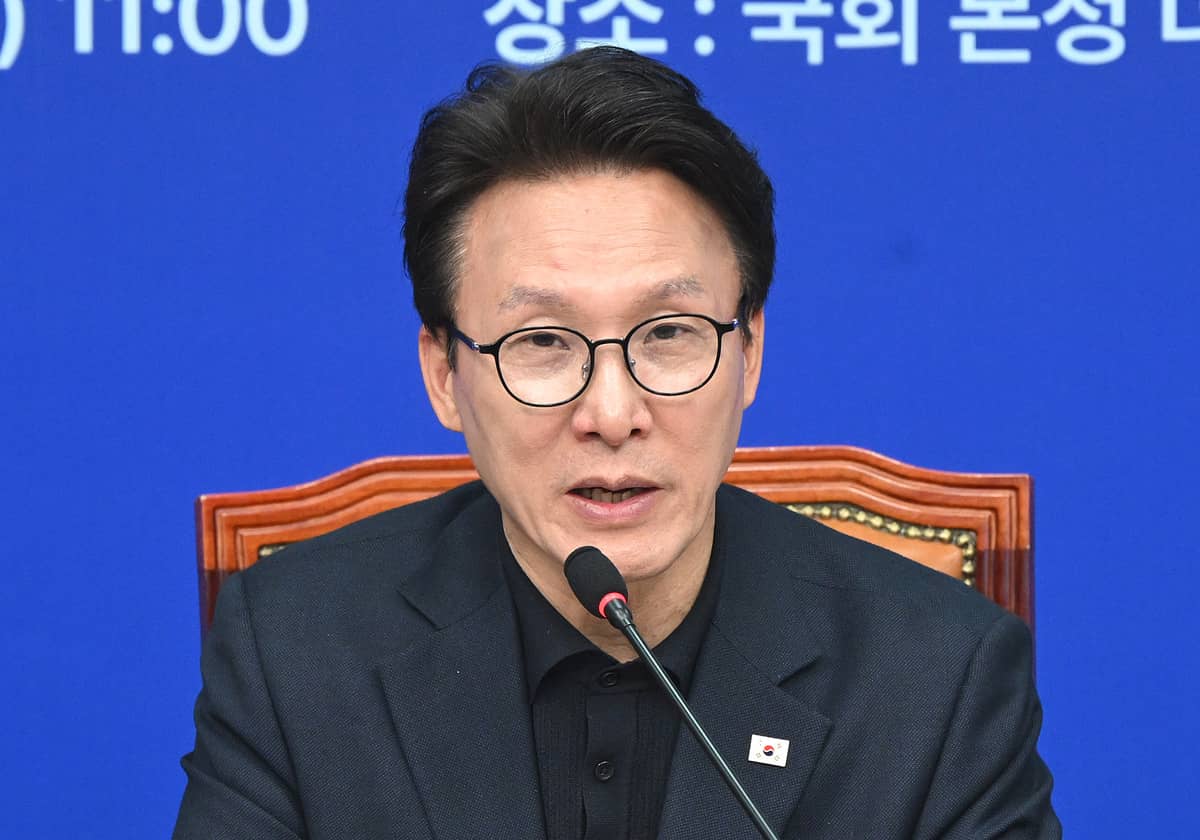
Kim Min-seok, leader of the Democratic Party of Korea, called on party members to show restraint regarding an internal dispute surrounding writer Rhyu Si-min. The conflict has intensified following Rhyu's public criticism of the Lee Jae-myung administration, prompting a response from party leadership aimed at curbing inflammatory rhetoric within the ranks.
Speaking on the party's YouTube channel "Minty07" on Sept. 28, Kim responded to a member's view that legal action against Rhyu was necessary. Rather than endorsing immediate punitive measures, Kim urged a de-escalation of tone. "It would be better to start by minimizing expressions that the other side may find uncomfortable," Kim said. He added, "First, I would like us to point out the other side's problems and work through them while minimizing what are commonly called derogatory labels."
Kim specifically mentioned "Yusa-simin," a derogatory term Democratic Party supporters use to refer to Rhyu, noting that such language contributes to internal division. He emphasized that considerably different views exist within the party following the convention, suggesting that unity cannot be achieved through uniformity of expression but rather through managed disagreement.
The remarks were made as disparaging terms such as "Mun-Jo-Teol-Lae-Yu" — combining the names of Moon Jae-in, Cho Kuk, Kim Eo-jun, Jung Chung-rae, and Rhyu Si-min — have fueled conflict within the broader ruling bloc. The use of these portmanteau insults has drawn attention to the deepening rift between different factions within the Democratic Party and its allies.
Party Procedures and Policy Shifts
Regarding calls for legal action at the party level, Kim said the party is proceeding in accordance with its charter and rules. "The party has its own procedures, and we will proceed case by case," he stated. This approach indicates a preference for institutional processes over ad-hoc disciplinary actions driven by public sentiment.
Kim also outlined future policy directions, stating the party would begin dealing more actively with inter-Korean relations and a peace regime following President Lee's keynote address to the U.N. General Assembly. This shift signals a potential pivot in the Democratic Party's strategic focus, moving beyond domestic issues to engage more directly with national security concerns.
Citing North Korea's advancing nuclear program and Pyongyang's doctrine of two hostile states, Kim said self-reliant security must be strengthened and resolved by establishing peace. He argued that the current geopolitical environment requires a robust defense posture coupled with diplomatic engagement to mitigate tensions.
He added that while the party mainly deals with livelihood issues or domestic democracy, issues of peace, the nation, and inter-Korean relations must ultimately be resolved. This statement underscores Kim's view that the Democratic Party cannot isolate itself from broader national security challenges, even as it prioritizes economic and democratic reforms.