

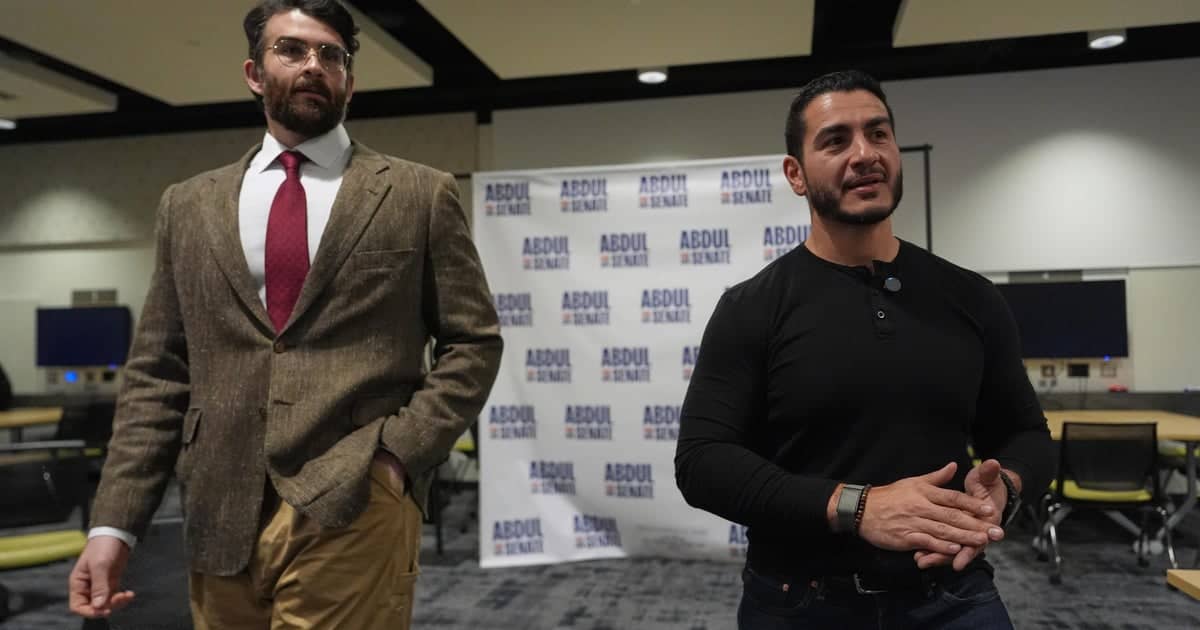

El-Sayed Issues Distancing Statement
Dr. Abdul El-Sayed, a Democratic candidate vying for a U.S. Senate seat in Michigan, has formally announced a separation from popular left-wing streamer Hasan Piker. This significant move follows a period of intense criticism directed at Piker by prominent Democrats for remarks he made concerning Jewish Americans and their support for Israel.
In a statement released to address the burgeoning controversy, El-Sayed sought to clarify his stance regarding Piker’s public commentary. He unequivocally stated that "nobody" speaks for him, thereby explicitly indicating that Piker does not represent his views, his campaign’s platform, or his political aspirations. This declaration marks a clear delineation between the candidate and the online personality.
The incident represents a notable shift in the political relationship between the two figures. Prior to this public distancing, Hasan Piker had been a visible and active supporter of El-Sayed, particularly during the Democratic primary election. The streamer had campaigned alongside the Senate candidate at various points throughout that cycle, publicly aligning himself with El-Sayed’s political efforts and lending his significant online influence to the campaign.
A Shift in Campaign Alliances
The decision by El-Sayed to distance himself from Piker underscores the evolving dynamics of political campaigns, particularly when engaging with influential online personalities. The prior association between El-Sayed and Piker was a testament to the growing trend of leveraging digital platforms and their stars to reach specific voter demographics. However, the recent controversy highlights the inherent risks involved when such allies express views that diverge sharply from, or conflict with, the broader party line or sensitive political issues.
Controversy Over Remarks on Israel and Jewish Americans
The immediate catalyst for El-Sayed’s distancing statement was a wave of criticism directed at Hasan Piker for comments he made regarding the complex intersection of Jewish American identity, support for the state of Israel, and the phenomenon of antisemitism. According to reports, prominent Democrats leveled stiff criticism against Piker on Monday, following his public assertions that sparked widespread concern.
Piker's Specific Allegations and Democratic Backlash
Piker’s remarks, which ignited the noted criticism, centered on an argument that some Jewish Americans' support for Israel is actively "making antisemitism worse." This specific phrasing drew considerable attention and condemnation. The streamer has a known history of offering heated remarks about Israel and U.S. foreign policy during his broadcasts, comments that have previously garnered scrutiny within political circles and among various advocacy groups.
The backlash from within the Democratic party was both immediate and substantial. Prominent members of the party publicly criticized Piker’s characterization of the relationship between support for Israel and the rise of antisemitism. This criticism highlighted existing tensions within the Democratic party regarding how to navigate and address sensitive issues of foreign policy, the concerns of Jewish American constituents, and accusations of antisemitism. The controversy brought to the forefront the delicate balance political figures must maintain when discussing such topics.
Political Implications and Campaign Dynamics
The controversy surrounding Hasan Piker’s remarks and Dr. Abdul El-Sayed’s subsequent distancing has introduced a new and complex dynamic to the hotly contested Michigan Senate race. This particular race has already seen multiple discussions and controversies revolve around Piker’s prior involvement with El-Sayed’s campaign, making his presence and commentary a consistent element of the public narrative surrounding the Democratic candidate.
El-Sayed’s decision to explicitly state that Piker does not speak for him serves as a direct and strategic response to what appears to be growing friction between his campaign and other Democratic leaders and factions. By clarifying that no one outside his official campaign represents his views, El-Sayed attempts to proactively separate his candidacy from the potentially polarizing commentary of his previous ally, thereby aiming to mitigate any negative repercussions on his electoral prospects.
The Role of Online Personalities in Modern Campaigns
Hasan Piker’s history of offering heated remarks about Israel and U.S. foreign policy, often delivered to a large and engaged online audience, has made his association with political candidates a recurring point of contention. This latest development underscores a broader challenge faced by Democratic candidates, and indeed politicians across the spectrum, who increasingly rely on support and amplification from influential online personalities, many of whom possess strong, often controversial, views that may not align with traditional party platforms or public expectations.
The incident illustrates the double-edged sword of digital endorsements: while they can provide access to new demographics and significant reach, they also carry the risk of association with remarks that can alienate other crucial voter blocs or create internal party strife. Navigating these relationships requires careful consideration of both the potential benefits and the inherent liabilities.
Impact on the Michigan Senate Race
For Dr. El-Sayed, the separation is a strategic maneuver intended to protect his campaign’s integrity and appeal within a diverse electorate. The Michigan Senate race is a high-stakes contest, and candidates must carefully manage their public image and associations. By drawing a clear line, El-Sayed aims to reassure voters and party members that his campaign is focused on its own agenda and not beholden to the potentially inflammatory statements of external figures.
Timeline of the Separation
The sequence of events leading to Dr. Abdul El-Sayed’s distancing statement began with Hasan Piker’s controversial comments regarding Jewish Americans and their support for Israel. These remarks quickly led to stiff criticism from prominent Democrats, which became publicly known on Monday. In direct response to the resulting controversy and the pressure it generated, El-Sayed issued his statement, effectively separating himself from the streamer.
This separation follows a period where Piker had actively campaigned with El-Sayed during the Democratic primary, indicating a prior close association that has now been publicly severed. As the Michigan Senate race continues to unfold, the relationships between candidates and their various supporters, particularly those with significant public platforms, remain under intense scrutiny. El-Sayed’s clarification provides a factual record of his stance relative to Piker’s public statements, though it does not delve into or address the broader debate surrounding the comments themselves.