

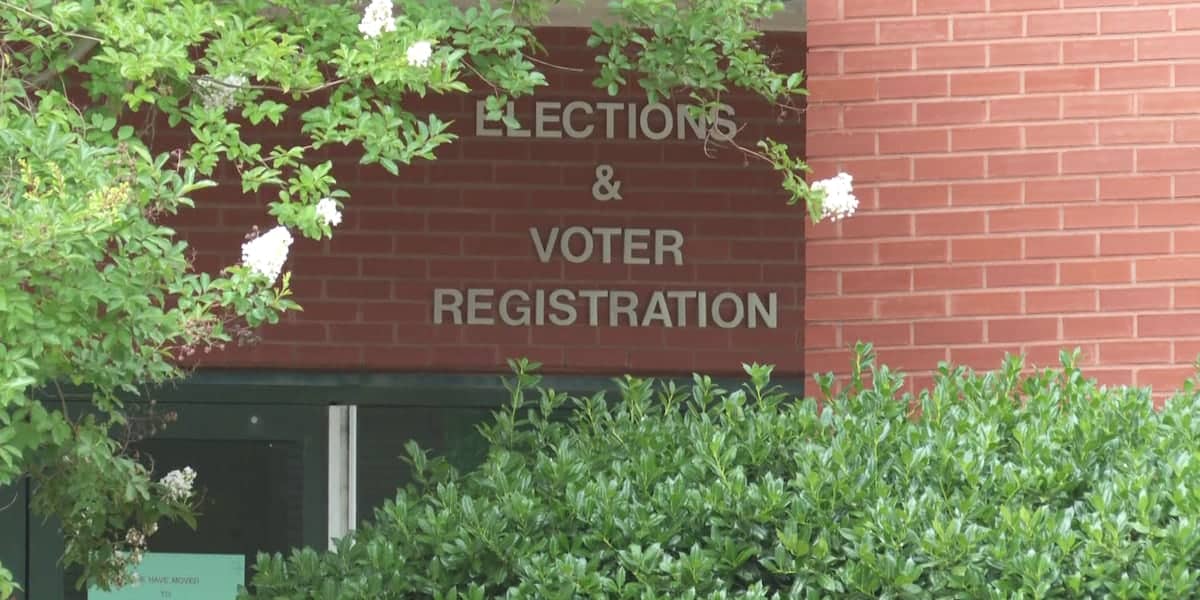

Early voting for South Carolina's primary elections commenced on Tuesday, marking the official start of the electoral process for numerous state and federal offices. Concurrently, state lawmakers are engaged in an ongoing debate concerning a proposed congressional redistricting map, a legislative effort that carries the potential to significantly reshape the state's political landscape.
Early Voting Period Begins
Voters across South Carolina are now able to cast their ballots ahead of the official primary election day. The early voting period, which began Tuesday, allows registered voters to participate in the selection of party nominees for various positions without waiting until the traditional election day. This process aims to provide greater accessibility and convenience for citizens to exercise their franchise, potentially increasing voter participation by offering more opportunities to vote.
The introduction and expansion of early voting options in many states, including South Carolina, have been part of broader efforts to modernize election administration and accommodate diverse voter schedules. Instead of being limited to a single day, voters can visit designated polling locations over a period of days or weeks, often during standard business hours, to cast their ballot in person.
Primary elections are crucial as they determine which candidates will represent their respective political parties in the general election. In a multi-party system, these contests often feature multiple candidates from the same party vying for a single nomination, making voter turnout during the early voting period and on election day a key factor in determining who advances. Offices typically decided in primary elections range from federal positions like U.S. House of Representatives to state-level offices such as governor, state legislators, and various local government roles.
Designated early voting centers have been established in counties throughout South Carolina. These centers typically operate during standard business hours for a specified duration leading up to the primary election day. Voters are generally required to present a valid photo identification to cast their ballot, a common requirement in many states to ensure election integrity.
Congressional Redistricting Map Under Debate
Simultaneously with the start of early voting, South Carolina's state lawmakers are actively debating a proposed congressional redistricting map. Redistricting is a constitutionally mandated process undertaken every ten years following the U.S. Census, with its primary goal being to redraw electoral district boundaries to ensure that each district contains a roughly equal population. This adjustment is necessary to reflect demographic shifts, population growth or decline, and maintain the principle of "one person, one vote," as affirmed by various Supreme Court rulings.
The U.S. Constitution, specifically Article I, Section 2, mandates that an enumeration of the population be conducted every ten years, which serves as the basis for reapportioning congressional seats among the states and subsequently for redrawing district lines within states. The current debate centers on a map specifically designed for the state's congressional districts, which define the geographical areas from which South Carolina's representatives to the U.S. House of Representatives are elected. The legislative process for approving such a map typically involves proposals introduced by lawmakers, extensive committee hearings where public input may be gathered, and votes in both chambers of the state legislature before a final map can be enacted into law.
Lawmakers consider various criteria when redrawing district lines. Beyond population equality, common considerations include the contiguity of districts (meaning districts must be a single, unbroken shape), compactness (districts should not be excessively sprawling or irregular), and the preservation of "communities of interest," which refers to groups of people with shared cultural, economic, or social characteristics. Additionally, the Voting Rights Act of 1965 requires states to ensure that redistricting plans do not dilute the voting power of racial or language minority groups. The debate often involves intricate discussions on how these various criteria are balanced and how the proposed lines might impact future elections and the representation of different demographic groups within the state.
Potential Implications for South Carolina's Political Landscape
The proposed congressional redistricting map has the potential to alter South Carolina's political landscape. The way district lines are drawn can significantly influence the partisan composition of congressional delegations by shifting the balance of registered voters within specific districts. This can, in turn, affect the competitiveness of elections, making some districts more securely partisan ("safe seats") or creating more competitive districts, and thereby influencing the likelihood of incumbent candidates being re-elected or new candidates winning seats.
Changes to district boundaries can lead to a redistribution of voters, potentially consolidating voters of one political affiliation into fewer districts (a practice sometimes referred to as "packing") or spreading them across multiple districts to dilute their influence (often called "cracking"). Such adjustments can impact the demographic makeup of a district, influencing the types of issues that become central to campaigns, the priorities of elected representatives, and ultimately, the policy outcomes at the federal level.
The process of redistricting is inherently political, as the drawing of lines can have profound consequences for political power and representation for the ensuing decade. While the stated goal is fair and equal representation, the practical application often involves strategic considerations by the political parties in power. The outcome of the redistricting debate will establish the electoral framework for South Carolina's congressional elections for the next decade, until the next census necessitates another round of redistricting. The final approved map will define the geographical areas and voter populations that will participate in future federal elections in the state, shaping its political trajectory for years to come.