

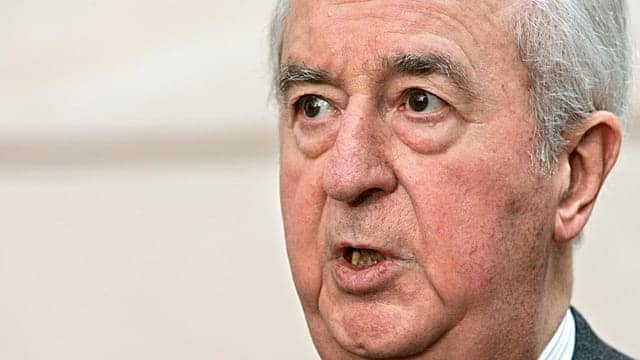

Edouard Balladur, Former French Prime Minister, Dies at 97
Edouard Balladur, who served as Prime Minister of France during a pivotal period in the 1990s, has passed away at the age of 97. His family confirmed his death to Africanews, with the report published on September 1, 2026. The announcement marks the end of a political career that spanned several decades, during which Balladur played a central role in French governance and economic policy.
Balladur's long life and extensive career saw him rise to one of the highest offices in the French Republic. His passing closes a chapter on a figure who contributed significantly to the political and economic landscape of France, particularly through his leadership during a period of complex domestic and international challenges.
A Life of Public Service and Distinct Origins
Born in Turkey, Edouard Balladur later moved to France, where he would embark on a distinguished career in public service. His birthplace is a notable detail in his biographical record, setting his origins apart from many of his political contemporaries who were born within metropolitan France. This background formed part of the unique tapestry of his personal history as he ascended through the ranks of French politics.
Before reaching the pinnacle of the prime ministership, Balladur dedicated many years to various roles within the French administration, steadily building a reputation and influence that would eventually position him as a central figure in the government of the 1990s. His journey from his birth in Turkey to the highest echelons of French power underscores a remarkable trajectory in public life.
Navigating French Politics Through Cohabitation
Edouard Balladur served as Prime Minister of France from March 1993 to May 1995. His tenure was notably under the presidency of Francois Mitterrand, creating a political dynamic known as "cohabitation." This constitutional arrangement arises when the President and the Prime Minister belong to opposing political parties, necessitating a delicate balance of power and cooperation in governance.
The period of cohabitation under Balladur and Mitterrand was a defining characteristic of his premiership. It required a unique approach to leadership, as the head of government and the head of state, though from different political camps, had to navigate the country's affairs together. This scenario shaped the governance of France during this specific two-year window, influencing policy formulation and implementation across various sectors.
Economic Reforms and State Privatisation
During his time in office, Prime Minister Balladur oversaw significant privatisations of state companies. These economic measures were a core component of his administration's policy agenda, reflecting a broader trend towards market liberalization in many European economies during that era. The transfer of state-owned enterprises to private ownership represented a major structural change in the French economy.
These privatisations were not merely administrative changes; they were fundamental shifts in the economic model, aimed at reforming and modernizing key sectors. Balladur's government committed to these policies, which had lasting implications for the role of the state in the French economy and the structure of its industries. The scale of these transformations underscored the ambition of his economic program.
A Defined Period of Governance
Balladur's service as Prime Minister commenced in March 1993, following a period of political realignment in France. His leadership concluded in May 1995, marking a distinct phase within the later years of Francois Mitterrand's presidency. This timeline places his administration directly within a crucial juncture of French political history, leading up to a significant presidential election.
The conclusion of his term was intrinsically linked to the electoral cycle that followed, signaling the end of his direct executive leadership. The two years of his premiership were characterized by the challenges and opportunities inherent in a cohabitation government, leaving a notable imprint on the political landscape of the mid-1990s.
The Unsuccessful Presidential Bid of 1995
Following his tenure as Prime Minister, Edouard Balladur sought to ascend to the highest office in France, running for the French presidency in 1995. Despite his recent leadership of the government, his candidacy ultimately proved unsuccessful. The source material explicitly notes that he "unsuccessfully ran" for the top job, indicating that he did not win the election.
The 1995 presidential race was a significant event in French political history, drawing considerable public attention and shaping the country's direction for the subsequent years. Balladur's decision to run represented an ambitious attempt to transition from his powerful role as head of government under President Mitterrand to the ultimate executive authority of the country. His loss in this contest brought an end to his bid for the presidency and marked a turning point in his political career.
The outcome of the 1995 election had profound implications for Balladur's political future and for the broader conservative movement in France. His candidacy, while ultimately not victorious, highlighted his stature and influence within French politics at the time, underscoring his ambition to lead the nation directly as its head of state.