

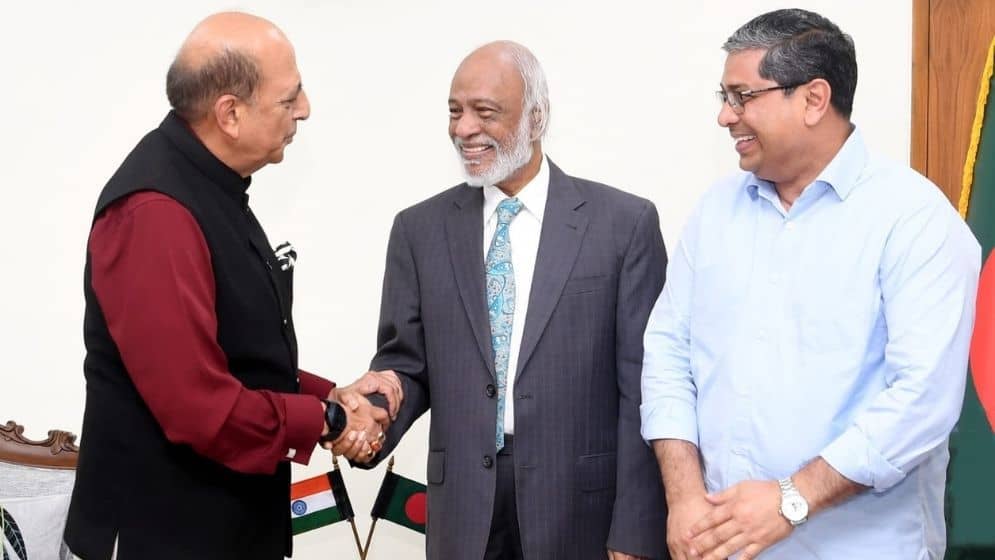

Indian Envoy Reaffirms Non-Interference in Dhaka's Politics
Dinesh Trivedi, the Indian High Commissioner to Bangladesh, has issued a definitive statement underscoring India's commitment to a policy of non-interference in the internal political affairs of its neighboring nation. Speaking on the diplomatic posture of New Delhi, Trivedi explicitly stated that India would refrain from offering any commentary on Bangladesh's domestic political matters, thereby reinforcing a long-standing principle of bilateral relations.
The High Commissioner's declaration serves as a crucial clarification of India's foreign policy approach, particularly in the sensitive landscape of regional diplomacy. By drawing a clear line, the Indian mission in Bangladesh aims to distinguish its diplomatic engagements from the sovereign political processes unfolding within Bangladesh. This stance is not merely a passive observation but an active affirmation of mutual respect for national sovereignty, ensuring that internal political developments are understood as subjects solely within Bangladesh's jurisdiction, free from external commentary by the Indian government.
Trivedi's remarks come at a time when diplomatic circles often scrutinize the interactions between neighboring states for any perceived shifts in policy. His direct address reinforces that India's focus remains steadfast on maintaining a respectful and non-intrusive approach to Bangladesh's internal governance, thereby fostering an environment of trust and predictability in their relationship.
The Context of Tarique Rahman Speculation
The High Commissioner's statement was made amidst considerable speculation within diplomatic and political spheres concerning a potential visit by Tarique Rahman. These discussions, which have generated significant interest among observers, touch upon sensitive aspects of Bangladesh's internal political landscape. While the specific details regarding the nature and timing of such a visit have been a subject of ongoing conjecture, Trivedi's intervention was designed to preempt any misinterpretation of India's position.
By explicitly declining to discuss the specifics of the speculated visit or the individual involved, Trivedi meticulously upheld India’s stated policy of non-interference. This deliberate avoidance of engagement with internal political figures or events ensures that New Delhi’s actions cannot be construed as an endorsement, disapproval, or any form of involvement in Bangladesh’s domestic political dynamics. The High Commissioner did not confirm or deny the details of any potential visit, nor did he offer insights into how such an event might influence bilateral relations. Instead, the emphasis was firmly placed on the overarching principle that India does not comment upon or engage with the internal political affairs of Bangladesh, irrespective of the individuals or circumstances involved.
Building Stronger Bilateral Links
In conjunction with the assertion of non-interference, High Commissioner Trivedi utilized the opportunity to advocate strongly for the deepening and strengthening of ties between India and Bangladesh. He highlighted the paramount importance of cultivating robust diplomatic, strategic, and cooperative connections between the two nations, suggesting that a collaborative spirit should consistently guide bilateral interactions.
This emphasis on stronger ties is particularly pertinent given the dynamic regional environment that both governments closely monitor. Trivedi’s comments signal New Delhi's unwavering intention to continue nurturing relationships across a broad spectrum of sectors. This commitment to fostering cooperation is presented as independent of, and unaffected by, the political speculations surrounding specific individuals or internal events within Dhaka. While the High Commissioner did not enumerate specific areas of cooperation that would be prioritized, his general advocacy for enhanced relations was articulated with clarity, signaling a desire for comprehensive and enduring partnership.
Mutual Benefits and Regional Cooperation
The call for strengthened bilateral relations stems from a recognition of the significant mutual benefits that India and Bangladesh derive from close cooperation. Both nations share historical bonds, geographical proximity, and common interests in regional stability and economic prosperity. Enhanced ties can translate into greater collaboration on trade, connectivity, security, and cultural exchange, fostering a more integrated and prosperous South Asian region.
India's consistent advocacy for robust engagement, even amidst internal political developments in Bangladesh, underscores its long-term vision for a stable and cooperative neighborhood. This approach aims to insulate the essential framework of bilateral relations from transient political fluctuations, ensuring that the foundational partnership between New Delhi and Dhaka can continue to flourish, supporting shared developmental goals and regional peace.
Upholding Sovereign Principles in Diplomacy
The declaration by the Indian High Commissioner serves as a powerful testament to the careful balance India endeavors to maintain in its regional diplomatic engagements. While actively promoting and advocating for stronger ties and deeper cooperation, the Indian government has simultaneously established a firm boundary against any perception of meddling in the internal political processes of Bangladesh. This dual approach is central to India's foreign policy in the region.
This diplomatic posture aligns seamlessly with established international norms regarding national sovereignty and the principle of non-interference, which are cornerstones of respectful interstate relations. Trivedi’s remarks provide a clear and official record of India’s consistent position, ensuring that all future interactions and engagements between the two nations are understood and conducted within a framework of mutual respect for domestic jurisdictions, while concurrently fostering a spirit of cooperative bilateral engagement. This strategic clarity contributes significantly to building enduring trust and predictability in the relationship between India and Bangladesh.