

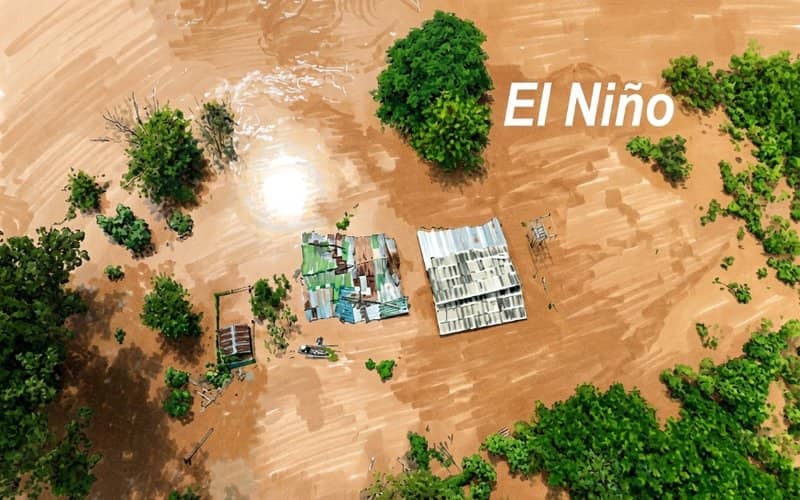

Climate Patterns Signal Potential Agricultural Disruption
A significant El Niño event is currently developing, according to reports from climate scientists, raising concerns about its far-reaching global impact. This powerful climate phenomenon is projected to trigger widespread environmental changes, including severe droughts and extensive flooding across multiple continents. Such extreme weather patterns are expected to significantly disrupt crop yields globally, threatening food security and agricultural supply chains.
Justin Mankin, a climate scientist at Dartmouth, has characterized the incoming weather pattern as a “super El Niño” in a recent podcast episode. Mankin emphasized the distinction of this event from standard seasonal variations, noting its profound potential to reshape agricultural output on a continental scale. The economic implications of such widespread disruptions are substantial, with initial estimates suggesting the global economy could face costs potentially reaching into the trillions of dollars due to lost production, infrastructure damage, and humanitarian aid requirements.
Global Markets Brace for Climate Impact
In anticipation of these challenging conditions, global markets have already begun to react. Agricultural commodities, critical for food production and various industries, are reportedly trading at decade-high levels. Analysts are directly linking this surge in commodity prices to the market's proactive pricing in of the potential effects from the developing El Niño event. Investors are closely monitoring what has been termed the “weather trade,” as they assess the escalating risk to global supply chains and the potential for inflationary pressures stemming from reduced agricultural output.
The prospect of widespread droughts could severely impact grain harvests in key producing regions, while extensive flooding could devastate crops and agricultural infrastructure in others. These disruptions, occurring simultaneously across diverse geographies, underscore the interconnectedness of global food systems and the vulnerability of commodity markets to significant climate shifts.
Gold Prices Advance on Chinese Demand
Gold prices have recently climbed to near a three-month high, a surge largely attributed to robust purchasing activity originating from China. Market data reveals that China's over-the-counter (OTC) gold purchases amounted to approximately 88 tonnes during the two-month period of May and June. This significant and sustained buying pressure from one of the world's largest gold consumers has been a primary contributor to the upward trajectory of the precious metal's valuation.
The increase in gold's valuation is not occurring in isolation but coincides with a period of broader macroeconomic uncertainties. These uncertainties include the aforementioned climate risks posed by the developing El Niño event, which threaten agricultural stability and global supply chains. Historically, investors have viewed gold as a reliable hedge against systemic shocks, economic instability, and inflation. This traditional role of gold as a safe-haven asset may explain the observed correlation between the escalating El Niño forecasts and the metal's recent price action, as market participants seek to protect their portfolios from potential downturns and volatility.
Precious Metals as a Store of Value
Beyond immediate climate concerns, gold's appeal is often bolstered by its status as a store of value during times of geopolitical tension or financial market turbulence. The substantial Chinese demand, particularly through OTC channels, suggests a strategic accumulation by entities or individuals seeking to diversify assets or hedge against domestic economic factors. This consistent demand from a major global economy provides a strong floor for gold prices, even as other market forces fluctuate.
Silver Rebounds Amid Bond Market Turbulence
Silver, often considered gold's more volatile counterpart, is currently experiencing a notable rebound in the prevailing market cycle. This recovery in silver valuations is unfolding against a backdrop of significant turbulence within the bond market. Reports from financial analysts and media outlets have attributed this period of bond market instability to actions or statements made by Donald Trump, with some characterizing the situation as a “bond market tantrum.”
The term “bond market tantrum” typically describes a sharp and sudden increase in bond yields, often triggered by investor concerns over fiscal policy, inflation, or political uncertainty. The attribution to Donald Trump suggests that market participants are reacting to specific political signals or potential policy shifts that could impact the fixed-income landscape. This interplay between precious metals, like silver, and fixed-income assets indicates a broader trend of investors actively shifting their allocations in response to both political developments and evolving economic signals.
Divergent Market Drivers
The current market environment presents a complex picture, with distinct drivers influencing different asset classes. While gold and silver are experiencing upward momentum, fueled by safe-haven demand and specific market dynamics, the agricultural sector faces potential headwinds from the developing El Niño climate event. This divergence highlights a split in market concerns: agricultural commodity prices are being driven by tangible supply fears related to climate impact, whereas precious metals are responding more to monetary policy expectations, geopolitical tensions, and, in the case of the bond market, specific political commentary.
The lack of an official response regarding the specific impact of political statements on bond yields underscores the speculative nature of some market movements, yet the market's reaction itself is a clear indicator of investor sentiment. This intricate web of climate risks, political influences, and traditional market drivers creates a challenging landscape for investors seeking stability and growth.