

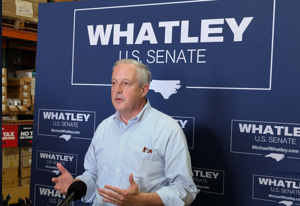

Cooper Maintains Significant Lead in Latest Senate Survey
The latest Elon University Poll reveals that Roy Cooper holds an 11-point lead over Michael Whatley in the contest for the United States Senate seat. The survey data, released recently, highlights the current standing between the two candidates as they prepare for the general election. Cooper’s margin of victory in this specific polling instance stands at 11 percentage points. This result underscores the competitive nature of the race, though it also reflects a persistent gap in name recognition and public awareness between the incumbent governor and his challenger. The poll provides a snapshot of voter sentiment at this stage of the campaign cycle, offering quantitative metrics on how each candidate is perceived by the electorate.Analysis of Voter Familiarity Trends
Jason Husser, the director of the Elon University Poll, provided context regarding the disparity in name recognition between the two contenders. According to Husser, while Roy Cooper continues to be much more familiar to voters than Michael Whatley, the gap is not static. The data indicates that Whatley’s level of familiarity has increased meaningfully over a four-month period. Husser specifically noted that Whatley’s familiarity among voters has increased meaningfully between March and July. This timeline suggests that the challenger’s campaign efforts or public visibility have had a measurable impact on how well-known he is to the voting population. Despite this growth in recognition, Husser affirmed that Cooper remains significantly more familiar to voters than Whatley. The increase in familiarity for Whatley is a notable data point in the poll’s findings. It suggests a shift in the dynamics of the race, even if the overall lead for Cooper remains substantial. The poll does not attribute specific causes for this rise in awareness, but it documents the trend clearly within the specified timeframe.Implications for the Senate Race Dynamics
The 11-point gap reported by the Elon University Poll places Cooper in a leading position relative to Whatley. However, the concurrent rise in Whatley’s voter familiarity indicates that the race may be tightening or that the challenger is successfully penetrating the public consciousness. Political analysts often view voter familiarity as a critical precursor to vote choice, particularly in races where one candidate has held office longer than the other. Cooper’s continued high level of familiarity is consistent with his status as the incumbent governor. Voters who are aware of Cooper’s record and current role are more likely to have a formed opinion about him compared to those evaluating Whatley, whose political profile may be less established in the minds of the general electorate.Timeline of Polling Data
The comparison of voter familiarity relies on data collected at two distinct points in time. The Elon University Poll tracked changes from March to July. This four-month window allows for an assessment of how quickly a challenger can build name recognition in a high-profile federal race.- In March, Michael Whatley had a lower level of voter familiarity compared to his July standing.
- By July, the poll recorded a meaningful increase in Whatley’s familiarity among voters.
- Throughout this period, Roy Cooper maintained a higher degree of familiarity relative to Whatley.
The specific magnitude of the 11-point lead in the current poll is a key metric for observers. It quantifies the advantage Cooper holds at this moment, while the qualitative data on familiarity provides context for how that advantage might evolve as the election approaches. The poll results serve as one indicator among many in the broader landscape of the US Senate race.
Survey Methodology and Scope
The Elon University Poll is conducted by researchers at Elon University, with Jason Husser serving as the director. His role involves overseeing the collection and analysis of data related to political trends in North Carolina and beyond. The poll’s findings are based on responses from a sample of voters, providing estimates of candidate support and awareness.The release of this poll adds to the body of evidence available to campaigns, journalists, and the public regarding the state of the Senate race. While an 11-point lead is significant, polling data fluctuates over time due to various factors including campaign events, economic conditions, and voter turnout models.
The increase in Whatley’s familiarity from March to July is a specific finding that warrants attention. It suggests that efforts to raise his profile have been effective in expanding his recognition base. However, the data does not indicate whether this increased familiarity translates directly into increased support or vote intention, only that more voters are aware of who he is.
As the race progresses, subsequent polls will likely track whether Whatley’s growing name recognition narrows Cooper’s lead. The current snapshot shows Cooper ahead by 11 points, with a challenger who is becoming more known to the public. These metrics provide a factual basis for understanding the current competitive balance in the contest.
The Elon University Poll continues to be a source of data for monitoring political shifts in the region. Its reporting on the Senate race highlights both the incumbent’s strong position and the challenger’s progress in building visibility among the electorate.