

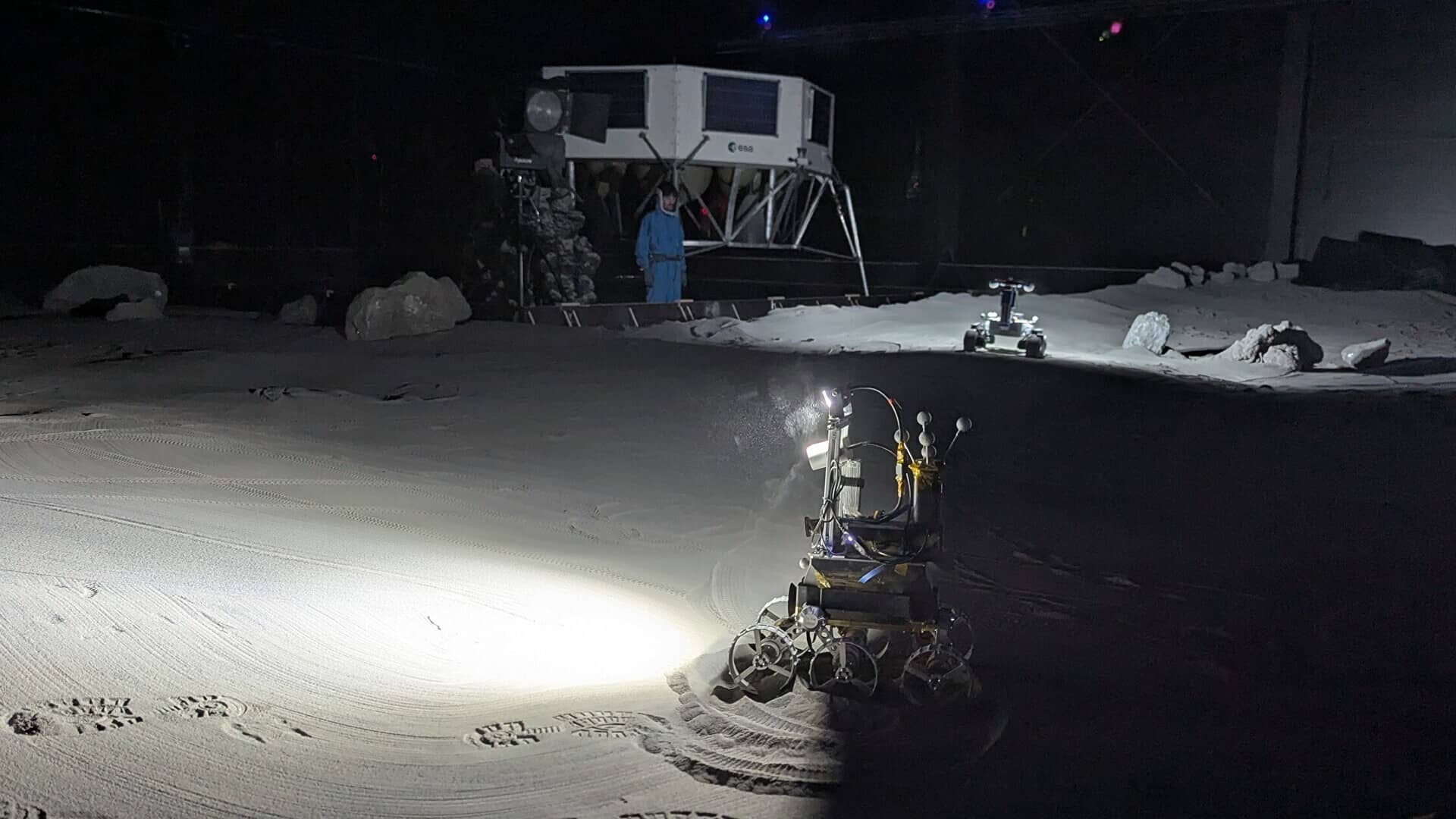

Estonian Rover Completes Inaugural Lunar Simulation
An Estonian-developed lunar rover has successfully completed its first trial run on an artificial Moon surface. The vehicle, a product of collaboration between the University of Tartu's Tartu Observatory and the nonprofit organization KuupKulgur, underwent extensive testing at a specialized facility in Germany. This mission marks a significant milestone for the project, with the development team expressing strong optimism about the rover's potential to reach the actual Moon within the next decade.
The testing phase took place at LUNA, a facility widely recognized as Europe's largest Moon-analogue environment. Located in Germany, LUNA provides a meticulously controlled setting designed to replicate the challenging conditions found on the lunar surface. The successful completion of this initial trial run has bolstered the team's confidence in their timeline for future missions, affirming their belief that a lunar deployment could be achieved within the ambitious ten-year window.
Collaborative Development and Engineering Challenges
The creation of this lunar rover is a testament to a robust collaborative venture, bringing together academic institutions from Estonia and dedicated private nonprofit groups. The University of Tartu's Tartu Observatory played a pivotal and central role in the rover's development process, working in close partnership with KuupKulgur. This joint effort focused on preparing the vehicle for operational readiness under conditions that closely simulate those encountered on the lunar surface, from its unique gravitational pull to its rugged terrain.
Simulating Lunar Conditions at LUNA
The LUNA facility served as the crucial primary testing ground for this innovative initiative. Situated within Germany, this advanced site offers a controlled environment engineered to mimic key lunar characteristics, including specific gravity and terrain features. The ability to conduct such comprehensive tests on Earth is invaluable, allowing researchers to rigorously evaluate the rover's navigation systems and mobility capabilities without the immediate necessity of spaceflight or direct access to extraterrestrial bodies. This terrestrial testing phase is critical for identifying and resolving potential issues before committing to a space mission.
Projected Path to Lunar Deployment
The core objective of the recently concluded trial run was to rigorously validate the rover's performance within a simulated lunar environment. This validation is a foundational step before the project can advance to more complex and demanding scenarios. The team has expressed considerable confidence that the invaluable lessons learned and data gathered during this test mission will directly inform and guide future iterations of the vehicle's design, ensuring continuous improvement and adaptation.
Decade-Long Lunar Ambition
Officials closely associated with the project have articulated an aspirational, yet carefully considered, timeline for the rover's eventual deployment to the Moon. They anticipate that full operational deployment could realistically occur within a ten-year window, calculated from the time of these initial, foundational tests. This ambitious projection underscores the significant progress that will be required across several critical technological domains. These include advancements in propulsion systems for launch and trajectory, sophisticated landing systems capable of precise and soft lunar touchdowns, and robust surface navigation technology designed to operate autonomously in the Moon's unforgiving environment.
Institutional Commitment and Broad Engagement
The University of Tartu has a well-established history of active involvement in space-related research projects, spanning several years. This sustained engagement highlights Estonia's growing commitment to contributing to global space exploration efforts. The direct involvement of students in the rover project signifies a vital educational component to the mission. It aims not only to contribute to scientific advancement but also to actively train and develop the next generation of aerospace engineers and scientists within Estonia's academic system, fostering a skilled workforce for future space endeavors.
Nonprofit's Role in European Space Endeavors
KuupKulgur operates as a dedicated nonprofit organization, with a clear mission to advance space exploration initiatives across Europe. Their active participation in the lunar rover project is particularly noteworthy, as it highlights a burgeoning interest and capability from civil society groups in contributing to space exploration. This involvement is crucial for advancing European capabilities for lunar missions, offering an alternative and complementary pathway to progress that operates independently of major government agencies or large commercial aerospace corporations. It signifies a broader, more inclusive approach to space exploration, drawing on diverse expertise and passion.