

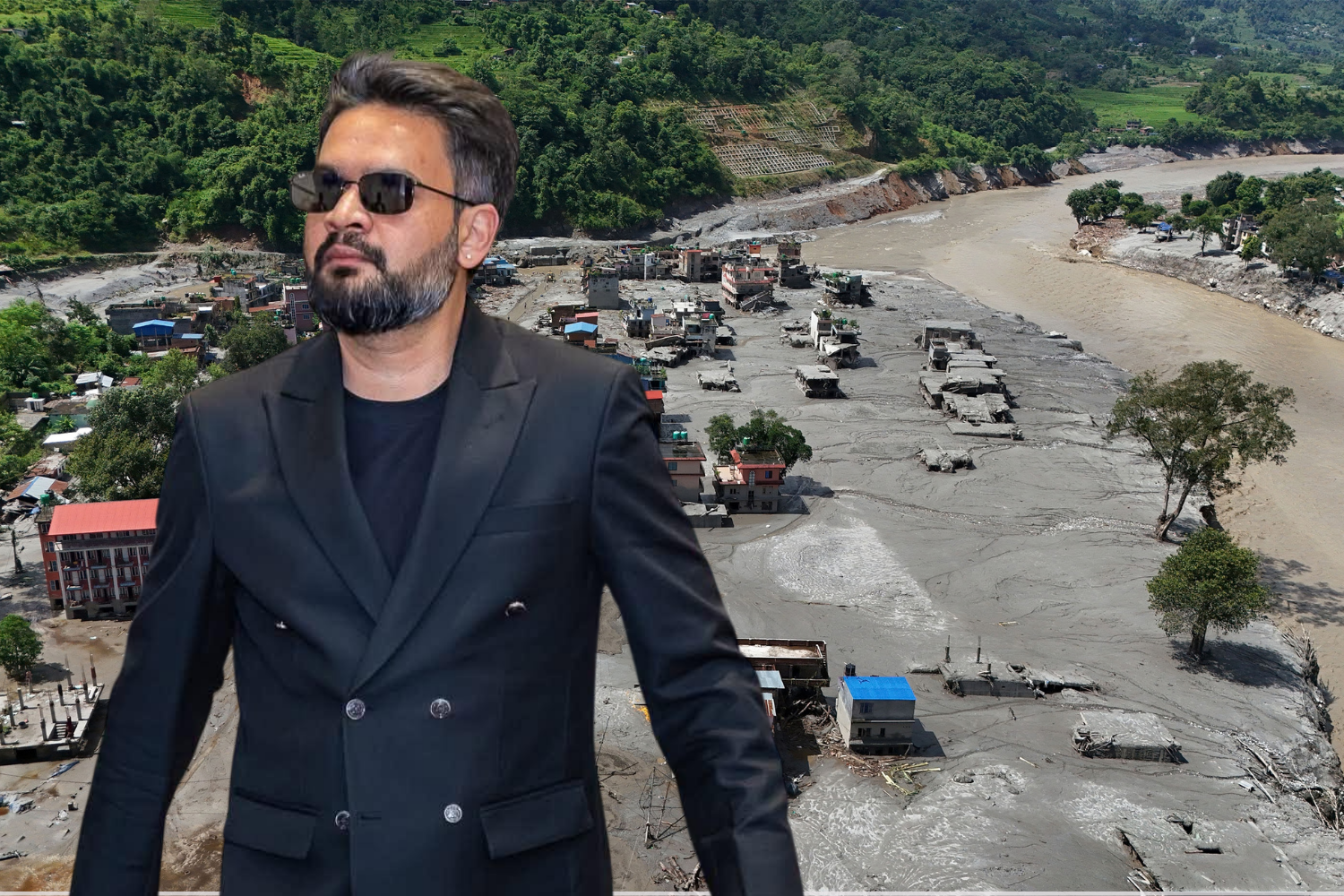

Shah’s First Foreign Trip Aligns With UN Agenda
Nepal Prime Minister Balendra Shah is undertaking his first foreign trip since taking office to deliver a routine address at the United Nations General Assembly. The visit places him in the United States, which is currently led by President Donald Trump.
The Kathmandu Post reported that Shah’s itinerary appears limited to this diplomatic engagement, with no other stated business for the trip. The timing coincides with a period of heightened global tension and shifting foreign policies under the current US administration.
Trump Administration Policies Draw Criticism
The political environment in which Shah will deliver his address is defined by the aggressive stance of President Trump. According to the Kathmandu Post, Trump has been characterized as a climate change denier who has moved to eliminate USAID and conducted an unprovoked attack on a sovereign civilizational state.
Trump’s rhetoric at the UN General Assembly has further escalated regional tensions. On the second day of the assembly, which featured speeches from leaders of Syria, Iran, and Ukraine, Trump threatened to ‘annihilate’ Iran while simultaneously bragging about his diplomatic efforts. Tehran responded by warning of a counter-response.
Additionally, the Army’s General Staff accused the US president of using the UN podium to justify ‘aggression’. The trade war initiated by Trump has been central to his presidency, yet reports indicate it has not slashed US deficits, while China recorded a surplus during the same period.
China’s Diplomatic Presence
Chinese President Xi Jinping is scheduled for a state visit to the US during the same period as the UN General Assembly. This diplomatic schedule makes it unlikely that Xi will have time to address climate justice concerns from the UN platform, a topic of significant interest to peripheral nations like Nepal.
Historical Aid Patterns and Strategic Interests
The current geopolitical landscape is viewed by some analysts as a continuation of historical patterns where foreign aid serves strategic interests rather than purely humanitarian goals. The Kathmandu Post argues that financial assistance is often symbolic when it does not align with those strategic interests.
Historical precedents illustrate this dynamic. Following the 1954 monsoon floods, the US announced a relief package of approximately $2 million, which is equivalent to $24.8 million in 2026 terms. However, a more significant intervention occurred in April 1960, when US President Dwight Eisenhower pledged $15 million directly to King Mahendra. This amount is equivalent to $170 million today.
The Kathmandu Post describes this 1960 pledge as an investment in the political manipulation of a peripheral country. Following this financial support, King Mahendra staged a royal-military coup, transforming the monarchy into what critics describe as a pawn of Western powers. This shift allowed Mustang to be used as a base for the Khampa Rebellion, with supply lines extending from Kathmandu.
The campaign against the Khampas eventually became counterproductive for US interests following the Nixon-Mao rapprochement. The Khampas were crushed in 1974, and while rumors circulated that trained Chinese fighters assisted Nepali forces, these claims were never corroborated.
Modern Disaster Response and Geopolitical Realities
While historical aid has been tied to political maneuvering, modern disaster response reflects a shift in focus. Following devastating flash floods in the Rasuwa district, the US announced $0.5 million in emergency assistance to be channeled through Catholic Relief Services.
Recent disaster response efforts have shifted from immediate rescue operations to relief and recovery phases. This transition is often discussed in the context of the term "Himalayan Tsunami," a phrase possibly coined by Kunda Dixit in 2009 to describe a Glacial Lake Outburst Flood.
Advances in geosciences and infrastructure have improved early-warning systems, but predicting seismic activity or cascading events like glacial lake outbursts remains imprecise due to complex variables. This uncertainty underscores the challenges faced by peripheral nations as they navigate both domestic vulnerabilities and global instability.
Global Tensions Beyond Nepal
The UN General Assembly also highlighted broader conflicts affecting other regions. France’s Macron stated that suffering in Gaza should ‘shame all of us’, while Canada’s Carney pledged $71m for two-state efforts.
In Africa, the Tigray People’s Liberation Front seized control of airports and targeted government positions in Afar and Amhara regions, adding to the list of crises addressed by world leaders during the assembly.