

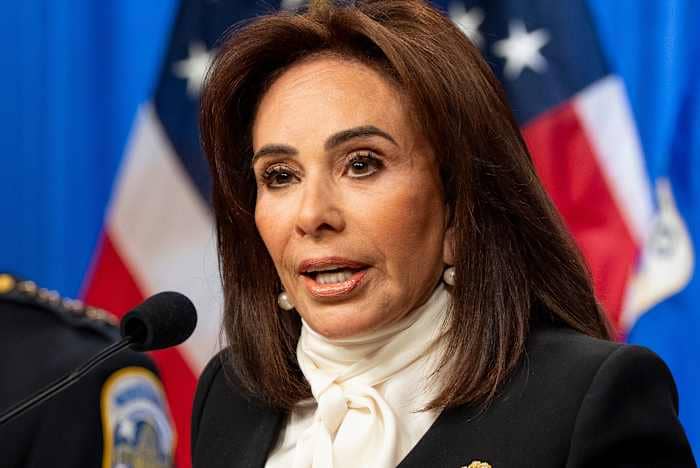

Ethics Watchdog Challenges U.S. Attorney's Conduct
A prominent legal watchdog group has formally filed bar complaints against U.S. Attorney Jeanine Pirro and two of her key associates, initiating a significant challenge to their professional conduct. The complaints, filed on August 25, 2026, and reported by the Associated Press, accuse these officials of violating their ethical obligations and breaching professional duties. The allegations stem from their concerted effort to indict six Democratic lawmakers, a move the watchdog group contends was an egregious overreach and an ethical lapse by federal prosecutors.
The filings represent a serious formal challenge to the integrity and conduct of Pirro and her staff within the U.S. Attorney's office. By pursuing these bar complaints, the watchdog group is seeking either disciplinary action or a thorough investigation into whether the attorneys involved adhered to the rigorous professional rules and ethical standards that govern the legal profession, particularly when targeting elected officials with federal charges.
The watchdog's primary contention is that the prosecution strategy employed by Pirro and her team constituted a direct violation of the ethical standards expected of federal prosecutors. This action underscores the group's commitment to holding government attorneys accountable for their decisions and methods, especially in cases with significant political and legal ramifications.
Prosecution Bid Against Lawmakers for Video Content
The central controversy animating the bar complaints revolves around the U.S. Attorney's office's attempt to indict six Democratic members of Congress. The legal watchdog group asserts that Jeanine Pirro and her team actively sought to bring federal charges against these lawmakers due to their involvement in a specific video production.
The Content of the Video and Its Implications
According to the detailed accusations within the bar complaints, the targeted lawmakers were accused of participating in content that directly urged members of the military to resist what were termed 'unlawful orders.' This participation, the watchdog's complaints assert, formed the entire basis for the government's attempt to prosecute these legislators under federal law.
The nature of the message—encouraging troops to resist unlawful orders—is a critical element in the watchdog's allegations. While the specific context or origin of these 'unlawful orders' is not detailed in the available information, the act of lawmakers participating in such a message to military personnel carries significant weight. The watchdog's filings do not explicitly detail the specific legal statutes that Pirro's office might have cited in its indictment attempts; instead, they emphatically focus on the profound ethical implications of prosecuting elected officials for such an activity. The watchdog argues that the very pursuit of these charges, irrespective of their legal merit, violated the fundamental ethical duties owed by U.S. Attorneys and their subordinates, particularly concerning the balance between prosecutorial power and the expression of elected representatives.
Ethical Breaches Alleged Against Pirro's Office
The bar complaints specifically name U.S. Attorney Jeanine Pirro, alongside two of her lieutenants, as the individuals who allegedly violated their ethical obligations. The watchdog contends that all three individuals acted in concert, breaching their professional responsibilities in the course of seeking to indict the six Democratic lawmakers.
These accusations suggest a deliberate and coordinated effort within the U.S. Attorney's office to pursue legal action that the watchdog deems to be ethically unsound. The complaints frame the prosecution bid not merely as a disagreement over legal interpretation or strategy, but as a clear and substantial breach of the professional conduct standards that are foundational for federal attorneys. Such alleged breaches could undermine public trust in the impartiality of the justice system and the integrity of its practitioners, particularly when the targets are elected officials.
Wider Implications for Prosecutorial Discretion and Congressional Speech
The bar complaints, filed on August 25, 2026, as reported by the Associated Press, highlight a critical and ongoing conflict at the intersection of executive branch prosecutorial powers and the conduct of elected representatives. The watchdog group's action directly challenges the boundaries of prosecutorial discretion, particularly when it involves the actions and speech of members of Congress.
By targeting the ethical compliance of Jeanine Pirro and her staff, the watchdog group aims to either halt the legal process against the six legislators or, at the very least, subject it to intense scrutiny and public accountability. This move signals a broader concern about the potential for prosecutorial tools to be used in ways that could be perceived as politically motivated or ethically questionable, especially when directed at individuals holding public office. The watchdog's intervention seeks to ensure that federal prosecutors adhere strictly to their ethical mandates, preventing any perceived weaponization of the legal system.
The initial reporting on these bar complaints did not include any immediate response or statement from Jeanine Pirro or her office regarding the serious allegations. The article focuses solely on the claims put forth by the legal watchdog, which center on the attempted indictment of Democratic lawmakers for their role in a video encouraging resistance to unlawful orders. The outcome of these complaints could set important precedents for the ethical boundaries of federal prosecution and the protections afforded to elected officials in their public statements, particularly concerning issues that touch upon military conduct and constitutional principles.