

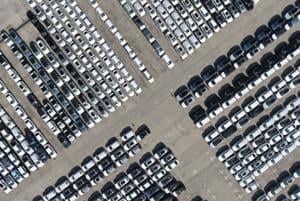

EU Sets Quota Amid Export Surge
The European Union has reached an interim agreement establishing an annual import quota of 350,000 hybrid vehicles manufactured in China. The limit includes plug-in hybrids and will be monitored by customs authorities starting as early as December, with shipments halted once the cap is reached.
Two senior EU officials reported that the agreement excludes cars made in Europe by Chinese companies. EU trade chief Maroš Šefčovič stated that the interim deal could halve Chinese hybrid vehicle exports to the bloc.
The regulatory move comes as Chinese automakers significantly increase their overseas presence. According to the China Association of Automobile Manufacturers, China's passenger car exports surged 64% in September compared to the same month in 2025, with approximately 919,000 vehicles exported.
Domestic Sales Decline Drives Overseas Focus
The push for exports follows a sharp contraction in the Chinese domestic market. The industry association reported that domestic passenger car sales in China fell 27% year-on-year in September to over 1.6 million units due to weaker consumer confidence and scaled-back government subsidies.
S&P Global Ratings analyst Stephen Chan stated that the industry increasingly relies on overseas markets for sales and profit growth to offset weakness in the domestic market.
For the first nine months of 2026, China exported over 7.1 million passenger cars, an increase of more than 70% from the same period last year. AlixPartners analysis reported that Chinese automakers are expected to export nearly or around 10 million vehicles globally in 2026.
Cost Advantages and Market Share
Chinese manufacturers have gained significant ground in European markets. Deutsche Bank research noted that Chinese automakers captured around 12% of Europe's new-car market in August and accounted for one in four hybrid sales in the region.
AlixPartners analysis indicated a substantial cost disparity driving this competitiveness, reporting that a Chinese-branded electric vehicle costs around $20,000 to produce, compared with $31,000 for a European equivalent.
Industry Response and Expansion
CITIC CLSA head of Hong Kong and China industrials research Xiao Feng stated that automakers cannot expect to export too many cars without facing tariffs or pushbacks from foreign governments.
In response to geopolitical pressures, BYD executive vice president Stella Li identified geopolitics as the biggest challenge to the company’s overseas expansion. She noted this has prompted BYD to expand overseas production in locations such as Thailand and Indonesia.