

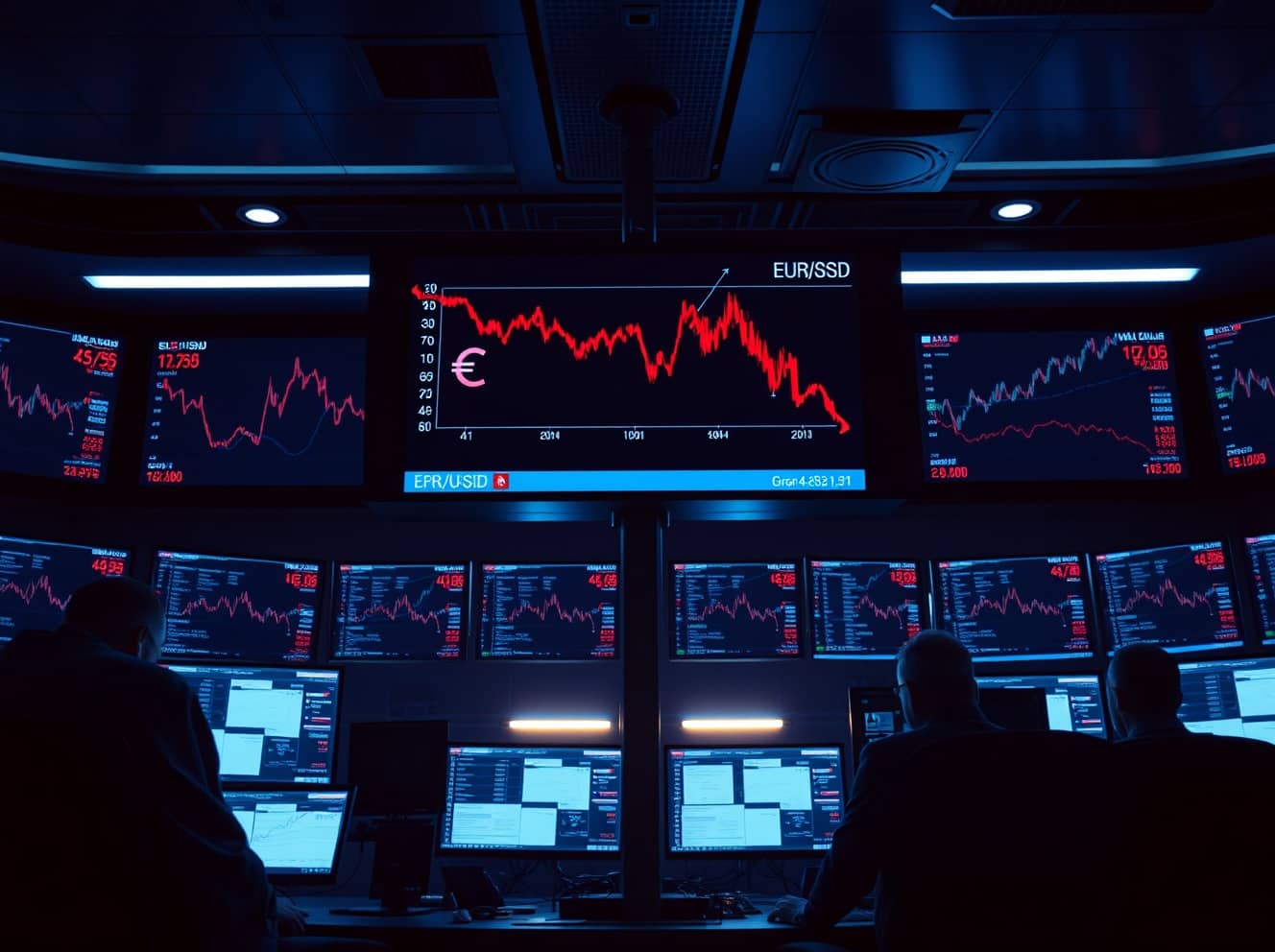

Euro Slides Against U.S. Dollar
The euro weakened against the U.S. dollar on Monday, trading below the 1.1650 mark. This depreciation was observed as escalating geopolitical tensions between the United States and Iran prompted investors to seek the perceived safety of the U.S. dollar. The movement in the currency market reflects a broader shift in investor sentiment, characterized by a move away from assets considered riskier and towards more stable, liquid investments.
Currency traders adjusted their positions, leading to a notable strengthening of the greenback across various currency pairs. The euro's decline underscores how global political developments can directly influence foreign exchange markets, particularly when they involve major economic powers and regions critical to international trade and energy supply.
Geopolitical Tensions Drive Risk-Off Sentiment
The heightened tensions between the United States and Iran have been a significant factor contributing to a risk-off sentiment in global financial markets. Geopolitical instability often leads investors to reduce their exposure to assets that are perceived to carry higher risk, such as equities in emerging markets or currencies of regions more susceptible to economic disruption. Instead, capital tends to flow into assets traditionally considered safe havens during periods of uncertainty.
The Middle East, a pivotal region for global energy supplies, is particularly sensitive to geopolitical developments. Any increase in tensions there can raise concerns about potential disruptions to oil production and transit routes, which in turn can have ripple effects across the global economy. This uncertainty encourages a flight to safety, with the U.S. dollar often being a primary beneficiary due to its global reserve currency status and the perceived stability of the U.S. economy.
U.S. Dollar's Role as a Safe Haven
The U.S. dollar frequently serves as a safe-haven currency during times of global economic or political turmoil. Several factors contribute to this role. Firstly, the sheer size and liquidity of the U.S. Treasury market allow for large-scale capital inflows without significantly distorting prices, providing a reliable store of value. Secondly, the U.S. dollar's status as the world's primary reserve currency means it is widely accepted and used in international trade and finance, making it highly liquid and easily convertible.
Furthermore, the U.S. economy is often viewed as relatively resilient compared to other major economies, and its financial markets are deep and well-regulated. In moments of heightened global risk, investors tend to prioritize capital preservation, leading them to convert assets into dollars, which are seen as less volatile and more secure. This increased demand for dollars naturally drives up its value against other currencies, including the euro.
Impact on Eurozone Assets and Trade Routes
The escalating tensions have prompted traders to reassess their exposure to eurozone assets. The eurozone, heavily reliant on international trade and energy imports, is particularly vulnerable to disruptions stemming from geopolitical instability in key regions. Heightened uncertainty, especially concerning the Middle East, raises concerns about potential impacts on global supply chains and energy costs.
A significant point of concern is the Strait of Hormuz, a narrow waterway connecting the Persian Gulf to the open ocean. It is one of the world's most strategically important choke points for oil transit, with a substantial portion of the world's seaborne oil passing through it daily. Any threat or disruption to shipping in this strait could lead to a sharp increase in global oil prices and significant logistical challenges for international trade. Such scenarios could negatively impact economic growth in the eurozone, which is a major energy importer, thereby making euro-denominated assets less attractive to investors.
Currency Sensitivity to De-escalation Hopes
The sensitivity of currency markets to geopolitical developments is further evidenced by past movements. The euro has demonstrated rallies when hopes for a ceasefire or de-escalation of tensions related to Iran have emerged. This pattern indicates that any perceived reduction in geopolitical risk can quickly reverse the risk-off sentiment, leading investors to re-evaluate their positions and potentially move capital back into assets and currencies that are more sensitive to global growth prospects.
Such fluctuations highlight the dynamic interplay between international relations, investor confidence, and currency valuations. The immediate reaction of currency markets to news concerning diplomatic efforts or military postures underscores the ongoing assessment of global risk by market participants.