

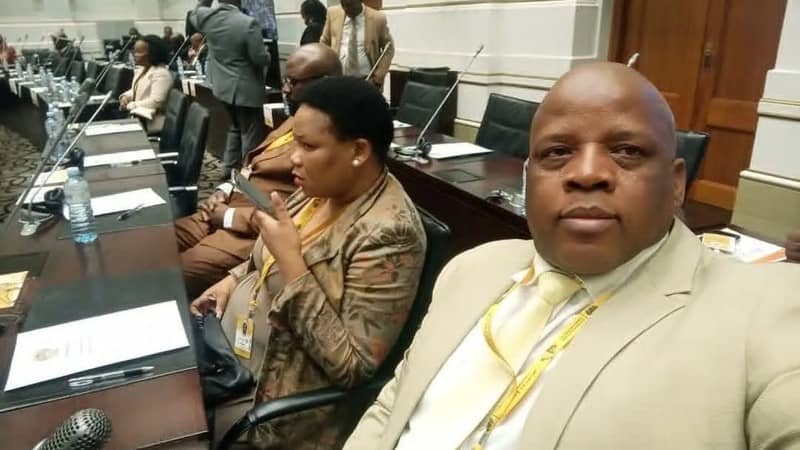

High Court Issues Eviction Order for Former Legislator
The Western Cape High Court has issued a formal order requiring former uMkhonto weSizwe Party (MKP) Member of Parliament France Bongani Mfiki to vacate his parliamentary residence located at Laboria Park. This significant ruling directs that Mfiki must leave the state-owned property by September 30, 2024. Should he fail to comply with this deadline, the Sheriff of the Court has been explicitly instructed to execute the eviction order, ensuring the prompt recovery of the public asset.
Mfiki’s occupation of the unit at the Laboria Park parliamentary villages has extended for more than two years beyond his official tenure as a Member of Parliament. These residential facilities, including Laboria Park, Acacia Park, and Pelican Park, are specifically designated to house serving Members of Parliament, providing convenient and subsidized accommodation during their terms in office. The Department of Public Works and Infrastructure (DPWI), the custodian of state property, initiated legal proceedings to recover the property after Mfiki did not leave following the end of his term, which the department cited as August 7, 2024.
Standard Protocols for Parliamentary Accommodation
According to established parliamentary regulations and departmental statements, former Members of Parliament are ordinarily permitted to remain in state-provided accommodation for a grace period of 30 days after their tenure officially concludes. This allowance is designed to facilitate a smooth transition, providing former legislators with adequate time to arrange alternative living accommodations and relocate their belongings without immediate pressure.
Despite this standard provision, Mfiki remained in the Laboria Park residence long after the initial grace period expired. The Department of Public Works and Infrastructure reported making repeated attempts to recover the property from him over the extended period of his unlawful occupation. These efforts included formally issuing a notice to vacate on September 11, 2024, explicitly detailing the requirement for him to leave the premises and outlining the consequences of non-compliance.
The department stated that despite these formal notices and numerous previous attempts at communication and recovery, Mfiki failed or refused to vacate the premises. This prolonged non-compliance, spanning over two years beyond his parliamentary term, left the Department of Public Works and Infrastructure with no alternative but to institute eviction proceedings through the Western Cape High Court to enforce the return of the state asset and uphold the integrity of public property management.
Government Takes Firm Stance on State Property
Public Works and Infrastructure Minister Dean Macpherson addressed the court’s ruling, unequivocally describing it as a crucial reinforcement of ongoing efforts to protect state assets from unlawful occupation. Minister Macpherson emphasized a fundamental principle of public service: that the provision of accommodation by the state to Members of Parliament is considered a privilege granted for the duration of their service, rather than a private entitlement that extends indefinitely beyond their term.
Macpherson reiterated the department's diligent approach to the matter, stating, "The Department of Public Works and Infrastructure made repeated attempts to recover the property from Mr Mfiki, including formally issuing him with a notice to vacate on 11 September 2024. Despite these efforts, Mr Mfiki failed or refused to vacate the premises, leaving the Department with no alternative but to institute eviction proceedings." This statement underscores the department's commitment to due process and exhausting all administrative avenues before resorting to legal action.
Upholding Accountability for Public Resources
The minister welcomed the high court's decisive decision, noting that it provides strong judicial backing for his broader mission to ensure that state housing and other valuable assets are not occupied illegally by former officials who have exceeded their authorized stay periods. The ruling sends a clear message regarding the accountability expected from individuals entrusted with public resources, even after their terms of service have ended, reinforcing the principle that public property must be managed responsibly and in the public interest.
This case highlights the procedural mechanisms meticulously employed by the Department of Public Works and Infrastructure to manage parliamentary accommodations. The department’s approach involves a structured process of issuing formal notices to vacate, engaging in repeated communication, and only then pursuing legal action through the courts when former MPs do not leave within the allotted 30-day window post-tenure. The Mfiki situation, with its extended period of non-compliance, underscores the strict enforcement of these timelines in instances where former legislators remain in state-owned properties for significantly prolonged durations, creating an administrative burden and potentially denying accommodation to new, deserving Members of Parliament.
The Enforcement of Judicial Orders
The Western Cape High Court's order sets a firm deadline of September 30 for France Bongani Mfiki to vacate the Laboria Park residence. This date marks the culmination of a lengthy process initiated by the Department of Public Works and Infrastructure to reclaim the property. The involvement of the Sheriff of the Court signifies the final stage of legal enforcement, ensuring that the court's directive is carried out if voluntary compliance is not achieved by the stipulated deadline.
The Sheriff's role in such matters is to execute court orders, which includes physically removing occupants and their belongings from a property if they fail to comply with an eviction notice. This measure is a critical component of the legal system, ensuring that judicial decisions are respected and upheld, thereby maintaining the rule of law. The upcoming eviction by the Sheriff on or after September 30 will therefore mark the definitive end of Mfiki’s occupation of the Laboria Park residence, an occupation that has lasted significantly longer than the standard post-tenure allowance and has necessitated considerable departmental and judicial resources to resolve.