

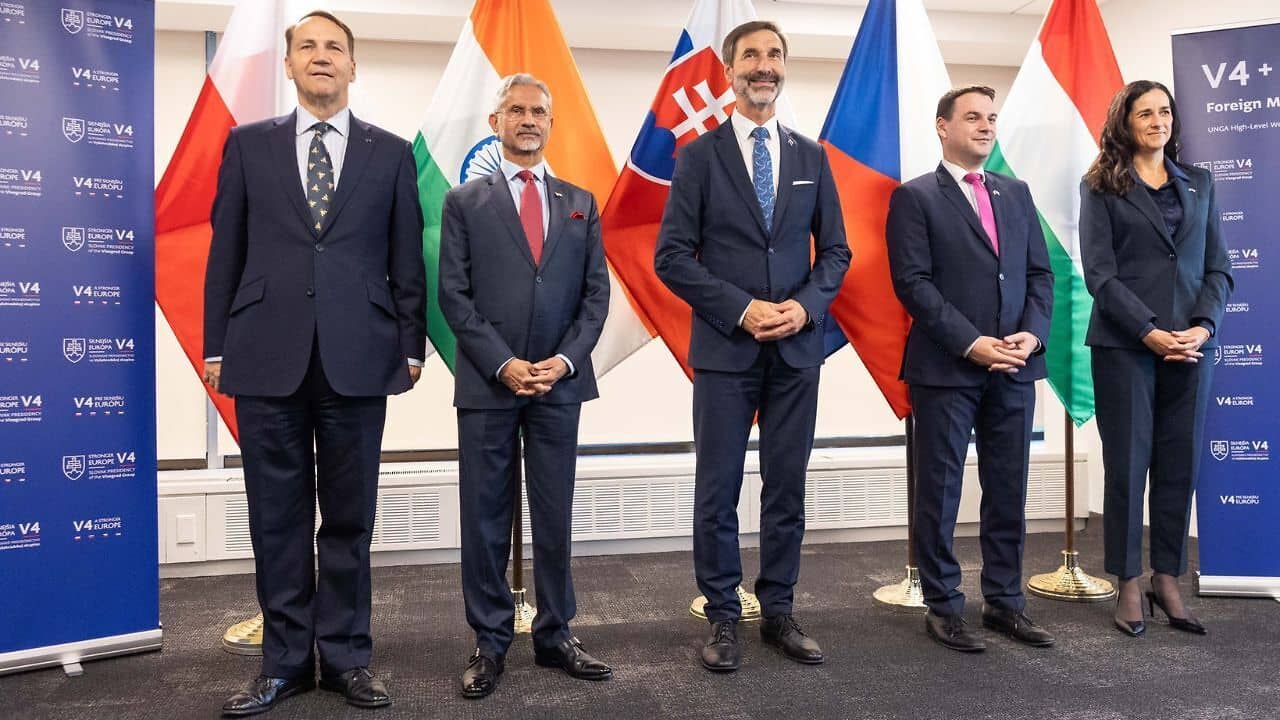

Visegrád Group Announces Unanimous Support for Permanent Seat
The four member nations of the Visegrád Group (V4) have formally endorsed India’s bid for a permanent seat on the United Nations Security Council. The endorsement was confirmed during the inaugural foreign ministers' meeting between India and the V4 countries, which took place on the sidelines of the United Nations General Assembly.
The V4 coalition consists of Poland, Hungary, Slovakia, and the Czech Republic. According to reports from the diplomatic gathering, all four nations expressed their backing for New Delhi’s candidacy. This marks a significant diplomatic development as India continues its long-standing effort to secure a permanent position on the world’s most powerful security body.
The meeting served as the first formal engagement of foreign ministers from both sides in this specific configuration. The announcement of support was made publicly following the discussions, highlighting a unified stance among the Central and Eastern European nations regarding India’s geopolitical ambitions.
Official Statements on Global South Representation
Slovak Foreign Minister Juraj Blanár provided specific details regarding the collective position of the Visegrád Group. He stated that the four countries were united in their support for India’s permanent membership. Blanär emphasized the strategic and demographic reasons behind this endorsement, linking it to India’s role in global governance.
"We all agree as V4 countries that India as a part of the Global South, upcoming superpower in the Indo-Pacific region, must be at the table as the permanent member of the UN Security Council," Blanár said. His statement outlines the specific rationale provided by Slovakia and its partners for the endorsement.
The reference to India as an "upcoming superpower" and a key part of the "Global South" reflects the diplomatic language used to justify the support. By characterizing India in these terms, the V4 nations are aligning their foreign policy positions with broader trends in international relations that seek greater representation for emerging economies.
Diplomatic Context of the UN General Assembly Meeting
The endorsement occurred during a period of intense diplomatic activity at the United Nations headquarters. The inaugural foreign ministers' meeting between India and the Visegrád Group was held on the sidelines of the ongoing UN General Assembly session. This timing allowed for high-level discussions outside the formal plenary sessions, facilitating direct dialogue between the parties.
External Affairs Minister S. Jaishankar participated in the meeting alongside the foreign ministers of Poland, Hungary, Slovakia, and the Czech Republic. The presence of India’s top diplomat signals the importance New Delhi places on securing support from European nations for its UNSC bid. The gathering provided a platform to consolidate backing from multiple member states simultaneously.
The Visegrád Group has historically functioned as a cultural and political alliance in Central Europe. Their collective endorsement represents a coordinated foreign policy move rather than isolated national decisions. By acting in unison, the four countries amplify their influence in discussions regarding UN reform and security council expansion.
Implications for India’s Multilateral Strategy
India has long sought to reform the United Nations Security Council to better reflect contemporary geopolitical realities. The country argues that the current composition of permanent members does not adequately represent regions such as Asia, Africa, and Latin America. Support from European nations is often viewed as critical for achieving the necessary diplomatic momentum for any structural changes to the council.
The backing from Poland, Hungary, Slovakia, and the Czech Republic adds weight to India’s arguments. These nations are members of the European Union and NATO, regions that hold significant sway in international institutions. Their support may encourage other countries to reconsider their positions on India’s candidacy.
India’s relationship with the Visegrád Group has been growing in recent years. The focus on trade, security cooperation, and shared democratic values has strengthened ties between New Delhi and Central Europe. This diplomatic meeting formalizes that growing partnership through a concrete policy endorsement.
The specific mention of the Indo-Pacific region in Foreign Minister Blanár’s statement highlights the strategic dimension of the support. It suggests that the V4 nations view India as a key stabilizing force in Asia, a perspective that aligns with broader Western interests in balancing power dynamics in the region.
No other countries were mentioned as having provided immediate counter-statements or opposing views during this specific meeting. The focus of the diplomatic engagement remained on the unanimous agreement to support India’s permanent membership bid.