


The Weight of a Divided Calendar
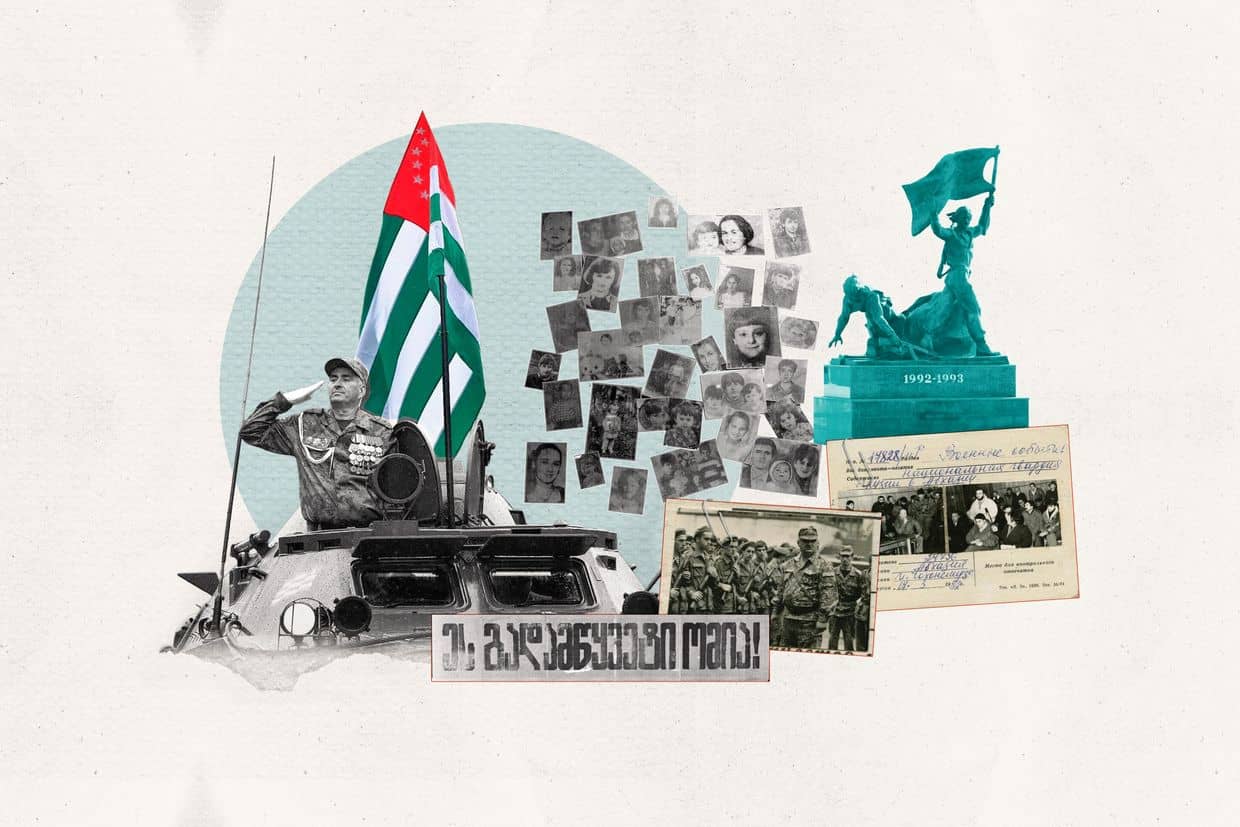
In Abkhazia, Sept. 30 is officially celebrated as Victory Day, marking the end of the 1992–1993 war and the withdrawal of Georgian government forces. In Georgia, the same date represents territorial loss, displacement, and defeat.
The Gali district lies directly between these conflicting narratives. Local Abkhazian authorities celebrate Victory Day, while ethnic Georgian residents recall being forced to commemorate an event tied directly to their community’s displacement and expulsion.
Mandatory Celebrations and Student Coercion
For many ethnic Georgians in Gali, the annual commemoration involves public performance rather than genuine remembrance. Lana Kokaia recalled that annual Sept. 30 processions were treated as an obligation characterized by a pervasive lack of enthusiasm.
Kokaia noted that teachers were forced to mobilize classes and bring students from other regions specifically for the day’s events.
Beka, who requested anonymity, stated that attendance at these commemorations was mandatory. He recalled facing consequences such as threats regarding grades if he did not participate.
Beka said his sisters detested the day because they were required to carry flags of countries recognized as "brotherly" to Abkhazia. His sister Salome, also requesting anonymity, was assigned by teachers to learn an Abkhaz poem that referred to Georgians as fascists.
Salome told OC Media she did not go to school for several days due to stress after originally refusing to learn the poem.
Personal Memories of Oppression
Nino, who grew up in Lekukhona (also known as Alakumhara), told OC Media that attending Victory Day commemorations felt oppressive. She stated that her family taught her the day was connected to the war rather than liberation.
"What you were being forced to celebrate was a lie," Nino said.
Post-War Return and Ongoing Challenges
After the 1992–1993 war, many ethnic Georgians returned to Gali under a post-war process involving the Georgian and Abkhazian sides, Russia, the UN, and the UNHCR.
A key agreement signed in Moscow in April 1994 provided for the voluntary and safe return of displaced people, with Gali identified as a priority. Georgians gradually returned to the district following this agreement.
The challenges faced by ethnic Georgians in Gali extend beyond annual commemorations. Georgian-language education has been significantly reduced. Movement across administrative boundaries remains difficult.
Questions surrounding documentation, property, and access to services continue to affect everyday life. These policies and restrictions make it increasingly difficult for many Georgian families in Gali to preserve their language, identity, and connections with the wider Georgian community.