


Foundation Pledges Funding for AI Infrastructure and Sector Partnerships
The Bill & Melinda Gates Foundation has committed to spending at least $1 billion over the next two years to expand access to artificial intelligence. The funding is designated for partners operating within the education, health, and agriculture sectors. A primary objective of this financial commitment involves developing data foundations that enable large language models to function effectively in languages beyond the limited set they currently support well.
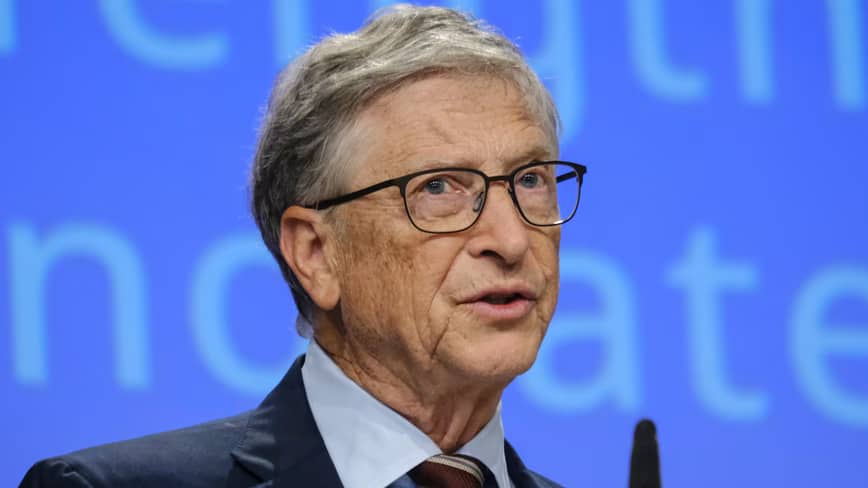
Bill Gates, the former Microsoft CEO and co-founder of the foundation, outlined these plans during an interview with Reuters. The announcement pairs the financial pledge with a critique of current regulatory frameworks for artificial intelligence. Gates stated that governments are not adequately prepared to manage the rapid development of AI technologies.
Gates Critiques Government Preparedness for AI Regulation
In his assessment of the global regulatory landscape, Gates expressed skepticism regarding the capacity of state actors to oversee AI development. He told Reuters, "I don’t think any government is nearly as deep on this as they have to be." The former tech executive further emphasized this gap in preparedness by stating, "Governments are way behind on this one." These comments were published on a Tuesday following the foundation's announcement.
The criticism highlights a perceived disconnect between the pace of technological advancement and the ability of legislative bodies to implement effective oversight. Gates' remarks suggest that the foundation intends to fill gaps in infrastructure and accessibility that may not be addressed by public sector initiatives alone.
Building Data Foundations for Multilingual Models
A significant portion of the $1 billion pledge is directed toward creating data foundations that allow large language models to operate across a broader range of languages. Currently, these models function well in only a handful of languages. The foundation aims to expand this capability to serve all languages rather than limiting access to those currently supported.
The disparity in digital language representation presents a technical challenge for expanding AI utility globally. English accounts for approximately 49 percent of web content. In contrast, Chinese, which is spoken by more than a billion people, represents only 1.3 percent of web content. This imbalance constrains the ability of large language models to process and generate text in languages with lower digital presence.
Building data foundations to correct this imbalance is described as substantively difficult. The effort requires creating robust datasets for languages that are underrepresented on the internet, thereby enabling AI systems to function effectively for non-English speaking populations. This focus on multilingual support distinguishes the foundation's current strategy from previous efforts that may have prioritized high-resource languages.
Strategic Focus on Education, Health, and Agriculture
The funding will be distributed to partners working in three specific sectors: education, healthcare, and agriculture. By targeting these areas, the foundation aims to leverage AI to address challenges in service delivery and efficiency. The expansion of AI access in these sectors is intended to support global development goals.
The emphasis on data foundations for multilingual models serves as a critical enabler for this sectoral work. Without adequate data support for local languages, AI tools may fail to function effectively in regions where English is not the primary language of instruction or commerce. The foundation's approach suggests that technical infrastructure must be built before widespread adoption in these sectors can occur.
The announcement comes as global interest in AI regulation intensifies. Gates' comments regarding government preparedness provide context for the foundation's decision to invest heavily in private sector partnerships and data infrastructure. By stating that governments are "way behind," Gates implies that immediate action is required from non-governmental entities to ensure equitable access to AI technologies.
The two-year timeline for the expenditure indicates a concentrated effort to establish these data foundations and partner networks rapidly. The foundation's focus on languages beyond those currently well-supported by large language models addresses a specific barrier to global AI adoption. This strategy aligns with the broader goal of expanding AI access to underserved populations in education, health, and agriculture.