Full story
Unprecedented Conflict Levels Altering International Mobility
The global travel landscape in 2026 is being fundamentally reconfigured by a surge in geopolitical instability. According to reporting from Mcdowell News, which cites data from the International Rescue Committee (IRC), the world is currently experiencing a higher number of active wars than at any point since World War II. This historical context underscores the severity of the current security environment and its direct impact on civilian movement.
The IRC’s assessment highlights that this level of global conflict is not merely a statistical anomaly but a defining characteristic of the current era. The presence of numerous concurrent armed conflicts has led to widespread disruptions in international flight paths, border crossings, and tourism infrastructure. Travelers and industry analysts alike are noting that the traditional stability assumed by pre-2020 travel planning models no longer applies.
The International Rescue Committee, an organization dedicated to helping people whose lives and livelihoods are shattered by conflict and disaster, has provided the primary data point regarding the scale of these conflicts. Their metrics indicate a density of active war zones that exceeds any period in modern history. This concentration of violence creates immediate barriers to travel, forcing airlines, tour operators, and individual travelers to adapt to a reality where safety assessments change rapidly.
The Reshaping of the 2026 Travel Map
Geopolitical volatility is actively reshaping what industry sources refer to as the "travel map" for 2026. This term describes the dynamic nature of which destinations are accessible, safe, and economically viable for international tourism. The shifts are not gradual but are driven by sudden escalations in regional conflicts that can close airspace or deter visitor inflows within days.
Mia Taylor, writing for TravelPulse on Aug. 24, 2026, reported on these changes. Her coverage, which was syndicated across multiple outlets including the Corvallis Gazette-times and The Daily News, indicates that the travel industry is responding to these geopolitical pressures by reevaluating routes and regions. The article notes that passengers are increasingly aware of the security implications of their destinations.
The concept of a "reshaped" travel map implies that previous hotspots for tourism may now be classified as high-risk or inaccessible. Conversely, regions previously considered peripheral due to logistical challenges may gain prominence as alternative routes emerge. This realignment is a direct consequence of the active wars identified by the IRC. Airlines are adjusting their schedules to avoid conflict zones, while ground transportation networks in neighboring countries face increased pressure from displaced populations and diverted trade routes.
Industry Response and Passenger Awareness
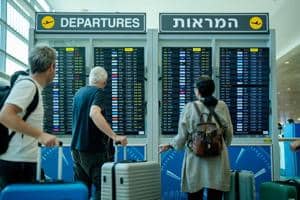
The reporting from TravelPulse suggests that the travel industry is in a state of active adjustment. The mention of passengers checking departure boards, as noted in the source context from Mcdowell News, illustrates the immediate, on-the-ground impact of these macro-level geopolitical trends. Travelers are making decisions based on real-time security information rather than historical precedent.
The syndication of Mia Taylor’s article across diverse publications, including Pressofatlanticcity and other regional news sites, indicates that this is a widespread concern affecting travelers from various geographic origins. The uniformity of the headline "How geopolitics are changing the travel map in 2026" across these outlets suggests a consensus among journalists that geopolitical factors are the primary driver of current travel disruptions.
The International Rescue Committee’s data serves as the foundational evidence for these reports. By linking the number of active wars to the changes in the travel landscape, the reporting establishes a clear causal link between global conflict and local travel experiences. The absence of stable peace agreements in major regions continues to sustain this volatility, ensuring that the travel map remains fluid throughout 2026.
Historical Comparisons and Current Realities
The comparison to the post-World War II era is significant. It places current events in a historical framework that emphasizes their rarity and intensity. The IRC’s statement provides a benchmark against which current conditions are measured, confirming that 2026 represents a peak in global conflict density.
This historical context informs the urgency of the travel industry’s response. Unlike previous periods of instability, the simultaneous nature of these conflicts means that disruptions are not isolated to single regions but are affecting global connectivity. The reshaping of the travel map is therefore a global phenomenon, impacting intercontinental flights and cross-border tourism alike.
The reporting from Aug. 24, 2026, captures this moment in time. As the year progresses, the effects of these geopolitical shifts are expected to continue altering how people plan, book, and execute international travel. The data from the IRC remains the key indicator of the scale of the challenge facing the global travel community.
Operational Challenges for Travel Providers
Travel providers are navigating a complex environment where safety is paramount. The active wars cited by the IRC create operational hurdles that extend beyond airspace closures. Insurance costs, crew availability, and ground security in transit hubs are all factors influenced by the broader geopolitical climate.
The article by Mia Taylor highlights the passenger perspective, but the underlying operational changes are equally profound. Airlines and tour operators must constantly update their risk assessments. The "travel map" is no longer a static representation of geography but a dynamic chart of safety and accessibility that changes with the news cycle.
The convergence of high conflict levels and global interdependence means that geopolitical events in one part of the world can have immediate ripple effects on travel elsewhere. This interconnectedness is a defining feature of 2026’s travel landscape, driven by the unprecedented number of active wars identified by international humanitarian organizations.