


Union Minister Challenges Gandhi's Untouchability Allegations
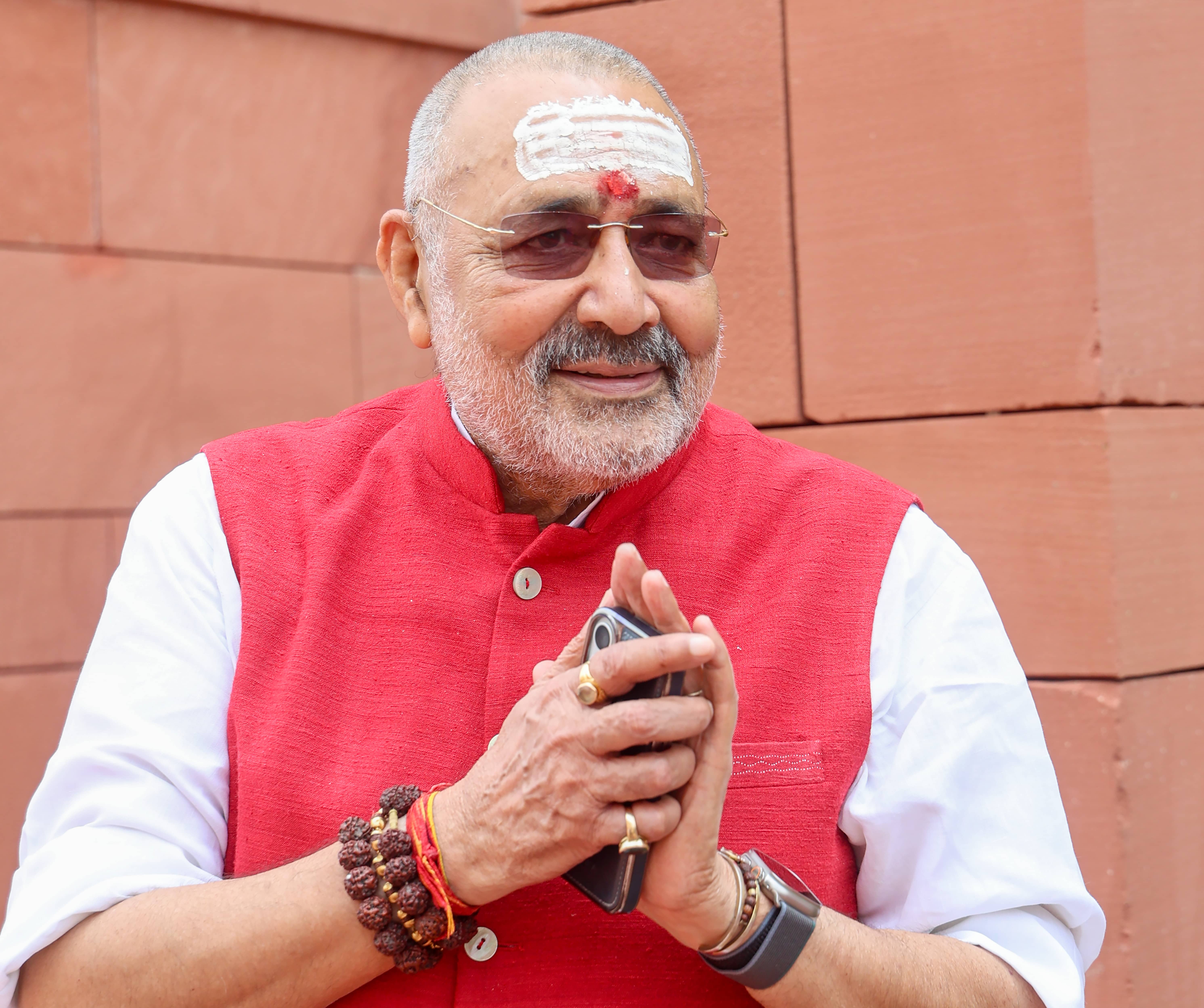
Union Minister Giriraj Singh on Sunday launched a strong critique against Congress leader Rahul Gandhi, accusing him of deliberately attempting to sow discord among social communities in his pursuit of political power. Singh’s pointed remarks came just a day after Gandhi demanded that Prime Minister Narendra Modi initiate the filing of a First Information Report (FIR) against individuals allegedly involved in the “shuddikaran,” or purification, of the Ramlila ground in Haldwani, Uttarakhand.
The Haldwani "Purification" Controversy
The controversy originated following a public meeting addressed by Congress National President Mallikarjun Kharge at the Ramlila ground. According to Rahul Gandhi, members of the Bharatiya Janata Party (BJP) and the Rashtriya Swayamsevak Sangh (RSS) subsequently conducted a purification ritual at the site. Gandhi vehemently asserted that this act of purification constituted a form of untouchability, which he underscored as a grave crime under the Indian Constitution. He further articulated that the very term “shuddhikaran” in this context was merely a euphemism for the discriminatory practice of untouchability, implying that the ground was deemed 'impure' after Kharge's presence.
Singh Dismisses Kharge as a "Mask"
In his response to these serious allegations, Giriraj Singh spoke to IANS, largely dismissing Mallikarjun Kharge's independent role in the matter. Singh stated, “The whole country knows that Khargeji is a mask.” He elaborated on this assertion, claiming that Kharge merely reiterates whatever Rahul Gandhi dictates, suggesting that the Congress President “cannot speak beyond that.” Singh characterized Gandhi’s recent public statements, including those concerning the Haldwani incident, as a calculated effort to generate discord and infighting within Indian society. He suggested that Gandhi consistently seeks to create divisions, whether by invoking student issues or other social causes, to further his political agenda.
Caste Discrimination Claims at Tea Stalls Spark Further Debate
The political exchange between the two prominent figures intensified as Rahul Gandhi also raised allegations concerning caste discrimination observed at tea stalls across the country. On Saturday, the Leader of Opposition claimed that such discriminatory practices are overtly visible in the types of cups used for different social groups. Gandhi specifically alleged that tea stalls commonly employ two distinct types of vessels: a reusable glass cup, which is washed after use, and a disposable paper or plastic cup, intended for single use.
Gandhi's Allegations of Segregated Cups
According to Gandhi’s detailed allegations, the paper or plastic cups are specifically designated for individuals belonging to Dalit communities, while the more durable glass cups are reserved for others. He presented this practice as tangible evidence of systemic, caste-based segregation that persists in public spaces, arguing that it reflects a deeply entrenched social hierarchy and discriminatory attitudes. Gandhi’s claims aimed to highlight what he perceives as ongoing constitutional violations and social stigma faced by marginalized communities in their daily lives.
Singh Counters with Accusations of Congress Hypocrisy
Giriraj Singh, however, vehemently countered these claims, suggesting that the very behavior exhibited by Rahul Gandhi and other senior Congress leaders contradicts their public stance against untouchability. Singh remarked, “I think this is what is going on in Rahul Gandhi's mind these days,” implying that Gandhi’s accusations were a projection of his own party's practices. To support his argument, Singh cited an incident that he claimed was widely visible on social media. In this alleged instance, Mallikarjun Kharge was seen offering water to a group that included both Rahul Gandhi and Sonia Gandhi at an event.
Singh specifically noted that during this gathering, despite Kharge offering water, both Rahul Gandhi and Sonia Gandhi allegedly did not drink the water he provided. Based on this observation, Singh asserted, “So, they themselves are propagating untouchability.” He argued that these actions by the Congress leadership demonstrate a personal adherence to the very practices they publicly condemn, thereby exposing what he termed as hypocrisy in their political rhetoric on social justice and equality.
A Nation's Stance on Untouchability and Political Motives
Beyond his specific rebuttals, Giriraj Singh further emphasized his position on the broader societal attitude toward caste discrimination in India. He firmly stated that the entire country stands united against the practice of untouchability, suggesting that it is not a widespread or accepted norm. To reinforce this view and challenge Gandhi’s narrative, Singh referenced visual evidence from another tea shop where Rahul Gandhi himself was reportedly seen drinking tea from a glass cup.
Contrasting Actions and Rhetoric
The Union Minister pointed out that while Gandhi used a glass cup in this instance, others in the vicinity were served differently. Singh implied that this observation revealed a disconnect between Gandhi’s political rhetoric, which highlights segregation, and his personal conduct or the actual reality of social interactions. Singh maintained that Gandhi’s narrative is primarily driven by political motives, aimed at creating divisions for electoral gain, rather than a genuine concern for fostering social harmony and eradicating discrimination. The minister’s statements underscore a sharp divergence in how both leaders interpret recent events in Haldwani and the prevalence of caste-based practices in India. While Gandhi frames the purification event and tea stall disparities as evidence of ongoing constitutional violations and social stigma, Singh portrays these allegations as manufactured attempts to divide communities for political advantage, framing them as a cynical strategy to gain power.