


Geopolitical Friction Ignites Oil Prices
Global energy markets witnessed significant upheaval this week as oil prices surged approximately 12 percent, a sharp increase that sent ripples across financial assets. This notable climb in crude benchmarks coincided directly with escalating clashes and heightened geopolitical friction between the United States and Iran, according to market reports from Reuters tracking the period.
The specific catalyst for this pronounced price increase was the intensification of tensions in US-Iran relations, particularly concerns surrounding potential disruptions to oil supply routes in the Middle East. As geopolitical instability mounted, the cost of crude oil responded with a substantial upward movement, challenging established trading patterns and signaling a renewed focus on supply-side risks. This 12 percent jump represents a material shift in energy costs, impacting everything from industrial production to consumer prices, and subsequently influencing broader economic forecasts and market sentiment.
Gold's Retreat Amid Shifting Market Dynamics
In stark contrast to the robust performance of oil, gold prices experienced their largest weekly drop in six weeks, a significant downturn for the precious metal. Reuters reported this decline as spot gold slipped below the critical $4,000 psychological threshold, hovering near $3,993 during the reporting period. This movement underscored a pivotal shift in how market participants are valuing gold in the face of evolving economic indicators and geopolitical developments.
Historically, gold has often served as a traditional safe-haven asset, with investors typically flocking to precious metals during periods of geopolitical chaos or economic uncertainty. However, analysts noted that the current surge in energy prices is fundamentally altering this traditional dynamic. The introduction of new variables, particularly heightened inflation expectations driven by rising energy costs, is compelling investors to re-evaluate gold's role and its appeal in their portfolios, leading to its recent underperformance.
Inflationary Pressures Reshape Rate Hike Bets
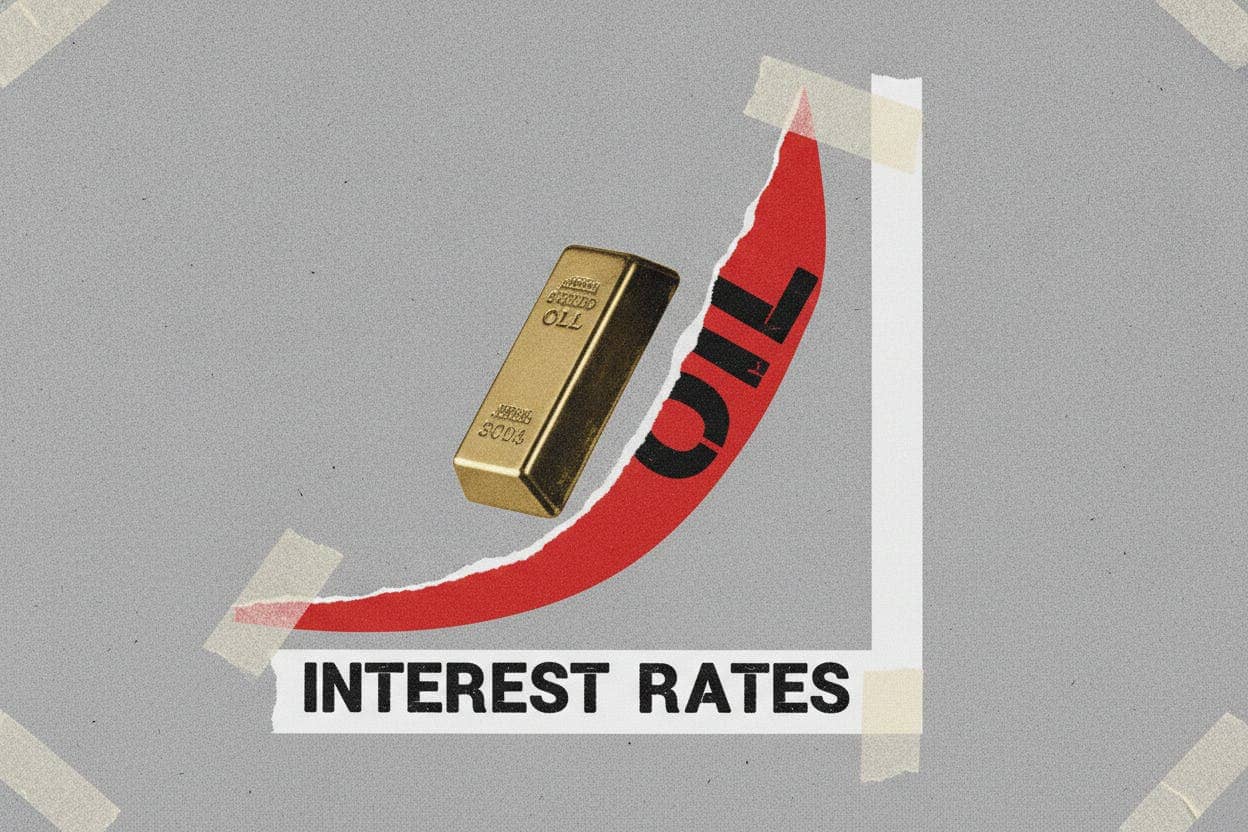
Elevated oil prices possess a direct and pervasive mechanism for seeping into everyday consumer costs over time, affecting everything from transportation to manufacturing and services. This phenomenon invariably lifts near-term inflation expectations among a broad spectrum of market participants, from individual consumers to institutional investors. When the market anticipates higher inflation driven by persistent energy price increases, a critical question emerges regarding the Federal Reserve's monetary policy stance: will policymakers need to maintain interest rates at elevated levels for a longer duration than previously projected, or even implement further hikes to curb price pressures?
Gold, unlike many other financial assets such as bonds or savings accounts, does not yield interest payments. This characteristic becomes a significant disadvantage when interest rates, particularly Treasury yields, begin to climb. In such an environment, holding non-yielding bullion becomes comparatively less attractive, as cash and fixed-income assets offer more rewarding, interest-bearing returns. This dynamic increasingly positions gold as an asset highly sensitive to changes in interest rates, rather than solely functioning as an impermeable crisis hedge.
Market data from CME Group's FedWatch tool provides a clear indication of this evolving sentiment, showing that traders are now pricing in a substantial 73 percent chance of a Federal Reserve rate hike occurring in December. This elevated probability reflects a growing concern among investors regarding the potential for inflation to either stall at uncomfortably high levels or persist despite the significant monetary tightening efforts already undertaken by policymakers. The market is signaling its belief that the Fed may be compelled to act further to curb price pressures and achieve its inflation target.
Bond Market Reacts to Energy-Driven Inflation
The ripple effect of increasing oil prices extends significantly into the broader bond market, exerting particular pressure on short-term yields. These yields are most directly tied to Federal Reserve policy decisions and immediate market expectations regarding interest rates. Should energy-led inflation concerns intensify and push up these short-term yields significantly faster than actual inflation expectations rise, a crucial metric known as "real yields"—which represent the return after adjusting for inflation—will firm. This firming of real yields makes bonds more appealing to investors seeking inflation-adjusted returns, further drawing capital away from non-yielding assets like gold.
Federal Reserve officials have consistently maintained a hawkish stance, keeping the door open to another interest rate hike if incoming economic data suggests that inflation remains stubbornly high or shows signs of re-accelerating in the coming months. This resolute position reinforces the prevailing view among traders and analysts that monetary policy must remain restrictive until price stability is firmly and demonstrably reestablished across all sectors of the economy. The Fed's commitment to its inflation target is a primary driver of bond market behavior in this environment, influencing yield curves and investor decisions.
Investor Preference Shifts to Yield-Bearing Assets
The market is demonstrably viewing gold through a different, more critical lens than before the recent events involving energy markets and geopolitical conflict. The traditional $4,000 psychological line for spot gold, once considered a significant support or resistance level, appears to be less relevant now that oil prices have jumped a substantial 12 percent in a single week. This indicates a reprioritization of market concerns, with macroeconomic factors now overshadowing specific price thresholds for precious metals.
For financial markets generally, the sheer magnitude of an oil price jump matters significantly more than whether gold holds a specific numerical level such as four thousand dollars per ounce. Energy-led inflation scares tend to impact parts of the bond market most closely tied to Federal Reserve policy first and foremost, as these areas are highly sensitive to expectations of future interest rate adjustments and the potential for increased borrowing costs across the economy.
This discernible shift in market behavior suggests that investors are increasingly prioritizing yield-bearing assets over non-yielding ones when confronted with the potential for rising borrowing costs driven by energy sector volatility. The opportunity cost of holding gold rises whenever Treasury yields climb, making bonds and other fixed-income instruments a more compelling option for capital preservation and generating returns during periods of rising inflation expectations tied directly to oil prices. Investors are actively seeking assets that can offer a buffer against inflation through interest income.
Traders continue to meticulously monitor the intricate interplay between geopolitical events and incoming economic data. While the initial US-Iran clashes were the primary catalyst that pushed up energy costs, the subsequent and more profound effect on interest rate speculation has now emerged as the dominant theme influencing precious metal valuations in recent trading sessions. This complex interaction highlights the interconnectedness of global events and financial market responses, with inflation concerns taking center stage for gold's outlook.