

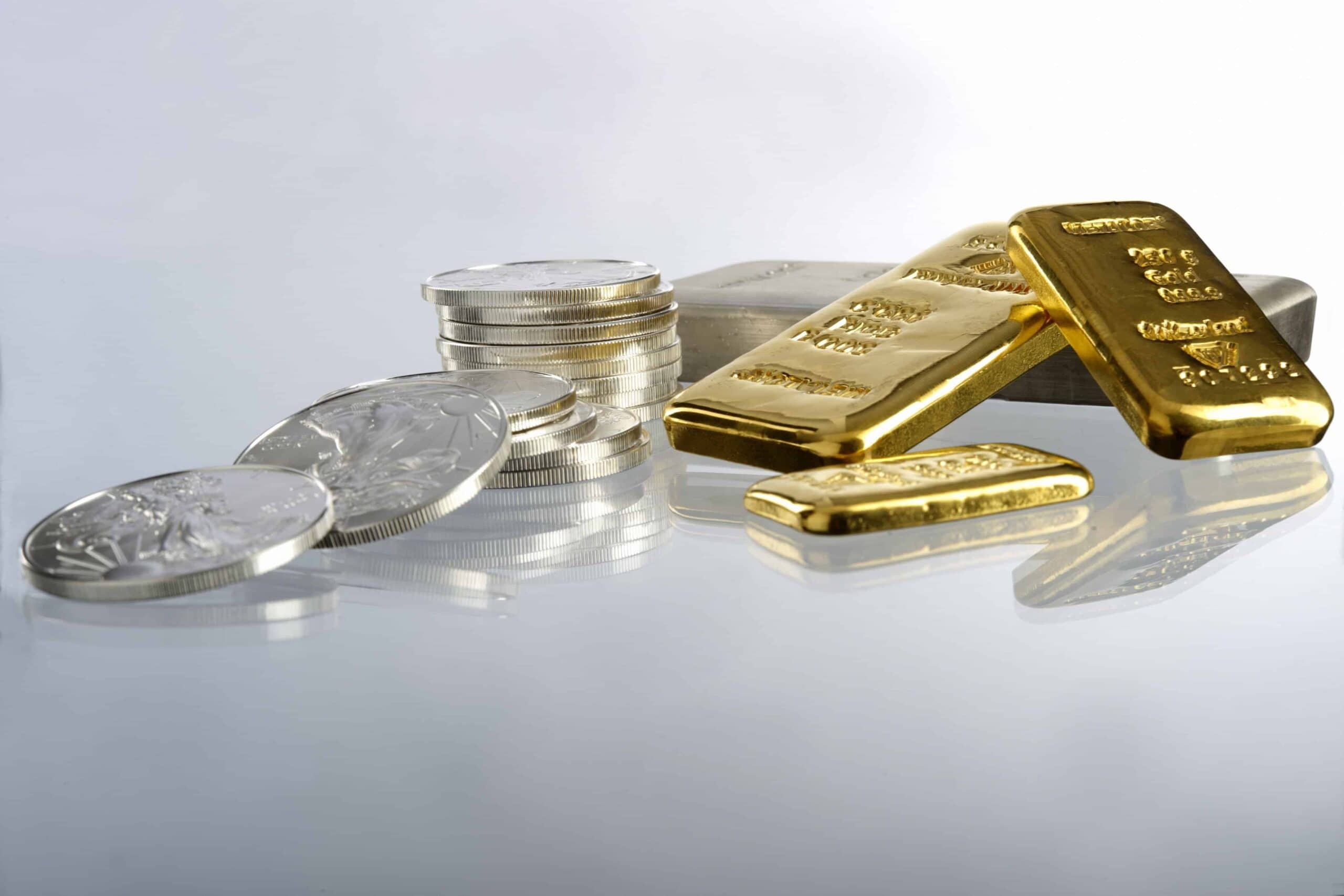


Market Movements Recorded for Precious Metals
Data published by The Rio Times indicates that the price of gold eased significantly on June 23. According to one source cited in the report, the yellow metal dropped 0.87 percent during trading sessions, settling at a level of approximately $4,068 per ounce.
In contrast to earlier reports suggesting silver steadied near specific levels without significant movement, detailed data from The Rio Times shows that silver also experienced a decline on June 23. Per the same source providing these figures, silver saw a drop of 1.89 percent in value, ending the day at $58.68 per ounce.
These specific price points for gold and silver represent deviations from longer-term trend lines observed by market analysts tracking safe-haven assets. The report notes that on June 23 specifically, gold slipped below long-term trend support levels previously established in the broader financial landscape.
The Impact of a Firm Dollar
Analysts and sources cited by The Rio Times attribute these market movements primarily to the strength of the US dollar. A firm currency is often viewed as having an inverse relationship with commodities priced in dollars, such as gold and silver. When the greenback strengthens against other major currencies, it becomes more expensive for foreign investors to purchase these assets, leading to downward pressure on prices.
The report highlights that expectations of interest rate hikes by central banks further exacerbated this trend. Higher interest rates generally increase the yield held in cash or dollar-denominated bonds, making non-yielding precious metals less attractive compared to fixed-income alternatives. This dynamic pushes investors toward assets with higher returns relative to their cost basis.
Specific exchange rate data provided alongside the commodity prices illustrates the breadth of this currency strength. The US dollar strengthened against a wide array of emerging market currencies on June 23. For instance, the USD/BRL pair rose by 0.19 percent to reach 5.12. Similarly, the USD/MXN index increased by 0.04 percent to settle at 17.48.
Other currency pairs showed mixed but generally firm performance for the dollar. The USD/COP pair saw a slight decline of 0.20 percent to close at 3,240. Conversely, the USD/ARS index remained relatively stable with a minimal change of -0.03 percent at 1,487. The USD/PEN currency rate moved up by 0.50 percent to reach 3.41.
Further evidence of dollar strength is found in other Latin American markets tracked in the report. The USD/UYU index climbed significantly by 1.37 percent to hit 40.22. In Paraguay, the USD/PYG rate jumped by 1.45 percent to stand at 6,055. Even smaller denominations reflected this trend; for example, the USD/DOP pair advanced by 0.29 percent to reach 58.65.
Energy markets also provided context to the broader economic environment on June 23. Brent crude oil prices climbed sharply by 4.28 percent to trade at $79.26 per barrel, while West Texas Intermediate (WTI) rose by 4.22 percent to reach $74.42. These energy price increases often correlate with inflationary pressures that influence central bank decisions on interest rates.
Commodity and Stock Market Context
The performance of precious metals occurred against a backdrop of varied activity in other commodity sectors. Corn prices saw a substantial increase of 6.68 percent to reach $467.25 per unit, while soybean futures declined by 0.15 percent to settle at $1,195.
Grain markets showed mixed results as well. Wheat futures advanced by 0.99 percent to trade at $638.25, whereas coffee prices fell sharply by 2.86 percent to close at $333.20 per unit. Sugar and orange juice also experienced declines of 0.40 percent and 3.01 percent respectively.
Equity markets in Brazil reflected the broader economic data with significant movement in various indices. The IBOV index surged by 2.97 percent to reach a level of 177,866 points. The IPSA index rose minimally by 0.28 percent to settle at 11,057.
Other Latin American markets also recorded gains or losses consistent with local economic conditions. The IPC MEX in Mexico climbed by 0.59 percent to hit 66,496 points. In Argentina, the MERVAL index jumped significantly by 2.43 percent to reach a value of $3,280,224.
Specific stock performances within Brazil highlighted sectoral rotation and investor sentiment. Petrobras (PETR4) shares rose by 1.12 percent to trade at BRL 39.65. Vale (VALE3), a major iron ore miner, gained 1.41 percent to reach $74.18.
Banking and financial services stocks also saw notable activity. Itau Unibanco (ITUB4) shares climbed by 4.02 percent to settle at BRL 44.30. Banco do Brasil (BBDC4) advanced strongly by 4.78 percent to reach $18.86.
Industrial and technology sectors showed diverse results. WEG S.A., a manufacturer of industrial equipment, rose by 1.68 percent to trade at BRL 46.51. However, some stocks faced headwinds; RAIZ4 declined sharply by 5.41 percent to settle at $0.35.
Market data also included movements in other commodities like lithium and copper. Lithium prices dropped by 0.69 percent to reach a level of $72.32 per unit, while copper saw gains of 0.99 percent to trade at $6.30 per pound.
These simultaneous fluctuations across global markets underscore the interconnected nature of financial systems where currency strength can ripple through energy prices, agricultural commodities, and equity valuations within hours.