

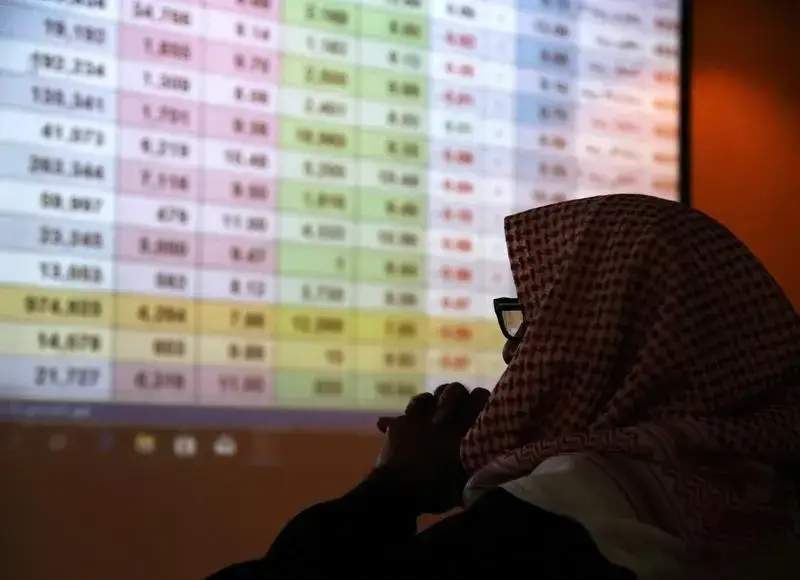

Market Declines Follow Diplomatic Rejection
Most Gulf equity markets closed in negative territory on Wednesday following President Donald Trump’s denial of any concessions to Iran regarding the easing of sanctions. The market downturn occurred as US officials announced new financial measures against Tehran, signaling an escalation rather than a de-escalation in diplomatic tensions.
Saudi Arabia’s benchmark index eased by 0.1 percent, while Qatar’s benchmark dropped 0.7 percent and Dubai’s main share index fell 0.5 percent. In Egypt, the blue-chip index slipped 0.8 percent, with Commercial International Bank losing 1.3 percent in trading activity.
The market reaction came shortly after Trump rejected media reports suggesting he was willing to offer sanctions relief to Iran. Writing on Truth Social, Trump stated, "This is untrue. I offered them nothing." The president also characterized Tehran’s recent response to US proposals as "totally unacceptable," accusing Iran of "playing games" after a 10-day delay in replying to a draft framework.
Despite the diplomatic stalemate, Qatari mediators continued to step up efforts to resolve the broader Middle East conflict. However, the immediate financial impact was driven by the certainty that no sanctions relief would be forthcoming in the near term.
Treasury Imposes New Financial Penalties
US Treasury Secretary Scott Bessent announced "Operation Economic Outcast," a new initiative targeting Tehran’s remaining revenue sources. Bessent described the sanctions as "the single greatest financial offensive ever" against Iran and warned that banks and businesses would share in Iran’s isolation if they refuse to cooperate with US demands.
The Treasury Department imposed specific sanctions on 60 entities, vessels, and individuals across the UAE, Hong Kong, China, Singapore, and Switzerland for facilitating Iranian trade. Bessent threatened penalties against any businesses continuing to do business with Iran, reinforcing the administration's hardline stance.
These actions contradict earlier reports from Axios and CNN, which cited unidentified US officials stating that Trump was willing to offer sanctions relief if Iran showed "concrete progress" on the nuclear issue. The Treasury’s announcement effectively closed the door on those reported possibilities, aligning with Trump’s public denial of any such offers.
Escalating Military Tensions and Oil Prices
The risk of military escalation has risen sharply amid the diplomatic impasse. The UAE intercepted two drones launched from Iran, while Kuwait reported drones entering its airspace. Additionally, a ship near Qatar caught fire following a reported drone strike.
Senator Lindsey Graham urged Trump to consider reviving "Project Freedom Plus," an expanded naval escort mission in the Strait of Hormuz, in response to the growing instability. The strategic importance of the waterway remains a central point of contention, with Washington demanding guarantees for free navigation through Hormuz and limits on Iranian military activity.
Oil markets reacted immediately to Trump’s comments and the subsequent Treasury announcements. Brent crude jumped around 3 percent after the president’s remarks, briefly hovering near $104 a barrel. The surge reflected investor concerns over potential disruptions to energy supplies in the region.
Diverging Demands on Nuclear and Security Issues
The diplomatic gap between Washington and Tehran remains wide. Iranian state media reported that Tehran rejected US demands as amounting to "surrender," insisting instead on sanctions relief, an end to the war, and guarantees against future attacks.
Iran reportedly demanded an end to the war, immediate lifting of US sanctions, the release of frozen assets, an end to the US naval blockade, and recognition of Iranian management of the Strait of Hormuz. In contrast, Washington’s key demands include the removal or transfer of highly enriched uranium, international inspections, restrictions on enrichment levels, and guarantees for free navigation through Hormuz.
Israeli Prime Minister Benjamin Netanyahu stated that the war could not truly end while enriched uranium remained inside Iran, underscoring the security concerns driving US policy. The conflicting requirements have left mediators with little ground to bridge the divide as military tensions continue to mount in the region.