

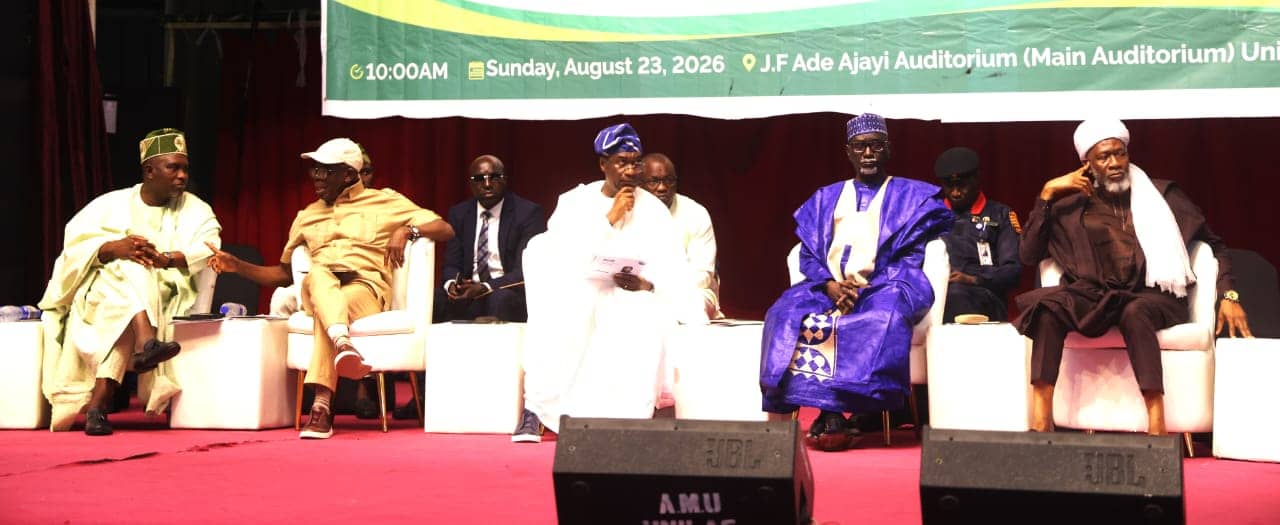

Advocating for a Cohesive National Framework
Prominent figures Hamzat, Oshiomhole, and Shekarau have collectively voiced a strong advocacy for the establishment and strengthening of a national identity within Nigeria. Their unified stance underscores a critical need to bring together the country’s inherently diverse population under a singular, overarching civic framework. This framework, as articulated by the three, is designed not to erase the distinct cultural backgrounds and traditions that define Nigeria's myriad communities, but rather to integrate them into a more cohesive national fabric.
Their observations highlight a fundamental reality: ethnic and religious identities are not superficial or transient; they are deeply entrenched and remain profoundly rooted in the country’s social and political life. According to their assessment, these identities constitute enduring structures that significantly influence how citizens interact with one another on a daily basis and, crucially, how they engage with the processes of governance and political participation. This deep embedding means these affiliations shape societal norms, community dynamics, and individual allegiances.
In confronting this intricate reality, Hamzat, Oshiomhole, and Shekarau have been careful to clarify the precise objective of their call for a stronger national identity. They explicitly state that the goal is not to eliminate or suppress these existing ethnic and religious affiliations. Instead, they contend that the paramount challenge lies in actively preventing these deeply held identities from being manipulated or evolving into instruments of division. This nuanced perspective advocates for the careful management of the coexistence of multiple identities, ensuring that while individual and group distinctions are acknowledged, they do not undermine the broader national unity.
Navigating Deep-Rooted Identities
The advocacy by Hamzat, Oshiomhole, and Shekarau acknowledges the profound influence of ethnic and religious identities on Nigeria's societal structure. These identities are not merely cultural markers but are fundamental elements that shape social interactions, community bonds, and even economic activities. Their observation that these identities are 'deeply rooted' suggests an understanding of their historical depth and pervasive impact across generations, influencing everything from family structures to communal decision-making processes.
This understanding forms the bedrock of their approach, which seeks to build a national identity that can accommodate and transcend these existing affiliations without negating them. The emphasis is on fostering a shared sense of belonging that complements, rather than competes with, sub-national identities. The challenge, as they see it, is to cultivate a civic space where diverse groups can find common ground and shared purpose, recognizing their national identity as a unifying umbrella.
The Role of Identity in Political Dynamics
The joint advocacy by Hamzat, Oshiomhole, and Shekarau brings into sharp focus a specific and pressing concern regarding the function of identity markers within the nation's political sphere. By noting that these identities are profoundly rooted in both social and political life, they are pointing to a structural issue where group affiliations frequently dictate not only political alliances but also the very direction of policy decisions. This dynamic can lead to a political landscape where loyalty to ethnic or religious groups might overshadow a broader commitment to national interests or merit-based governance.
Their statement carries the implicit warning that when ethnic or religious identities are weaponized or allowed to serve as instruments of division, the fundamental stability and unity of the nation are significantly compromised. Such divisions can manifest in political polarization, inter-communal strife, and a breakdown of trust necessary for effective governance. The challenge, therefore, is not defined by the mere presence of diversity itself—which is often celebrated as a national strength—but rather by the specific manner in which that diversity is mobilized and exploited for narrow political ends, often at the expense of national cohesion.
Safeguarding National Unity from Factionalism
The call for a strong national identity is presented as a crucial mechanism to actively mitigate the divisive potential inherent in ethnic and religious affiliations. By proactively promoting a unified civic identity, the advocates propose a framework wherein citizens can comfortably maintain their distinct cultural and religious backgrounds while simultaneously prioritizing a shared national interest. This approach seeks to create a dual loyalty that strengthens the nation without demanding the abandonment of heritage.
This strategy makes a clear distinction between the inherent existence of diverse identities—which are considered natural and valuable—and the political exploitation of those identities for factional gain. The core focus remains firmly on ensuring that these deep-rooted social factors do not become catalysts that fracture the political landscape, undermine democratic institutions, or otherwise hinder the essential goal of national cohesion. The objective is to cultivate a political culture where national identity serves as a common denominator, fostering cooperation and shared purpose across diverse groups.