

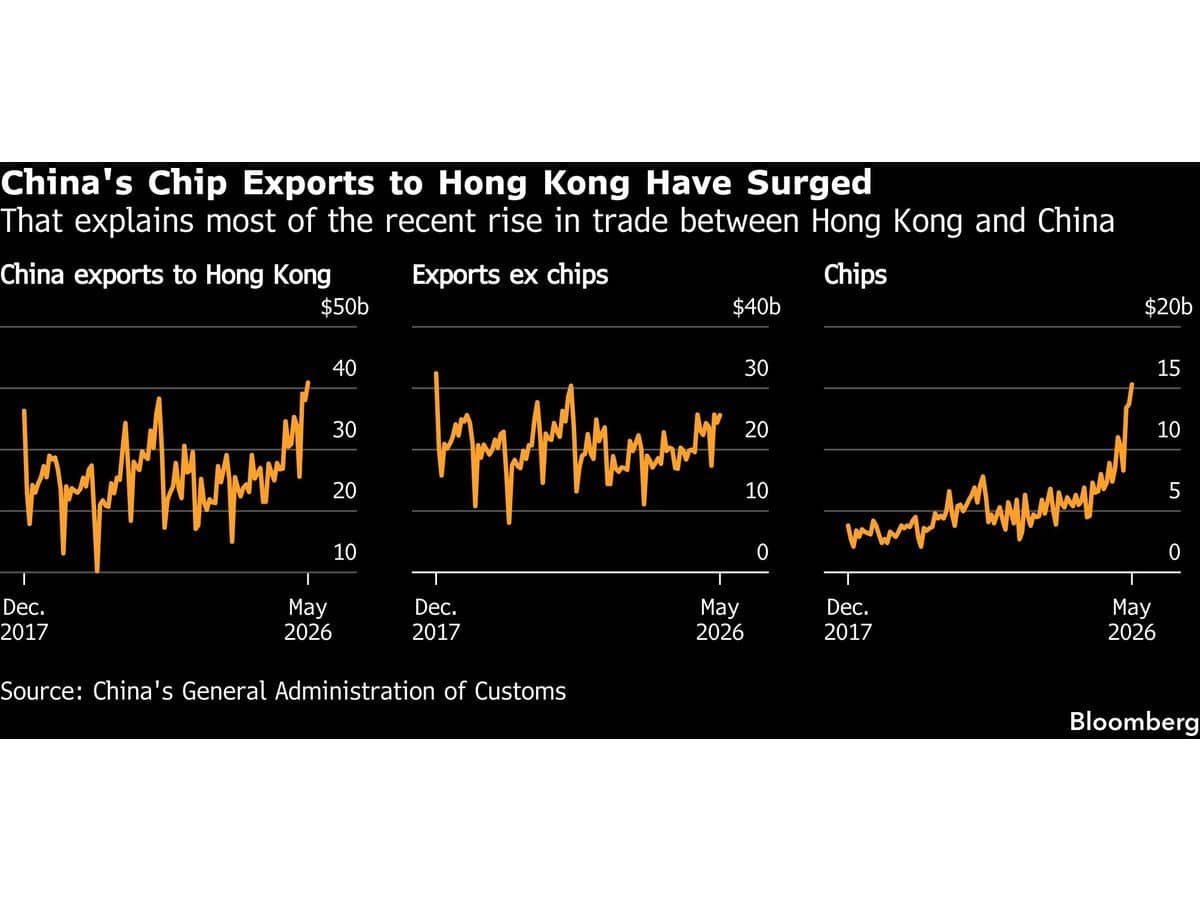

Hong Kong Rises as Crucial Node in Asia's $2 Trillion AI Trade
The Financial Post reports that Hong Kong has become a significant entry point for China, particularly regarding high-tech products. This development is driven by a surge in the trade of artificial intelligence semiconductors moving through the region.
According to sources citing data from the Financial Post, this specific role seals the territory's status as a gateway within a broader economic framework. The article highlights that Hong Kong positions itself not just as a local hub but as an integral component of a massive international commerce network.
The scope of this trade activity is quantified by experts referencing a global boom in artificial intelligence technology. This technological expansion has fueled the creation and growth of what sources describe as a $2 trillion Asian trade network. Within this vast financial ecosystem, Hong Kong functions as one specific node connecting various markets across Asia.
The surge in commerce specifically targets AI chips. These components are essential for modern computing infrastructure and machine learning applications. The Financial Post notes that the volume of these goods moving through Hong Kong has increased significantly compared to previous years. This increase correlates directly with global demand for artificial intelligence capabilities found in consumer electronics, data centers, and industrial machinery.
Trade routes involving high-tech products have shifted focus toward this location. Sources indicate that logistics companies are adapting their supply chains to prioritize flow through Hong Kong ports and air cargo terminals. The efficiency of these operations allows manufacturers to bypass certain bottlenecks in mainland production lines by utilizing the territory's established infrastructure.
The Financial Post emphasizes that this role is not accidental but a result of strategic positioning within global trade dynamics. As artificial intelligence technologies mature, the need for specialized hardware grows exponentially. Hong Kong has capitalized on its status as an international financial center to facilitate these high-value transactions without imposing additional tariffs or regulatory hurdles often found in other jurisdictions.
Industry analysts cited by the publication suggest that this trend reflects a larger pattern of regional integration. Countries and territories within Asia are increasingly linking their economies through specialized trade corridors focused on technology transfer. Hong Kong serves as one such corridor, specifically for semiconductors related to AI applications.
The Mechanics of High-Tech Commerce
According to the Financial Post article, the mechanics behind this surge involve complex supply chain management. Goods are sourced globally and consolidated before moving toward end markets in China or other Asian nations. The territory's free port status allows for rapid transshipment without immediate duties.
The financial implications of this trade volume are substantial. Sources estimate that a significant portion of the $2 trillion network relies on these specific high-tech components. Without the flow of AI semiconductors through key hubs like Hong Kong, certain segments of the global technology supply chain could face delays or disruptions.
Manufacturers report increased orders for chips designed specifically for machine learning processors and neural networks. These products are often manufactured in one region and shipped immediately to another via routes passing through Hong Kong. The speed of this movement is critical for maintaining production schedules across the Pacific Rim.
The Financial Post notes that investment flows accompany these physical goods. Capital follows technology, with venture funds and corporate investors directing resources toward firms capable of producing or distributing AI hardware efficiently. This capital injection further solidifies Hong Kong's position as a central location in this emerging market sector.
Implications for Regional Economic Networks
The emergence of Hong Kong as a key entry point has broader implications for the stability and growth of Asian trade networks. Sources indicate that other regions are watching how supply chains adapt to these new demands driven by artificial intelligence innovation.
Economists referenced in related coverage observe that this development could set precedents for future trade agreements or regulatory frameworks involving technology exports. If one territory successfully manages the flow of high-tech goods without friction, it may influence policies elsewhere in the region seeking similar advantages.
The Financial Post concludes its analysis by noting that while challenges remain regarding geopolitical tensions and potential restrictions on chip sales to certain entities, the immediate trend points toward continued growth. The $2 trillion network is expected to expand as more industries adopt artificial intelligence solutions requiring specialized hardware.
Competitors in other parts of Asia have expressed interest in replicating this success model. However, sources suggest that Hong Kong's unique combination of legal frameworks and logistical capabilities makes it difficult for others to match its current throughput capacity immediately.