

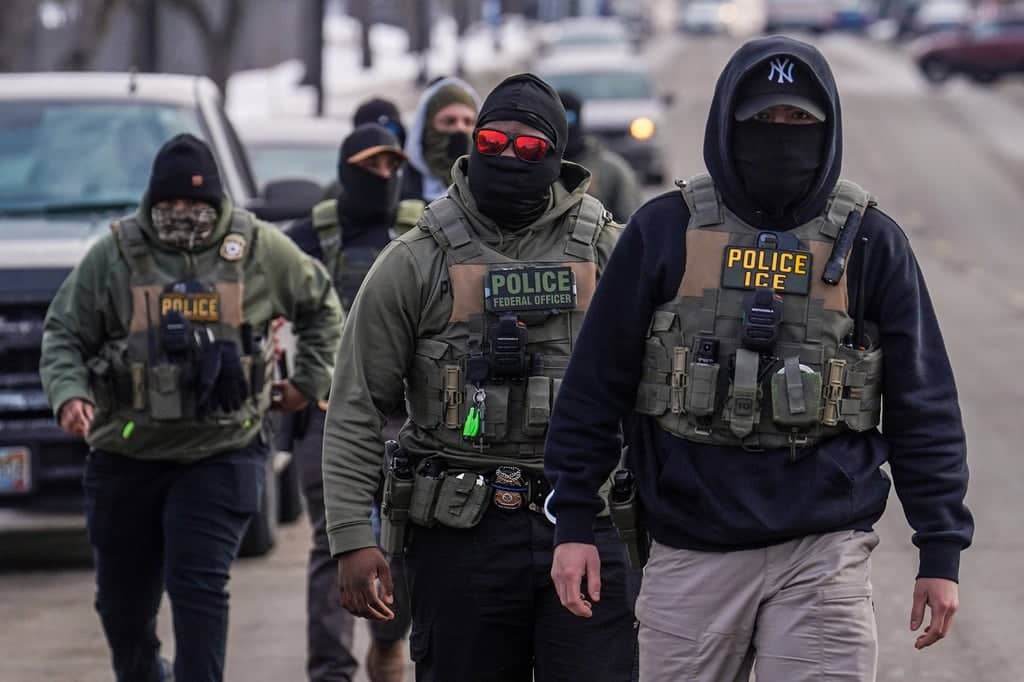

ICE Announces Purchase of Conductive Gloves for Officers
Immigration and Customs Enforcement (ICE) has announced a plan to spend between $10 million and $20 million to equip its officers with gloves capable of delivering electric shocks. The devices, identified as G.L.O.V.E. (Galvanic Laced Operational Vestment), are described in official notices as "conductive distraction and de-escalation devices." According to a notice published Monday and first revealed by The Associated Press, the purchase is intended to outfit officers and agents with this specific technology.
The G.L.O.V.E. function operates as standard patrol gloves until an officer presses a button to activate its electrical mode. Once activated, the gloves must be applied directly to someone’s skin to produce a voltage that causes pain. The stated purpose of this mechanism is to gain compliance from individuals who are resisting arrest or orders. Officials supporting the initiative note that, unlike traditional Tasers, these gloves do not leave burn or contact marks on the skin.
The scale of the proposed financial commitment suggests that ICE intends to provide the device to a significant portion, if not all, of its officers. This widespread distribution marks a notable shift in the agency's equipment portfolio, moving toward wearable technology designed for immediate physical compliance.
Democratic Officials and Advocates Condemn the Technology
The announcement has triggered immediate backlash from Democratic elected officials and civil rights advocates. Critics have characterized the plan as unnecessary and cruel, raising alarms about the potential for misuse of such powerful tools by federal agents. The criticism emerged shortly after the notice was published, with opponents arguing that the technology poses significant risks to civil liberties.
New York Attorney General Letitia James explicitly stated she was "outraged" by the plan. Her reaction reflects a broader sentiment among legal and advocacy groups who view the introduction of pain-inducing wearable devices as an escalation in force options that lacks sufficient oversight or justification. Advocates have pointed to historical instances where similar technologies were deployed without adequate safeguards, leading to concerns about arbitrary application.
The opposition emphasizes that the gloves represent a departure from established de-escalation protocols. By integrating electric shock capability directly into daily patrol gear, critics argue that ICE is normalizing the use of pain compliance in situations that may not warrant such extreme measures. The financial magnitude of the purchase has further fueled skepticism regarding the necessity of the equipment.
Context of Force and Local Law Enforcement Precedents
The proposal comes at a time when ICE officers have faced increased scrutiny regarding their use of force. Recent incidents have included extractions from vehicles and confrontations during protests related to immigration enforcement actions. These events have drawn public attention to the methods used by federal agents in the field, particularly in high-tension scenarios.
While the G.L.O.V.E. devices are new to federal ICE operations, similar gloves have been utilized by some local law enforcement agencies. However, reports indicate that these local deployments have occurred primarily within jail settings rather than on public streets. This distinction is central to the debate over the appropriateness of the technology for ICE officers, who operate in diverse environments ranging from detention centers to community spaces.
Local departments that have adopted similar technology often cite specific security needs within confined facilities. In contrast, ICE officers face dynamic and unpredictable situations during immigration enforcement operations. Critics argue that applying jail-based restraint technologies to street-level policing increases the likelihood of abuse and escalates conflicts unnecessarily. The lack of precedent for such widespread use in federal immigration enforcement has heightened concerns among watchdog groups.
Operational Mechanics and Safety Claims
Proponents of the G.L.O.V.E. system highlight its design as a less-lethal alternative to other force multipliers. The devices are engineered to deliver pain compliance through direct skin contact, requiring an officer to physically touch the subject. This requirement is intended to prevent accidental activation or use from a distance, which proponents argue reduces the risk of indiscriminate application.
Despite these technical specifications, opponents remain unconvinced by the safety arguments. They contend that the ability to inflict pain through wearable gloves creates a temptation for officers to use force in situations where verbal commands or other de-escalation techniques would suffice. The potential for misuse is compounded by the fact that the devices are integrated into standard uniforms, making them constantly accessible during any interaction.
The ongoing protests against immigration enforcement actions have further complicated the operational environment for ICE officers. As tensions rise in communities affected by deportation raids and policy changes, the introduction of new force options has been viewed by many as a provocative move. Civil rights organizations have called for a halt to the procurement process until independent reviews can assess the potential impact on public safety and individual rights.
Future Implications for Federal Policing
If the purchase proceeds, the widespread adoption of G.L.O.V.E. devices could set a precedent for other federal law enforcement agencies. The decision by ICE to invest millions in this technology signals a strategic shift toward wearable force options that blur the line between restraint and punishment.
Legal challenges are expected as advocates seek to block the deployment of the gloves. Arguments against the technology will likely focus on constitutional standards regarding excessive force and the right to be free from cruel and unusual punishment. The outcome of these legal and political battles may determine whether similar technologies become standard issue across federal agencies in the coming years.
For now, the controversy remains focused on the immediate implications of the ICE proposal. As Democratic officials continue to voice their opposition and civil rights groups mobilize against the plan, the debate highlights ongoing tensions between law enforcement operational needs and the protection of individual liberties in the context of immigration enforcement.