


Washington's Perceived Strategy in Cuba
Washington's current strategy regarding Cuba is increasingly viewed by a range of international observers and policy analysts as a repetition of approaches previously utilized in its engagements with Iran and Venezuela. This perception suggests a consistent methodology in addressing governments deemed adversarial or non-compliant with U.S. foreign policy objectives.
This so-called 'playbook' implies a standardized set of tools and tactics employed to exert pressure on targeted nations. While specific applications may vary, the overarching framework often involves a combination of economic sanctions, diplomatic isolation, and rhetorical support for internal opposition movements. The aim, as often articulated by proponents of such strategies, is to compel political change, foster democratic transitions, or alter specific policy directions within the targeted state.
Elements of the Consistent Approach
Analysts frequently identify several key components within this perceived 'playbook.' Economic sanctions, for instance, are a prominent feature, often designed to restrict access to international financial systems, impede trade, and limit foreign investment. The intent behind such measures is typically to generate economic hardship, thereby increasing internal pressure on the government to concede to external demands or to encourage popular discontent.
Diplomatic isolation is another common tactic, involving efforts to reduce the target nation's standing in international forums, limit its diplomatic engagements, and discourage alliances or partnerships with other countries. This can manifest through reduced embassy presence, travel restrictions for officials, and efforts to build international coalitions that condemn the target government's actions.
Furthermore, consistent messaging and public statements often accompany these measures, frequently highlighting human rights concerns, democratic deficits, or alleged destabilizing actions by the targeted regime. This rhetoric serves to frame the policy within a broader context of promoting universal values and international stability, while also aiming to galvanize internal opposition.
Historical Context of US-Cuba Relations
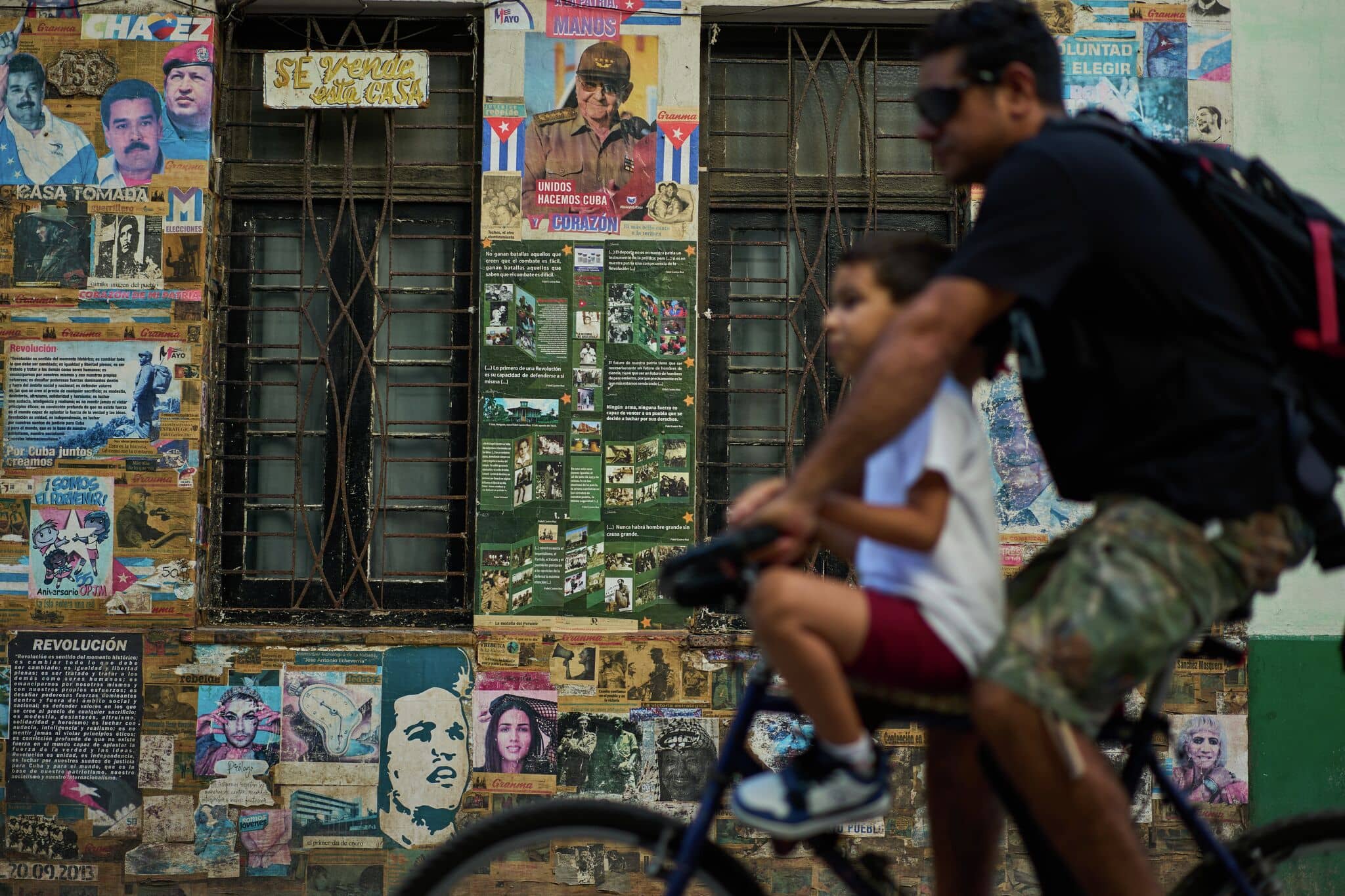
The relationship between the United States and Cuba has been characterized by a complex history spanning decades, marked by periods of intense confrontation and, at times, limited engagement. Following the 1959 Cuban Revolution, U.S. policy shifted towards isolating the island nation, culminating in the imposition of a comprehensive economic embargo in the early 1960s. This embargo, codified into law and reinforced over time, has remained a cornerstone of U.S. policy towards Cuba for over sixty years.
Despite periodic shifts in diplomatic posture, including a brief period of rapprochement in the mid-2010s, the fundamental approach of applying economic and diplomatic pressure has largely persisted. This long-standing pattern provides a historical lens through which current strategies are often viewed, reinforcing the perception of a consistent, albeit evolving, 'playbook' in Washington's foreign policy toolkit.
Parallels with Iran and Venezuela
The observation that Washington's strategy in Cuba echoes its approaches in Iran and Venezuela stems from the perceived commonality in the tools and objectives. In both Iran and Venezuela, U.S. policy has similarly relied heavily on extensive economic sanctions, aiming to curtail their respective oil industries and access to global finance. Diplomatic pressure, including efforts to delegitimize leadership and support opposition figures, has also been a consistent feature.
Observers note that in all three cases, the U.S. has articulated goals related to human rights, democratic governance, and regional stability. The application of similar pressure mechanisms across these distinct geopolitical contexts leads many to conclude that a standardized strategic framework is being applied, adapted to local circumstances but fundamentally consistent in its underlying principles and chosen instruments.
Questioning Military Superiority's Efficacy
A significant aspect of the critique surrounding this 'playbook' involves questioning the effectiveness of military superiority in resolving complex geopolitical challenges. Despite the United States possessing unparalleled military capabilities, this power is highlighted as not assuring a rapid resolution to the political impasses in Cuba, Iran, or Venezuela. The challenges in these nations are primarily political, economic, and social, rather than susceptible to purely military solutions.
Analysts often point out that the application of military force or the threat thereof, while a component of a nation's overall power, does not directly address the root causes of internal political stability or economic distress. In situations where the primary tools are economic sanctions and diplomatic pressure, military might, while present, does not inherently accelerate or guarantee the desired political outcomes. The protracted nature of these standoffs, despite significant U.S. power, underscores this perspective.
Democracy and External Pressure Limitations
Furthermore, military superiority is highlighted as not being a guarantee for establishing democracy. The experience in various regions suggests that imposing democratic systems from outside, even by powerful nations, is an inherently complex and often unsuccessful endeavor. The internal dynamics, historical contexts, and societal structures of a nation play a far more critical role in the development and sustainability of democratic institutions than external military might.
Critics of the 'playbook' argue that while external pressure can certainly destabilize regimes or create conditions for change, it does not automatically translate into the emergence of stable, democratic governance. In some instances, such pressure can inadvertently strengthen existing regimes by fostering a sense of national unity against external interference, or by creating humanitarian crises that further entrench authoritarian control. The long-term goal of fostering democracy, therefore, is often seen as requiring more nuanced and domestically driven processes than those facilitated by external military or economic coercion alone.