

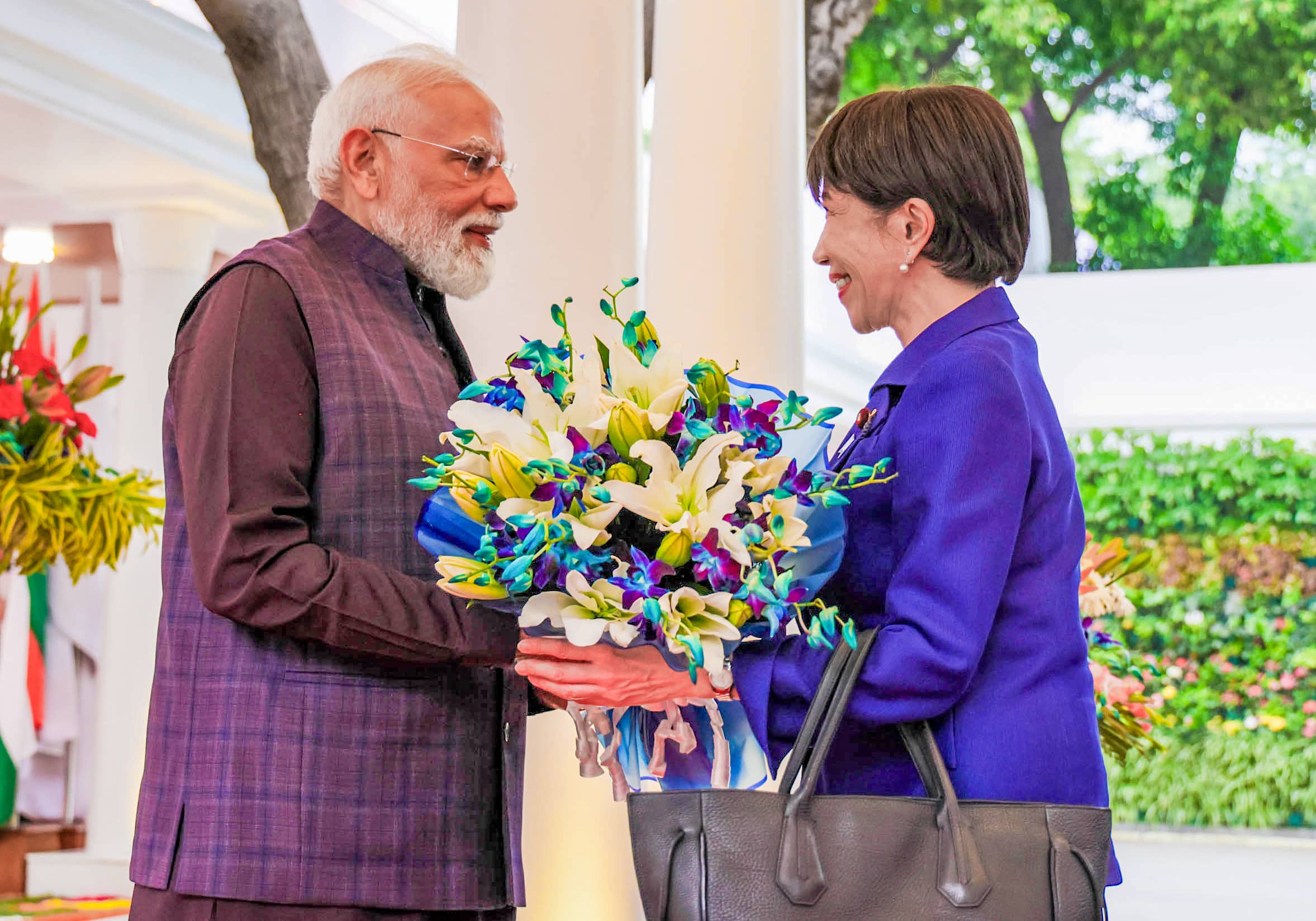

Summit Outcomes Point to Shift in Bilateral Dynamics
The 16th India-Japan Annual Summit, recently concluded in New Delhi, has been identified as a pivotal moment marking a new phase of stronger strategic partnership and expanded collaboration between the two prominent Asian nations. According to an insightful report published by former Indian diplomat Sanjay Kumar Verma in 'India Narrative', the significance of the event lay not in any singular agreement, but rather in its reaffirmation of the evolving strategic direction of bilateral ties.
Verma articulated that the summit reflected a steady and profound transformation of the relationship, moving beyond its traditional confines. Historically, cooperation between India and Japan has predominantly focused on areas such as development assistance, large-scale infrastructure projects, and trade facilitation. However, the report suggests that the recent diplomatic engagement has ascended to a more profound concept, which Verma describes as 'Strategic Trust.' This designation is critical, implying that New Delhi and Tokyo are no longer merely discussing cooperation in broad, general terms. Instead, they are increasingly committing to mutual reliance in domains that are fundamental to their respective national resilience, technological strength, and economic security.
Verma emphasized that while the success of diplomatic summits is often superficially judged by the immediate agreements they produce, their deeper and more enduring significance resides in their capacity to fundamentally alter how two countries perceive each other. He contended that Prime Minister Sanae Takaichi’s recent visit to India, and the outcome of her summit with Prime Minister Narendra Modi, are likely to be remembered for achieving precisely this qualitative shift. The Joint Statement issued following the summit serves as more than a mere record of fresh initiatives; it strongly indicates that both nations are embarking on a new, more integrated phase of engagement, characterized by deeper strategic alignment.
Defining Mutual Reliance in Critical Sectors
The concept of 'Strategic Trust' underscores a departure from transactional partnerships towards a more integrated and interdependent relationship. This mutual reliance extends into areas previously considered sovereign or less overtly collaborative. For India, enhancing national resilience might involve joint efforts in disaster management, supply chain diversification, or energy security. For Japan, a similar emphasis on resilience, coupled with technological strength, could see collaborative research and development in emerging technologies, cybersecurity, and advanced manufacturing. Economic security, a shared concern, points towards coordinated strategies to protect critical economic infrastructure, foster resilient global supply chains, and counter economic coercion, thereby solidifying the foundation of their bilateral economic relationship.
Modi's Consistent Attention Shapes Enduring Partnership
The report by Sanjay Kumar Verma unequivocally highlights the central and sustained role played by Prime Minister Narendra Modi in cultivating this evolving partnership. Verma detailed that the India-Japan relationship has benefited from more than a decade of consistent and dedicated political attention from the Indian Prime Minister. His leadership, characterized by a clear vision for bilateral ties, has become indispensable to the partnership’s continuity, momentum, and strategic direction, ensuring that high-level engagement translates into tangible progress and deeper understanding.
Regarding the concept of 'Strategic Trust,' Verma asserted, "That is more than a neat phrase. It reflects a real shift in the logic of the relationship." This shift, he explained, is tangibly evident in the progressively deepening cooperation across defense and maritime security sectors, which continue to serve as fundamental pillars of the bilateral partnership. Cooperation in these critical sectors has been steadily advancing through a robust framework of joint exercises, strategic dialogues, and concerted efforts to enhance interoperability between their respective forces. This sustained engagement signifies a profound level of confidence and shared strategic objectives.
Deepening Security Engagements and Economic Safeguards
The report further indicates that the burgeoning mutual reliance between India and Japan now encompasses a broader spectrum of critical domains. Beyond traditional security cooperation, this includes a robust focus on technological strength and comprehensive economic security. This expansion marks a significant departure from previous bilateral frameworks, where collaborative efforts were predominantly concentrated on areas like development assistance, financial aid for infrastructure projects, and general trade agreements. The current emphasis on technology and economic security reflects a shared understanding of contemporary geopolitical challenges and the imperative to build resilient national capabilities through collaborative means.
The ongoing cooperation in defense, particularly in maritime security, serves as a practical manifestation of this elevated trust. Joint naval exercises, for instance, not only enhance the operational capabilities of both navies but also foster a shared understanding of regional security challenges and promote a rules-based international order. These activities are complemented by regular high-level dialogues that address strategic concerns and coordinate responses to emerging threats, thereby strengthening the collective security architecture in the Indo-Pacific region.
A New Era of Regional Strategic Alignment
By characterizing the current period as the era of 'Strategic Trust,' Verma posits that the India-Japan partnership is undergoing a fundamental structural change in how their respective governments approach and address shared regional and global challenges. The report, while not delving into specific details regarding new treaties or financial commitments, deliberately focuses on the profound qualitative shift in their diplomatic posture and the underlying philosophy of their engagement. This shift suggests a move towards a more integrated strategic calculus, where the interests of one nation are increasingly seen as intertwined with those of the other.
The analysis underscores the sustained momentum generated by consistent high-level political engagement as a crucial driving factor for this transformative transition. The 16th Annual Summit, therefore, functioned as a powerful reaffirmation of this established trajectory, with both India and Japan unequivocally signaling their unwavering intent to deepen ties in areas deemed critical to their core national interests. This includes not only security and technology but also broader regional stability and economic resilience.
Interdependence as a Strategic Imperative
Verma’s comprehensive assessment positions the India-Japan relationship as one that is progressively defined by strategic interdependence rather than merely by the provision or reception of developmental aid. This evolution signifies a partnership built on shared vulnerabilities and common aspirations for a stable and prosperous future. The sustained and intensifying focus on defense and maritime security serves as the most tangible and practical application of this newfound trust. Joint exercises, combined with continuous dialogues, are not just symbolic gestures; they are the primary, concrete mechanisms through which interoperability between the two militaries is enhanced, mutual understanding is fostered, and a cohesive strategic front is presented. This deepens their ability to respond collectively to regional security dynamics and uphold a free and open Indo-Pacific.