

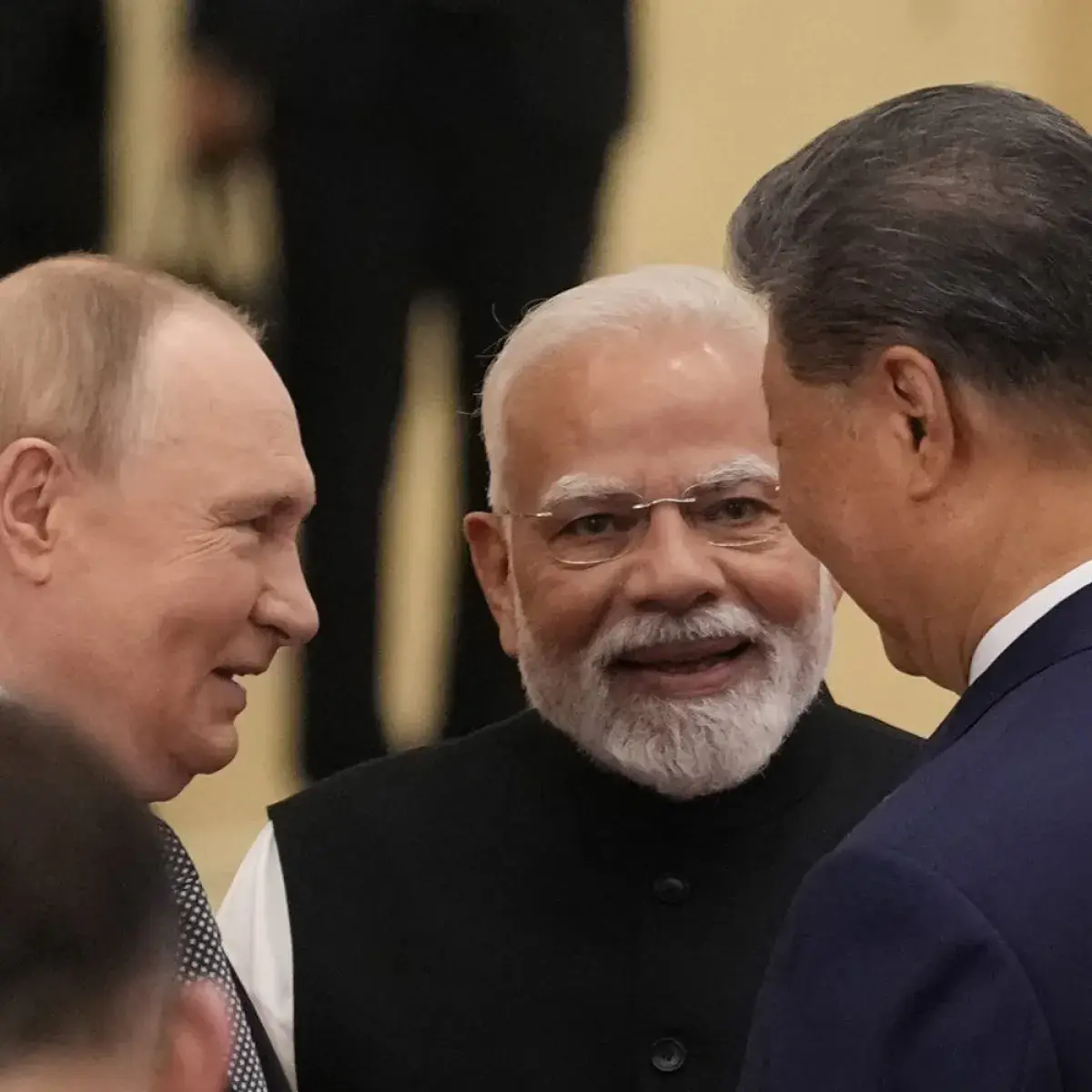

SCO Summit Highlights Shift in Regional Power Dynamics
The recent Shanghai Cooperation Organization (SCO) summit held in Kyrgyzstan has drawn attention to a changing landscape within the Eurasian bloc. According to analysis published by the Hoover Institution, the event served primarily to display the growing influence of Chinese President Xi Jinping while simultaneously underscoring the marginalization of India.
The publication, titled "The SCO’s Diminishing Usefulness for India," suggests that New Delhi's strategic relevance within the organization is waning. The summit provided a platform that reinforced Beijing's central role in the group, leaving India with a diminished voice in the collective decision-making process. Originally conceived as a forum for regional cooperation, the SCO's focus has visibly shifted, with the Kyrgyzstan summit serving as a clear indicator of this evolving dynamic.
Beijing's Ascendant Influence Within the Bloc
The summit's proceedings highlighted a consolidation of power around China, with President Xi Jinping emerging as the dominant figure. This growing influence translates into Beijing's increased capacity to shape the SCO's agenda and strategic direction. For India, this development signifies a reduction in its ability to steer the organization's priorities or to leverage it as a multilateral platform for its own geopolitical objectives.
India's Strategic Crossroads: Echoes of the First Cold War
Faced with this evolving dynamic, India confronts strategic decisions that analysts compare to those faced during the First Cold War. During that period, nations were often compelled to align with one of two dominant global blocs or attempt to forge an independent path. The analysis outlines three distinct paths available to New Delhi in response to the shifting balance of power within the SCO and the broader international arena.
Deepening Ties with the Eurasian Axis
The first option involves joining a bloc dominated by Moscow and Beijing. This path would require India to deepen its integration into the existing Eurasian framework led by Russia and China, accepting the hierarchy established by these two powers. Such an alignment would entail closer coordination on foreign policy, security matters, and economic initiatives, potentially at the expense of India's traditional non-aligned stance and its relationships with other global actors. It would solidify India's position within a geopolitical structure increasingly defined by the interests of its two most powerful members.
Realigning Towards Western Alliances
The second alternative is to join the Western bloc. This choice implies a significant realignment of foreign policy, moving away from the SCO's Eastern-oriented structure and strengthening ties with Western nations that have traditionally viewed China and Russia as strategic competitors. A pivot towards the West could involve enhanced military cooperation, economic partnerships, and diplomatic alignment with countries such as the United States and its allies. This path would necessitate a re-evaluation of India's long-standing strategic autonomy and could lead to increased friction with the Moscow-Beijing axis.
Forging an Independent Global Path
The third option presents India seeking to build its own independent bloc. This strategy would aim to establish a new center of gravity in global geopolitics, allowing India to operate outside the immediate influence of both the Moscow-Beijing axis and the Western alliance. Such a move would position India as a leader among a coalition of like-minded nations, advocating for a multipolar world order not dominated by existing power blocs. This ambitious path would demand significant diplomatic capital, economic strength, and a clear vision for an alternative global framework.
Consequences for Regional Order and India's Standing
The Hoover Institution's assessment highlights the technical and political issues preventing broader access to their full analysis, noting that the article is an "Insider exclusive." However, the core argument remains focused on the structural changes within the SCO. The organization, originally conceived as a forum for regional cooperation, is increasingly viewed through the lens of great power competition, a shift that fundamentally alters its utility for member states like India.
The marginalization of India at the Kyrgyzstan summit signals a potential reduction in the utility of the SCO as a neutral ground for dialogue between major powers. Instead, the forum appears to be consolidating around the interests of its most dominant members. This shift forces smaller and medium-sized powers within the organization to reassess their engagement strategies, as the SCO's original mandate of broad regional cooperation gives way to a more defined power dynamic.
For India, the diminishing usefulness of the SCO is not merely a diplomatic slight but a fundamental strategic question with far-reaching implications. The choice between joining a China-Russia dominated bloc, aligning with Western powers, or forging an independent path will define India's role in international affairs for years to come. The Kyrgyzstan summit served as a tangible indicator that the status quo is no longer sustainable for New Delhi within this specific multilateral framework, compelling a re-evaluation of its foreign policy trajectory.