


Contradictory Stances on Extraterritorial Migration Processing
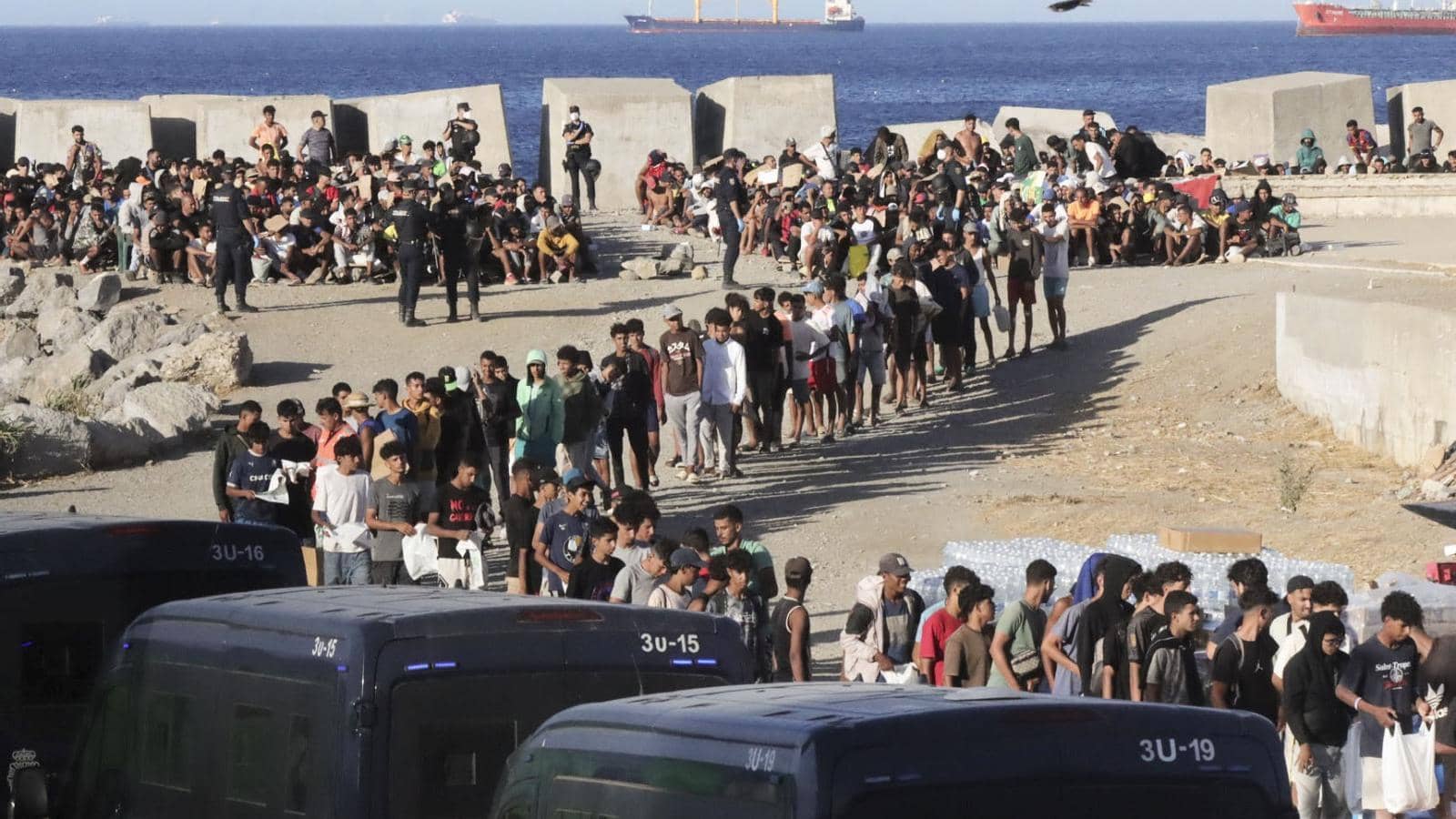
The Spanish government has historically led opposition to the creation of extraterritorial deportation centers located outside the European Union. These facilities are specifically designed for the processing of asylum seekers, often involving their forced relocation, and for housing irregular immigrants subject to expulsion orders while their cases are resolved. Spain's long-standing objection has been rooted in concerns over legal frameworks, human rights implications, and the principle of maintaining migration processing within sovereign EU territory. Paradoxically, despite this firm official stance against such models elsewhere, reports indicate that Spain is currently constructing the first fully operational European extraterritorial deportation center within its autonomous city of Ceuta.
This development unfolds in parallel with similar, albeit geographically distinct, efforts by other European nations to implement comparable policies. The government of Italian Prime Minister Giorgia Meloni had previously spearheaded an initiative to establish such centers beyond EU borders, culminating in the creation of two facilities in Albania. These Italian-run centers boast a combined capacity for 3,000 people. Although the European Commission initially expressed reservations regarding the legality and operational feasibility of these extraterritorial centers, they have nonetheless become part of the broader European border management policy, particularly following the approval of the European Pact on Migration and Asylum by the European Parliament.
Operational Challenges in Italian Facilities
The implementation of the Albanian model, intended to streamline migration processing, has encountered significant legal and practical hurdles. Reports suggest that the centers in Albania are not functioning smoothly, facing substantial issues identified within the Italian justice system. These problems extend beyond mere administrative inefficiencies, implying deeper legal complexities and challenges to due process that have hampered their effectiveness. These operational difficulties highlight the intricate legal and administrative challenges inherently associated with extraterritorial migration processing, serving as a cautionary tale even as Spain proceeds with the construction of its own facility in Ceuta.
Spain's Border Dilemma and Political Pressures
Spanish Prime Minister Pedro Sánchez's administration faces substantial and multifaceted pressure to prevent thousands of individuals who entered Spain irregularly from reaching the Spanish mainland. These individuals, many of whom arrived via Ceuta and other entry points, do not wish to return to Morocco, creating a significant logistical and political dilemma for the government. The pressure originates from multiple directions, including domestic opposition parties who criticize the government's migration management and numerous European chancelleries concerned about Spain's border integrity.
Several European governments have explicitly expressed discomfort with Spain's recent mass regularization of immigrants, viewing such actions as potentially encouraging further irregular migration flows into the continent. This international concern is significantly compounded by anticipated domestic reactions; Spanish public opinion is widely expected to view the transfer of irregular migrants from Ceuta or other enclaves to the Peninsula very unfavorably. The Sánchez government must therefore carefully balance these external diplomatic pressures with internal political stability and public sentiment, seeking solutions that address both national and European concerns without alienating its domestic base.
Unsuccessful Attempts at Alternative Solutions
In an effort to manage specific demographics within the migrant population and mitigate political backlash, the Spanish government explored alternative solutions. One such attempt involved testing the possibility of transferring a particularly sensitive group: unaccompanied minor girls. The proposed solution entailed moving them to private centers funded at the state's expense, aiming to provide care while avoiding the more controversial option of mainland transfers or immediate expulsions. However, reports indicate that this initiative has not been successful, leaving the government with fewer viable options for managing vulnerable groups without triggering the aforementioned political and public opinion challenges.
Official Expulsion Protocols and the Ceuta Center's Role
The official policy of the Spanish government dictates that all individuals who entered the country illegally will be expelled. This directive serves as the baseline for Spain's migration management strategy, designed to address the concerns of both European partners regarding border control and domestic opposition regarding irregular immigration. However, this policy is not absolute and includes specific exceptions based on international protection standards and safety guarantees, reflecting Spain's commitments under international law.
Exceptions to the general expulsion rule are primarily granted to two distinct groups. First, individuals who have a legitimate right to asylum under applicable national and international laws are exempt from immediate deportation, allowing their applications to be processed. Second, unaccompanied minors who cannot be returned to Morocco with sufficient guarantees of safety and welfare are also protected from expulsion, prioritizing their protection as vulnerable individuals. These exceptions define the operational boundaries of the Spanish government's migration strategy, particularly in contexts like Ceuta, where irregular entry points are closely monitored and managed.
Ceuta Facility: A New Approach to Border Management
The construction of the facility in Ceuta represents a significant infrastructure development within this complex policy framework. Positioned as the first fully operational European extraterritorial deportation center, its unique location within EU territory but outside the mainland of Spain or the broader Schengen area is strategically crucial. This facility is intended to serve as a key instrument for the government to process individuals who have entered irregularly, allowing for the resolution of their expulsion orders or asylum claims without transferring them to the Spanish Peninsula. This approach directly addresses the pressure to prevent irregular migrants from reaching the mainland, a concern shared by both domestic opposition and other European governments.
By establishing this center, Spain sets a precedent for how it manages its northern African borders and potentially influences future European border management strategies. The facility's operational success and its adherence to legal and human rights standards will be closely scrutinized, especially in light of the ongoing legal challenges and operational difficulties observed in Italy's Albanian centers. Its role will be profoundly shaped by how effectively it navigates the complex interplay of international law, domestic political pressures, and the practical realities of migration flows, all while upholding its stated commitment to human rights and due process.