


Surge in Local Currency Transaction Volume
JAKARTA – Bank Indonesia (BI) Governor Perry Warjiyo announced on Thursday that the volume of local currency transactions between Indonesia and China has increased significantly. According to Warjiyo, the total value of these transactions reached US$13 billion during the first four months of the current year.
This figure marks a notable acceleration in trade activity conducted without the use of the United States dollar. The governor pointed out that this quarterly volume represents a substantial speed-up compared to the previous year's performance. For the entirety of last year, the total value of local currency transactions between the two nations was recorded at US$18 billion.
The rapid growth in transaction values over such a short period highlights the intensifying efforts by both central banks to facilitate cross-border trade using their respective national currencies. The data indicates that the rate of adoption for this financial mechanism has risen sharply within the first few months of the current calendar year.
Strategic Shift Toward De-Dollarization
Indonesia and China are actively pursuing a strategy to become less reliant on the United States dollar in their bilateral economic exchanges. This objective is being pursued through the expansion of the local currency transaction (LCT) scheme. The LCT framework allows businesses and financial institutions in both countries to conduct trade and investment activities using the Indonesian rupiah and the Chinese yuan, rather than defaulting to the US dollar.
The move aligns with broader regional trends aimed at reducing dependency on Western-dominated financial systems. By utilizing their own currencies, Indonesia and China seek to mitigate exchange rate risks associated with the dollar and reduce transaction costs for importers and exporters.
Implementation of the LCT Scheme
The local currency transaction scheme serves as the primary vehicle for this economic shift. It facilitates direct conversions and settlements between the rupiah and the yuan. This mechanism supports cross-border trade flows, enabling companies to bypass the traditional dollar intermediary in their financial operations.
Bank Indonesia has been working to expand the network of banks and financial institutions eligible to participate in the LCT scheme. The goal is to increase liquidity and accessibility for traders who wish to settle invoices in local currencies. Governor Warjiyo’s recent comments underscore the central bank's commitment to monitoring and promoting this specific channel of commerce.
Implications for Bilateral Trade
The reported US$13 billion in transaction volume over four months suggests a growing confidence among traders in the stability and utility of the LCT framework. This level of activity implies that a significant portion of bilateral trade is now being settled directly between the two currencies.
De-dollarization efforts are not limited to Indonesia and China but are part of a wider movement across emerging economies. However, the specific metrics provided by Bank Indonesia offer concrete evidence of how these policies are translating into actual economic activity. The acceleration from US$18 billion in a full year to US$13 billion in just four months indicates that the pace of this transition is increasing.
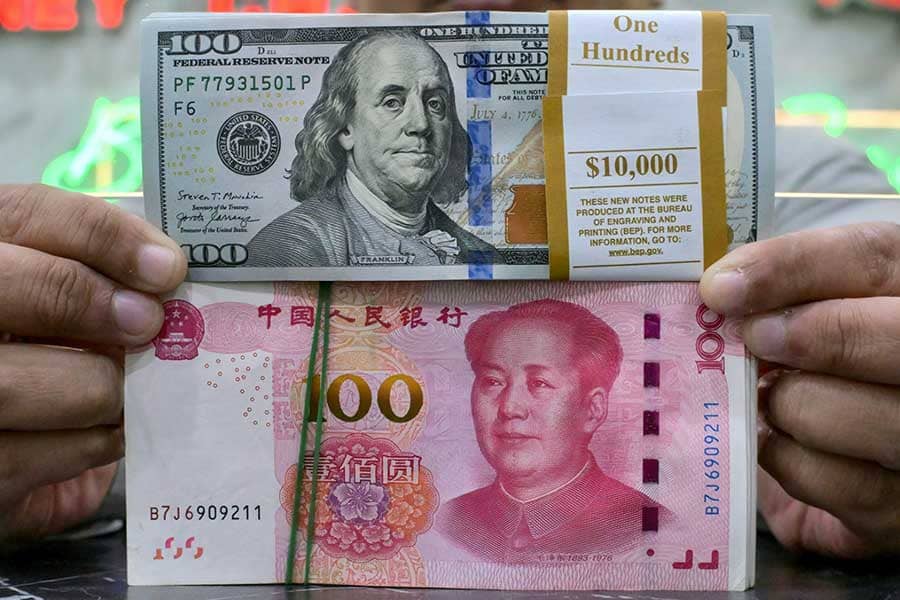
The Jakarta Post reported on the announcement, noting the significance of the speed-up in transaction values. The report highlights the role of currency exchange employees in managing the physical and digital aspects of these transactions, as seen in previous years when dollar and yuan notes were handled in Jakarta.
Regional Economic Dynamics
The push for de-dollarization has geopolitical and economic dimensions. By reducing reliance on the US dollar, Indonesia and China aim to enhance their monetary sovereignty and reduce vulnerability to external financial shocks. This strategy allows for greater control over domestic monetary policy and reduces the impact of fluctuations in the value of the US dollar on their respective economies.
As the LCT scheme expands, it may influence other regional trade relationships. Other countries in Southeast Asia and beyond may observe these developments and consider similar measures to protect their own economic interests. The success of the Indonesia-China model could serve as a template for other bilateral agreements seeking to minimize dollar dependency.
Bank Indonesia continues to monitor the effectiveness of the LCT scheme. Governor Warjiyo’s statements provide an official assessment of the current trajectory, confirming that the volume of local currency usage is not only growing but doing so at an accelerated rate. The data from the first four months of this year stands as a key indicator of the ongoing structural changes in how Indonesia and China conduct their economic relationship.