


Complex Relationship Dynamics
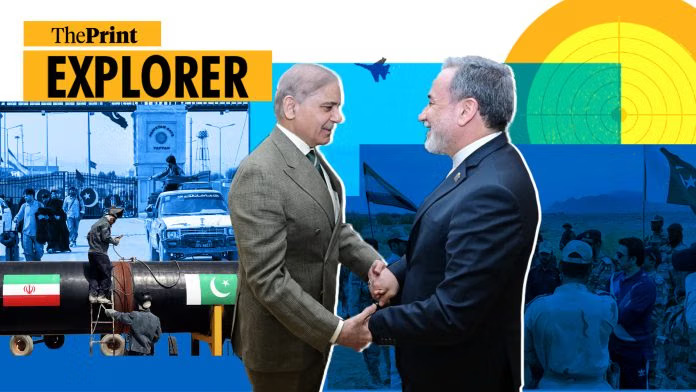
Iran and Pakistan continue to share a multifaceted relationship, though the "friends-with-benefits" characterization has been replaced by a high-stakes diplomatic necessity. While shared faith and 900km of border remain foundational, the relationship is now under extreme pressure due to the 2026 Iran War (initiated in February 2026). Pakistan’s role has shifted from a bystander to the primary diplomatic bridge between Tehran, Washington, and Riyadh.
The 2026 Gulf Crisis and Security Realities
The security landscape has moved beyond "perceived threats" to active regional warfare. Following joint US-Israeli strikes in early 2026 and Iran’s retaliatory strikes on Gulf shipping, the stability of the region has fractured. The partial closure of the Strait of Hormuz has hit Pakistan particularly hard, as it relied on the channel for nearly two-thirds of its LNG and 90% of its oil imports, necessitating a radical shift in its regional security strategy.
Pakistan's Strategic Position
Pakistan has emerged as the indispensable mediator in the current conflict. In April 2026, Islamabad hosted the "Islamabad Talks" at the Serena Hotel, where high-level delegations from the US and Iran engaged in grueling 21-hour negotiations. By brokering a temporary ceasefire in early April, Pakistan has leveraged its "Active Neutrality" to prevent a total regional conflagration, effectively balancing its "strategic depth" interests with its need for global economic stability
Historical Cooperation
Historically, cooperation was defined by trade and culture; today, it is defined by crisis management. While the two nations still discuss multifaceted cooperation in petroleum and trade (as reaffirmed in meetings on April 30, 2026), the reality is dominated by Operation Muhafiz-ul-Bahr. This Pakistan Navy operation, launched in March 2026, now escorts merchant vessels through contested waters, illustrating a shift from "cooperation on paper" to "cooperation through protection."
Geopolitical Developments Testing Ties
Despite their historical cooperation, recent geopolitical developments have tested the partnership between Iran and Pakistan. The rise of extremist groups and the ongoing conflict in Afghanistan have heightened security concerns for both nations. Iran's support for certain militant groups has raised alarms in Islamabad, where the government is wary of any potential spillover effects that may destabilize its own security environment.
Military Posturing and Threat Perceptions
The evolving military posturing in the Gulf region has further strained relations between Iran and Pakistan. As Gulf states bolster their military capabilities in response to perceived threats from Iran, Pakistan finds itself in a difficult position. The country has historically relied on its military ties with both Iran and Gulf nations, but the current climate necessitates a careful balancing act to avoid alienating either side.
Internal Political Dynamics
As of May 2026, the Pakistani government continues to manage a 'two-front' security crisis, balancing the mediation of the Iran War with ongoing border skirmishes in the northwest following the escalation of tensions with the Afghan Taliban in early 2026.
External Pressures from Regional Powers
External pressures from other regional powers, particularly India and the United States, have also impacted Iran-Pakistan relations. Both countries are aware of the broader geopolitical implications of their actions and decisions. India's growing ties with Gulf states and its strategic partnerships with the United States pose a challenge for both Iran and Pakistan, as they navigate their respective interests in a rapidly changing environment.
Implications for Bilateral Relations
The implications of these developments are significant for the future of Iran-Pakistan relations. As both nations grapple with internal and external pressures, their ability to maintain a cooperative relationship will be tested. The evolving security landscape in the Gulf, coupled with the complexities of their historical ties, suggests that the path forward may be fraught with challenges.