

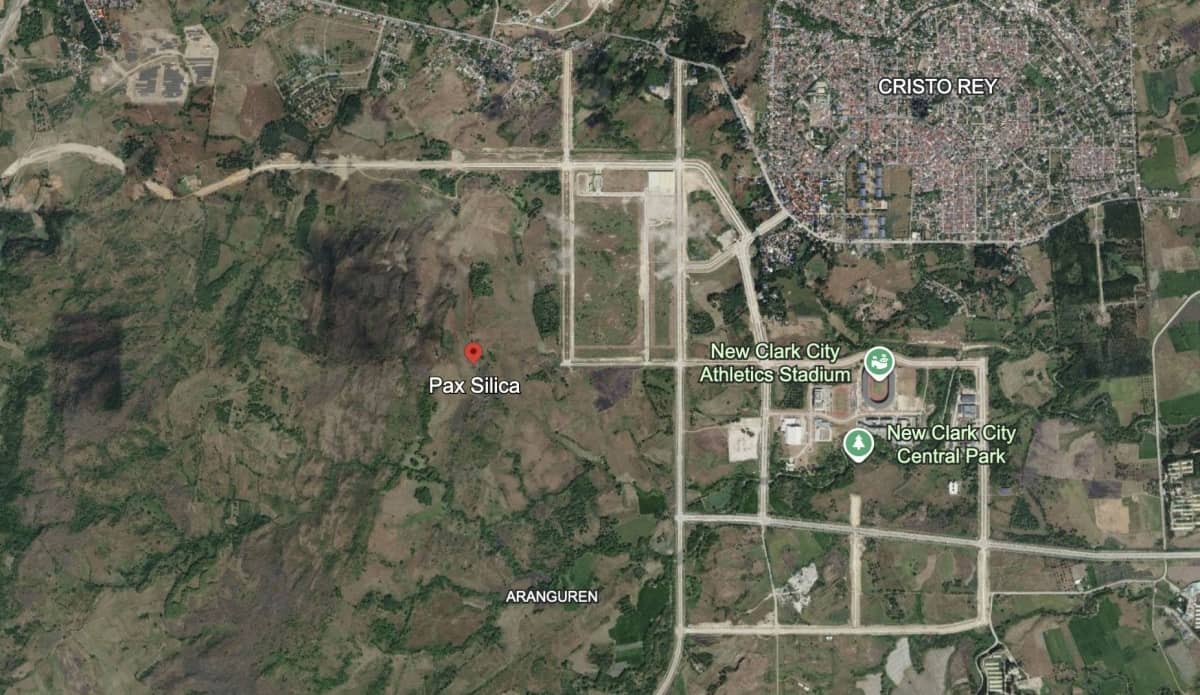

Government Moves Forward With $70 Billion Tech Hub
The Philippine government has advanced plans for the Pax Silica initiative, a strategic alliance originally proposed by the United States in December 2025 to counter China’s dominance in technology manufacturing and secure supply chains for AI, semiconductors, and critical minerals. The Philippines officially joined the initiative in April, aligning itself with original members including the United States, Japan, South Korea, Singapore, the United Kingdom, Israel, the United Arab Emirates, and Australia, bringing the group’s total membership to over 30 states.
Trade Undersecretary Ceferino Rodolfo confirmed that the Philippine government will sign a framework deal with a US government agency for Pax Silica, noting that the project remains bound by Philippine laws. President Ferdinand Marcos Jr. has given full support to the initiative, describing it in his fifth State of the Nation Address as a center in the global AI and technology value chain that will bring quality jobs, accelerate industrial competitiveness, and revitalize the economy.
The proposed Pax Silica hub is envisioned as the Luzon Economic Corridor, covering 1,620 hectares (approximately 4,000 acres) in New Clark City, Capas, Tarlac, a former US military base. Bases Conversion and Development Authority (BCDA) President and CEO Joshua Bingcang stated that the three-phase project is expected to start in 2028. He added that Pax Silica can pull in investments of up to $30 billion to $70 billion and could generate over 130,000 jobs for Filipino engineers, researchers, computer science graduates, and other highly skilled professionals.
Strategic Response to Regional Supply Chain Shifts
The initiative emerges against a backdrop of intensifying technological rivalry in the region. China is said to control about 90% of rare earth refining for advanced chips, having implemented rare earth controls in 2025 in response to US tariffs. The Pax Silica alliance aims to diversify these supply chains and reduce dependency on single-source manufacturing hubs.
Political analyst Dennis Coronacion said the Pax Silica project would be identified as one of Marcos’ most ambitious projects even if its operations begin past his term. The Office of the President, Department of Trade and Industry, BCDA, and National Water Resources Board have expressed support for the initiative, signaling broad institutional backing for the development.
Environmental Concerns and Public Skepticism
Critics warned that AI data centers and semiconductor facilities require massive daily cooling volumes estimated at 65 million to 90 million liters of water per day, raising sustainability questions regarding existing supplies. High-density energy needs threaten to overburden the local power grid and drive up regional electricity rates.
The project footprint targets roughly 1,600 to over 20,000 hectares for industrial lots and supporting renewable energy/reservoir infrastructure, risking local wetlands, watersheds, and agricultural lands. Environmental and indigenous groups have raised alarms over the potential displacement of thousands of farmers and local Aeta communities. At least 70 organizations have voiced opposition to the project.
Public sentiment reflects this division. A Momentum Research survey done in August showed that 34 percent of Filipinos were against the project, 26 percent admitted having little to no knowledge of it, while 20 percent say it needs further study.