

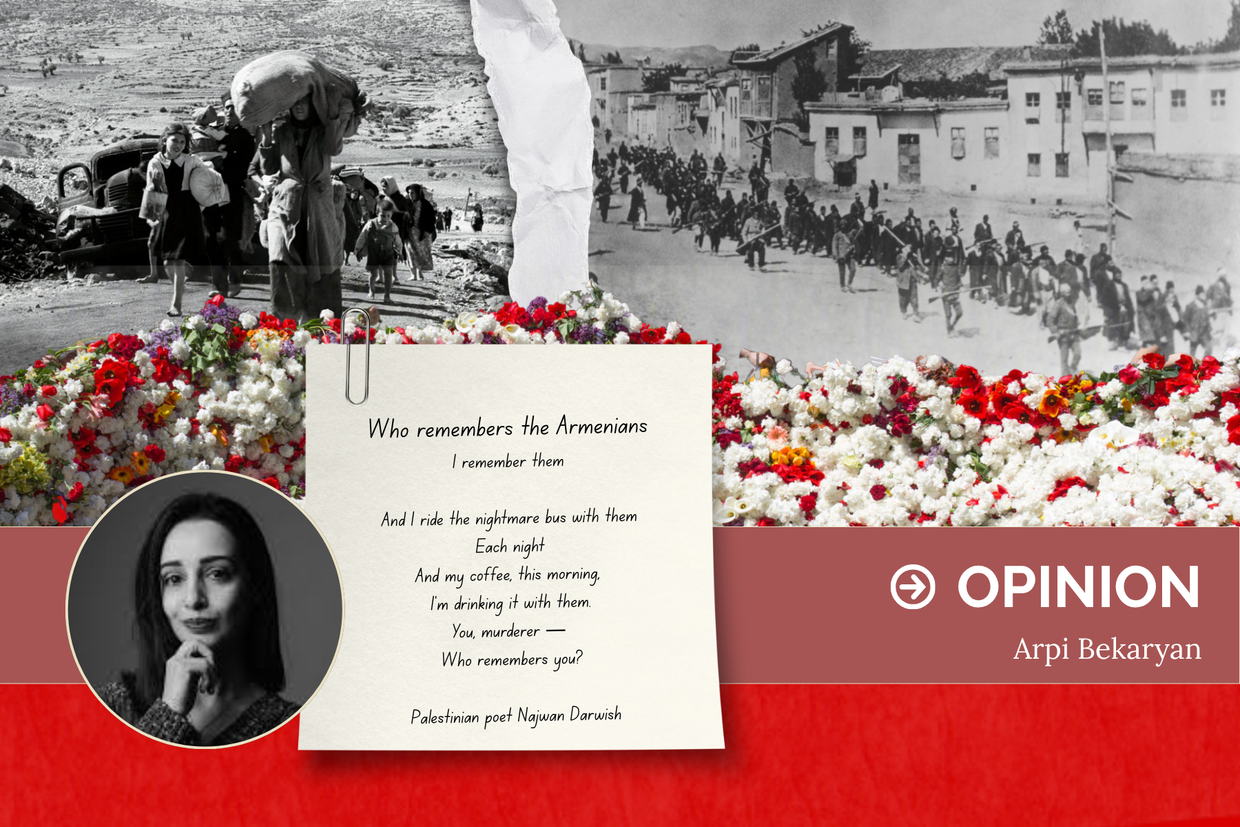

Israel's Diplomatic Calculus in Genocide Acknowledgment
In an opinion piece published by Oc Media, writer Arpi Bekaryan characterizes Israel's potential recognition of the Armenian Genocide as both "disingenuous" and "cynical." Bekaryan's article argues that the timing and underlying nature of such political moves are primarily driven by geopolitical considerations, particularly Israel's complex relationship with Turkey, rather than a genuine concern for the Armenian people or a commitment to historical justice. A central irony is highlighted in the current situation: the possibility of a government that is allegedly committing genocide in the present recognizing one that occurred more than a century ago, an ethical contradiction that casts a shadow over the sincerity of the gesture.
Bekaryan suggests that Israel, as a nation that survived its own genocide, should not treat the recognition of another nation's profound tragedy as a mere bargaining chip in its diplomatic relations. The author notes that some have argued Israel should never have used recognition as a means to influence Turkey or as a form of political punishment. Given its unique moral standing derived from its own history of survival and immense suffering, Bekaryan posits that Israel carries a particular ethical responsibility. This responsibility, she argues, should preclude the use of such significant acknowledgments for strategic leverage or as a tool for diplomatic maneuvering, demanding instead a recognition rooted in moral principle.
The US Precedent: Recognition as a Geopolitical Lever
The article draws a compelling parallel between recent events in the United States and the potential actions currently being contemplated by Israel. Bekaryan recalls that in 2021, when the US officially recognized the Armenian Genocide, she was studying in Italy alongside peers from various countries experiencing conflict. At that time, an Israeli friend remarked, "At least the US recognised the Armenian Genocide." However, Bekaryan’s personal reaction diverged significantly from the widespread gratitude and celebration expressed by many on social media and within Armenian communities globally.
Instead of celebrating, her immediate thoughts focused on the critical question of timing: "Why now?" The Armenian Genocide had occurred over 100 years prior, meaning no new historical facts or evidence regarding the atrocity had emerged to prompt this sudden acknowledgment. According to the article, the only significant change in circumstances that could explain the timing was related to the evolving dynamics of US-Turkey relations. Bekaryan notes that the US resolution on the Armenian Genocide came shortly after the US Senate voted to impose sanctions on Turkey, strongly implying a direct correlation between the two events and suggesting that recognition served as a political instrument.
Shifting US-Turkey Relations and Sanctions
The temporal proximity between the US Senate's decision to impose sanctions on Turkey and the official recognition of the Armenian Genocide by the US government is presented as a key piece of evidence for the instrumentalization of historical truth. This sequence of events, in Bekaryan's view, underscored that the recognition was less about a newfound commitment to historical justice for Armenians and more about applying pressure or expressing displeasure towards Turkey within a broader geopolitical strategy. The sanctions themselves were a clear signal of deteriorating relations, and the genocide recognition, in this context, appeared to be another facet of that diplomatic pressure, rather than a standalone moral act.
Beyond Symbolic Gestures: Armenian Voices Questioning Practical Impact
Bekaryan argues forcefully that the US recognition was never truly about actual Armenians or the generations of survivors who have lived with the intergenerational trauma of the genocide. She echoes sentiments widely expressed after the US declaration, questioning what tangible, practical value such a symbolic declaration holds for the victims' descendants. The article states that alongside posts of thanks and appreciation, many individuals within the Armenian diaspora and homeland asked a poignant question: "What has this recognition actually given us?" This query reflects a deep-seated skepticism about the efficacy of purely symbolic gestures in addressing the profound and lasting consequences of genocide.
This same critical question has resurfaced with renewed urgency as Israel appears to be on the verge of recognizing the Armenian Genocide, although the vote in its parliament has currently been postponed. The author implies that such political recognitions, when timed opportunistically, often serve primarily as tools for diplomatic maneuvering and strategic leverage in international relations, rather than genuine acts of historical justice, reparations, or meaningful support for affected communities. The postponement of the vote itself, in Bekaryan's view, further underscores the political calculations at play, suggesting that the decision is subject to ongoing negotiations and shifts in diplomatic priorities.
The Postponed Vote and Continued Scrutiny
The indefinite postponement of the parliamentary vote in Israel on Armenian Genocide recognition is presented as further evidence of the political, rather than purely moral, underpinnings of the initiative. This delay suggests that the recognition is not a foregone conclusion based on historical fact or moral imperative, but rather a decision that remains contingent on the fluid landscape of international relations, particularly Israel's ongoing diplomatic engagements with Turkey and other regional actors. The scrutiny from critics like Bekaryan intensifies during such periods of political deliberation, as the perceived sincerity of the recognition is directly linked to the transparency and motivations behind its timing and eventual outcome.
A Pattern of Instrumentalizing Historical Tragedies
The piece critically examines the broader pattern of instrumentalization of genocide recognition within international relations. By linking Israel's potential move to the US example, Bekaryan suggests a recurring pattern where acknowledgments of historical atrocities are strategically timed to coincide with significant shifts in foreign policy, the imposition of sanctions regimes, or other diplomatic pressures. While the article does not provide evidence of direct coordination between these specific events, it highlights the striking temporal correlation as indicative of a shared approach to using historical recognition as a political instrument.
Bekaryan’s argument rests on the fundamental premise that true solidarity with Armenians, and indeed with any victimized community, would not be contingent upon diplomatic utility or strategic advantage. Such solidarity, she contends, should stem from a genuine moral conviction and a commitment to universal human rights and historical truth, independent of political expediency. The opinion piece concludes by reinforcing the view that the recognition of genocide should not be reduced to a political bargaining chip, particularly when undertaken by a state with its own profound history of surviving genocide. The article does not report any official response from the Israeli government regarding the postponed vote or the specific criticisms leveled against its motivations.