


Statement Marks Anniversary of Independence
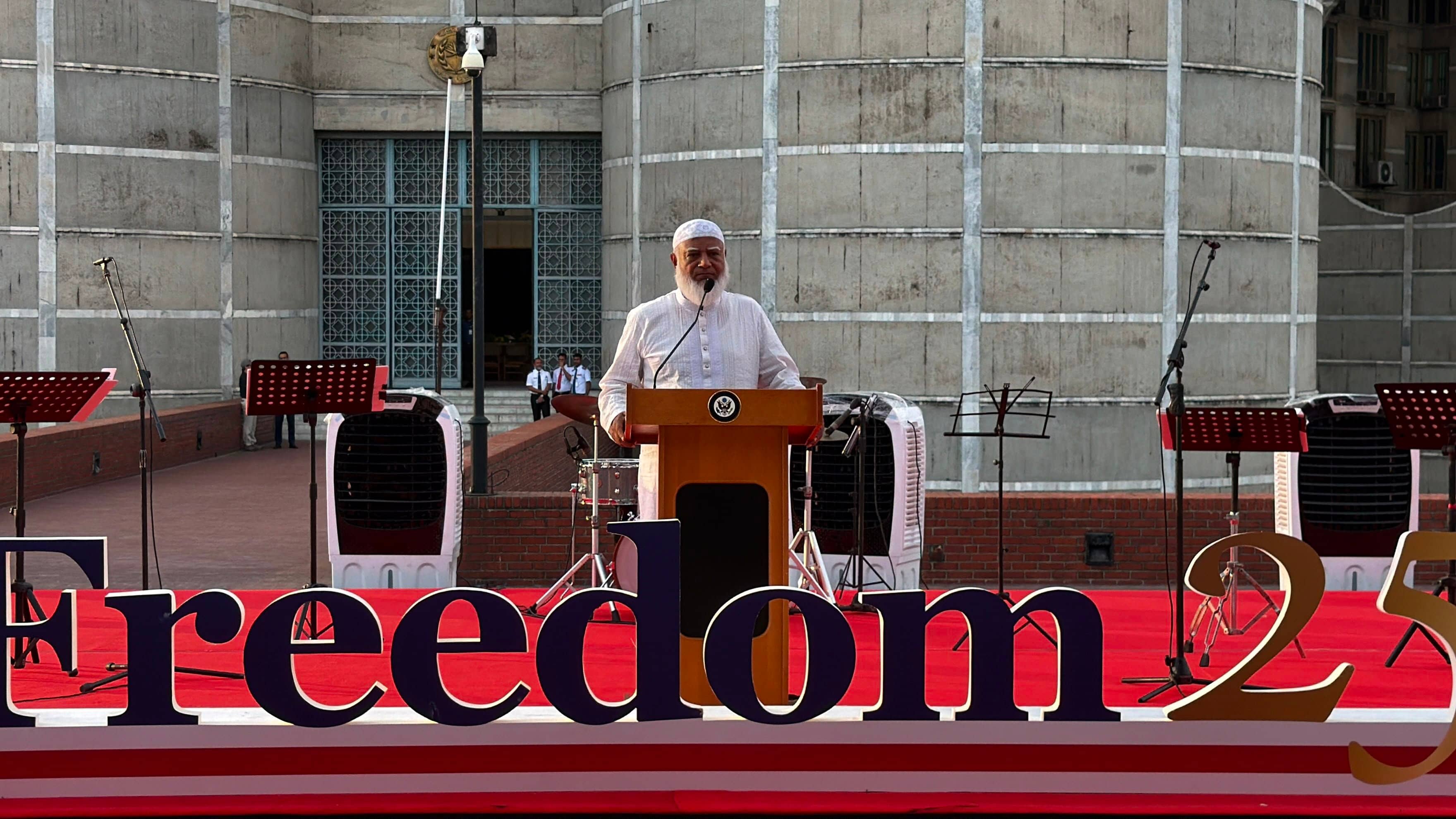
DHAKA — The Jamaat-e-Islami Ameer of Bangladesh, Shafiqur Rahman, referred to the United States as a "tested friend" in Dhaka. This statement was made during a recent event celebrating the 250th anniversary of American independence.
The remarks were delivered at the South Plaza of the Jatiya Sangsad, where officials gathered for the commemoration. The celebration highlighted ties between two countries, with diplomatic niceties serving as an integral part of international relations according to reports covering the event.
However, portraying the United States in this specific manner without acknowledging certain historical events has sparked controversy among observers and historians within Bangladesh. Critics argue that such a characterization risks reducing history to political convenience rather than presenting a balanced view of past interactions between Dhaka and Washington.
Critics Cite 1971 War as Defining Test
Although the report notes that Dhaka can recognize the importance of its present-day partnership with the United States, it emphasizes that serious failures in Washington's policy during the 1971 Bangladesh Liberation War against Pakistan cannot be overlooked. Those contradictions became particularly evident in December 1971.
A report has stated that as the Indo-Pakistani War reached its critical stage, the United States sent Task Force 74 into the Bay of Bengal. This military unit was led by the nuclear-powered aircraft carrier USS Enterprise. The deployment occurred while diplomatic niceties were being observed in other forums and international relations continued to be managed through established protocols.
The move widely perceived as support for Pakistan drew sharp criticism from historians who have analyzed American foreign policy during that era. These experts describe the Nixon administration's actions not merely as a strategic error but as one of the gravest moral failures of American foreign policy in recorded history.
Geopolitical Motivations Cited by Historians
The report detailed that historians attribute these decisions to geopolitical interests, particularly the Cold War rivalry and the effort to establish a strategic relationship with China. Nixon and his National Security Advisor, Henry Kissinger, are noted for sustaining support for Pakistan despite increasing evidence of severe atrocities committed by Pakistani forces in Bangladesh.
According to a report published in Bangladesh's newspaper Daily Sun, this selective interpretation of history calls for careful reflection when leaders project the United States as a "tested friend." The irony is difficult to ignore according to analysts reviewing the situation. The remark comes from the leader of Jamaat-e-Islami at a time when international observers are scrutinizing statements made by political figures regarding foreign alliances.
Despite evidence of atrocities, the US sustained support for Pakistan during that period. This stance remains a subject of intense debate among scholars and former diplomats who served in South Asia during the late 1960s and early 1970s. The report suggests that acknowledging these events is necessary to maintain historical integrity.
Implications for Diplomatic Discourse
The projection of the United States as a "tested friend" without addressing the defining test of 1971 risks reducing history to political convenience according to the Daily Sun report. The statement reignited an old debate regarding how nations should evaluate their historical partners.
Diplomatic niceties are integral parts of international relations, and there is nothing unusual about celebrating ties between two countries as noted by observers at the South Plaza event in Dhaka. Yet portraying a nation's role through a single lens ignores complex realities documented in archival records from 1971.
The controversy underscores how historical narratives shape current diplomatic discourse. Leaders must navigate statements that honor present partnerships while addressing past controversies raised by historians and citizens alike. The report argues that ignoring the defining test of 1971 undermines efforts to build honest foundations for future cooperation between nations in South Asia and beyond.
Observers note that such debates are not unique but reflect broader challenges faced by countries trying to reconcile historical grievances with contemporary alliances. The Jamaat-e-Islami Ameer's comments serve as a focal point for these discussions, drawing attention from both domestic political figures and international analysts monitoring relations between South Asian nations and the United States.
The event at the Jatiya Sangsad proceeded alongside other diplomatic activities involving foreign ministers arriving in India on official visits. However, the specific remarks regarding American policy during 1971 drew distinct reactions compared to routine congratulatory exchanges observed elsewhere in New Delhi or Dhaka over recent weeks.