


The Geopolitics of Attention at the UN
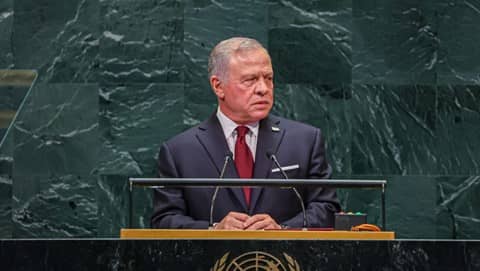
Jordan's King Abdullah II delivered a pointed address to the 81st United Nations General Assembly, urging the international community to redirect its focus toward the escalating situation in Gaza. In his speech, the King characterized global attention not merely as passive observation, but as a decisive geopolitical resource that determines which conflicts receive sustained diplomatic engagement and which are left to fester.
King Abdullah II argued that the current trajectory of violence is not accidental but strategic. He described the conditions in Gaza and the West Bank not as isolated incidents or separate humanitarian crises, but as "two fronts of the same Israeli strategy." According to the King, the objective of this coordinated approach is to make a viable Palestinian state impossible, effectively closing off diplomatic pathways through physical control and displacement.
The address extended its analysis beyond the immediate conflict in Palestine, referencing Syria and other regional countries to illustrate broader patterns of instability. By linking these disparate conflicts, the King suggested that the mechanisms of escalation are interconnected, requiring a unified international response rather than fragmented reactions.
Sanctions and the Choice of Inaction
Moving beyond diagnosis, King Abdullah II outlined specific mechanisms available to the international community to confront Israeli escalation. He named sanctions, asset freezes, embargoes, and diplomatic isolation as viable tools that could be deployed against Israel to alter its calculus.
The King challenged the narrative that the world is powerless to stop the violence. He argued that political inaction regarding these measures is a "choice" rather than a lack of options. By framing inaction as an active decision, he emphasized that the world has the capacity to act but must choose to do so, rejecting the idea that diplomatic tools are exhausted.
Diplomatic Pathways and Custodianship
To illustrate existing alternatives to escalation, the address referenced the 2002 Arab Peace Initiative. The King noted that this framework offered Israel normalization with 57 Arab and Muslim states in exchange for peace and the establishment of a Palestinian state. He used this historical precedent to highlight diplomatic pathways that remain available but have not been fully utilized by the international community.
On matters of sovereignty and religious heritage, King Abdullah II reaffirmed Jordan’s commitment to the Hashemite Custodianship and the historic legal status quo at Muslim and Christian holy sites in Jerusalem. This reaffirmation underscored Jordan's ongoing role in managing religious access and preservation in the city, positioning it as a key stakeholder in any future resolution regarding the status of Jerusalem.
The Consequences of Ignoring Conflict
Closing his address, the King issued a stark warning about the long-term consequences of international indifference. He stated that the future is shaped by what the world chooses to ignore, implying that neglecting current crises will only deepen regional instability.
By framing the lack of attention as an active contributor to ongoing violence, the speech concluded with a call for deliberate engagement. The King’s remarks served as both a critique of current diplomatic failures and a blueprint for how global powers might intervene before the window for a two-state solution closes entirely.