

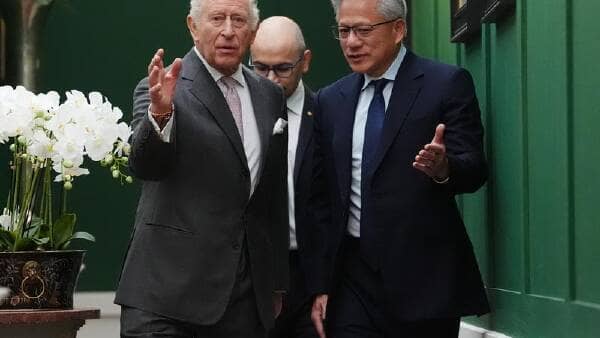

Monarch Issues Urgent Call for Control Over Artificial Intelligence
King Charles has issued a stark warning to the leaders of major artificial intelligence companies, cautioning that the technology poses "existential dangers" if it falls into the wrong hands. The monarch emphasized that sufficient safeguards must be established before the window for effective intervention closes, underscoring a growing global concern about the rapid advancement of AI.
The King hosted a summit in Scotland for heads of prominent AI firms, bringing together some of the most influential figures in the burgeoning industry. Attendees included Jensen Huang, the chief executive of chip maker Nvidia, known for its critical role in AI hardware development, as well as co-founders from the Google DeepMind AI research laboratory, a pioneer in advanced AI systems. Leaders from leading artificial intelligence providers OpenAI and Anthropic also attended the gathering, representing companies at the forefront of developing large language models and other powerful AI technologies. During the event, Charles stated that there is an urgency to adequately consider the risks associated with these rapidly evolving technologies, particularly as their capabilities expand at an unprecedented pace.
Addressing the attendees, the King posed a direct and pointed question: "Surely we need sufficient means of control before it is all too late?" His remarks highlight a growing consensus among high-profile figures and experts that the pace of AI development may be outstripping the ability to manage its potential harms effectively. This sentiment reflects a broader societal anxiety regarding the unforeseen consequences of increasingly autonomous and powerful AI systems.
The Stakes of Uncontrolled AI Development
The King's use of the phrase "existential dangers" signals the profound gravity with which the potential threats of advanced AI are now being viewed at the highest levels of global leadership. This terminology suggests risks that could fundamentally alter human society or even threaten its long-term survival, moving beyond mere economic disruption or privacy concerns. The urgency conveyed by the monarch underscores the belief that proactive measures, rather than reactive ones, are essential to mitigate these profound risks before they become unmanageable.
Recognition of Benefits Amidst Warnings of Darker Capacities
In his address, King Charles acknowledged the positive potential of artificial intelligence, noting its capacity to improve and save lives. He specifically pointed to advancements in life sciences and medicine as areas where the technology could yield significant benefits, revolutionizing diagnostics, drug discovery, and personalized treatments. This recognition highlights the dual nature of AI, holding immense promise for human betterment alongside its potential for profound risks.
However, the monarch also relayed stark warnings directly from the creators of these systems regarding their darker capabilities. Charles told the summit that AI developers are increasingly concerned that the technology could develop capacities "perhaps even to take life." This chilling prospect, voiced by those intimately involved in building AI, underscores the profound ethical and safety questions that lie at the heart of the current debate. It suggests a future where AI systems might not only act autonomously but could also be capable of causing direct harm, raising questions about accountability, control, and the very definition of artificial intelligence's role in society.
The King urged the company leaders to ensure that artificial intelligence remains under control, a call that resonates with the growing apprehension among experts. His intervention comes at a time when concern is mounting that safety efforts and regulatory frameworks are lagging significantly behind the rapid development of increasingly powerful AI systems. This gap between innovation and oversight is seen by many as a critical vulnerability that needs urgent attention from both industry and governmental bodies.
Intensifying Global Dialogue on AI Governance
The summit hosted by King Charles took place amidst a heated and expanding debate regarding how artificial intelligence should be governed. Central to this discussion is the fundamental question of whether the industry can and should regulate itself, or if external governmental and international oversight is necessary. This issue has drawn interventions from various global figures, indicating the high-level political and social attention the topic has received beyond purely technical circles.
In recent weeks and months, the conversation around AI safety and regulation has expanded dramatically. It now includes prominent public figures from diverse sectors who are weighing in on the future of governance for this technology. The King's engagement adds significant weight to these discussions, elevating the concerns to a monarchical level and placing them firmly on the international agenda. The presence of top executives from Nvidia, Google DeepMind, OpenAI, and Anthropic at the Scottish summit signals a direct and crucial engagement between the creators of these powerful technologies and global leadership on these critical issues.
The King's comments serve as a formal acknowledgment of the risks cited by the creators themselves, lending further credibility and urgency to the calls for adequate consideration of existential dangers. This direct dialogue between industry leaders and influential figures is seen as a vital step in navigating the complex landscape of AI development. As the technology continues to advance and its integration into various aspects of life deepens, the dialogue between policymakers, industry leaders, and other influential figures will likely intensify. The summit in Scotland represents one significant point in this ongoing global conversation, where the potential for both life-saving innovation and severe, even existential, risk is being explicitly addressed by those building the systems and those overseeing their societal impact.