


Grid Constraints Threaten Mega Project Viability
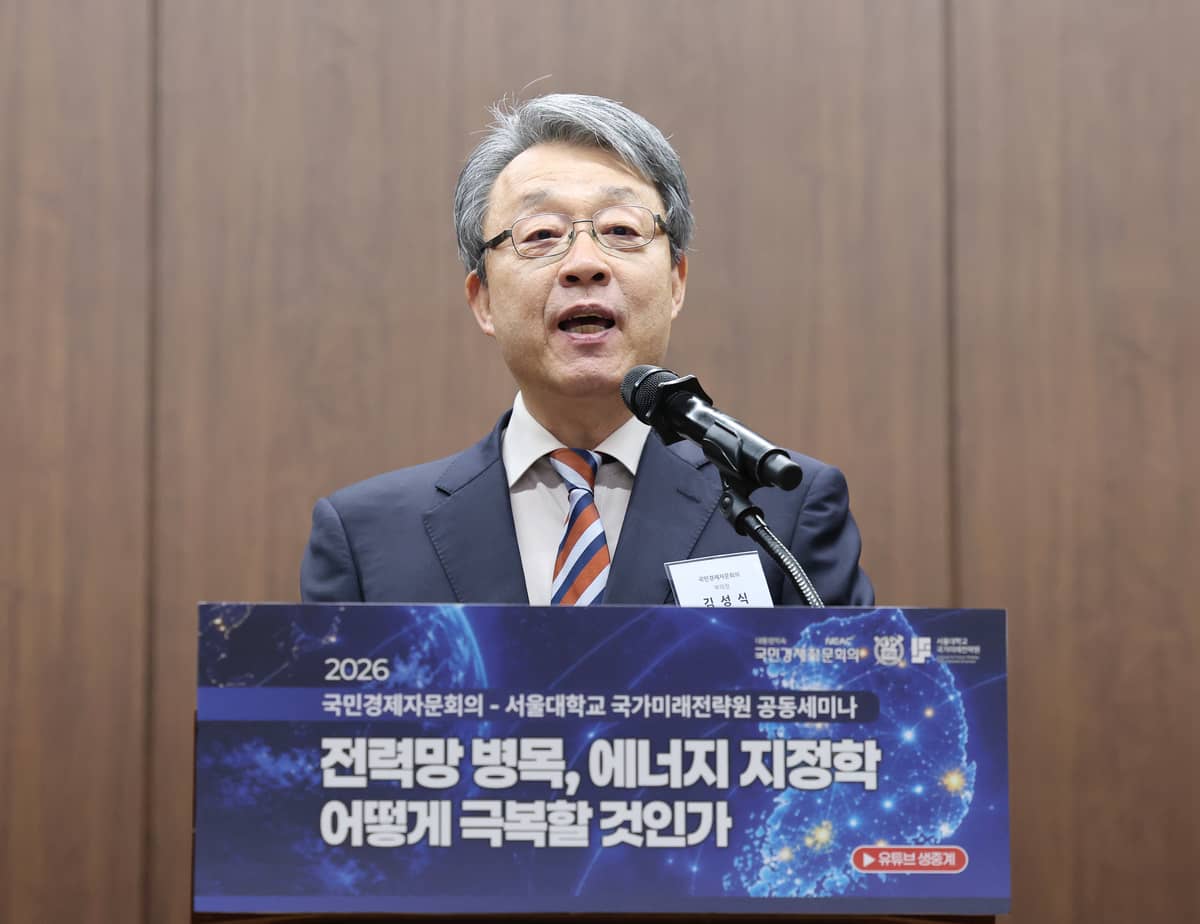
Kim Sung-sik, vice chairman of the National Economic Advisory Council, stated that clearing power transmission bottlenecks is essential for the success or failure of South Korea's three mega projects. Kim made this assessment at a joint seminar hosted by the National Economic Advisory Council and Seoul National University's Institute for Future Strategy on Jan. 28.
The event, titled "How to Overcome Power Grid Bottlenecks and Energy Geopolitics," took place at the Bank Hall in Jung-gu, Seoul. During his opening address, Kim emphasized that emergency implementation plans must be drawn up and the regulatory framework improved to resolve power generation and transmission bottlenecks.
Kim urged policymakers to move away from past practices that focused solely on investment figures. Instead, he argued for decisively clearing infrastructure bottlenecks through swift improvements to power and grid rules.
Policy Adjustments for Energy Demand
Addressing the specific needs of emerging industries, Kim noted that power dispatch plans for AI data centers should be set in stages based on confirmed demand. This approach aims to align energy supply with actual consumption patterns rather than speculative projections.
Moon Shin-hak, senior presidential secretary for economic growth, also spoke at the seminar. Moon stated that while South Korea takes pride in operating a large-scale single grid, addressing emerging gaps has become more difficult. He promised to take good ideas and policies from participants into heart, turn them into policy, and put them into practice.
Participants at the seminar called for speeding up grid construction and expanding the network with safety mechanisms to withstand large loads. These proposals were aimed at ensuring the infrastructure could support the increased energy requirements associated with national development goals.
Strategic Resource Management
The discussion extended beyond domestic grid issues to broader energy geopolitics. Kim stressed the need for a preemptive security strategy against geopolitical risks and resource weaponization.
Speakers at the event proposed using South Korea's fifth-largest refining capacity to swap crude oil and petroleum products with oil-producing countries. This strategy aims to leverage existing industrial assets for diplomatic and economic stability.
Additionally, speakers called for designating "black mass" recovered from spent batteries as a circular resource to build a recycling supply chain. This measure is intended to secure critical minerals and reduce dependency on external sources.