

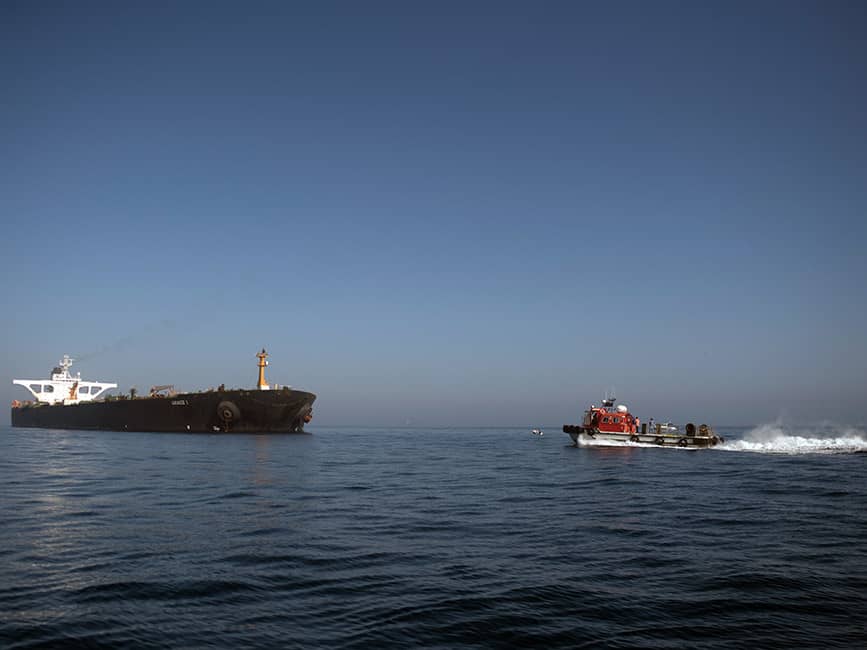

Export Volumes and Market Pricing
According to data from energy intelligence firm Kpler, crude and condensate exports from the Middle East averaged approximately 16.5 million barrels per day (bpd) in September. The firm noted that export volumes exceeded the pre-war average of 18 million bpd on several days during the final week of the month. This surge in activity coincides with Brent crude trading around $100 per barrel, a price point nearly $30 per barrel above its pre-war level.
Allegations of Transit Tolls and Diplomatic Friction
Middle Eastern producers are engaging in what Michelle Brohard, head of policy and geopolitical risk at Kpler, described as a "race to get out as much as possible, as quickly as possible before the war restarts." Brohard suspects that certain Gulf nations have struck deals with Iran to keep oil flowing, driven by fears they cannot rely indefinitely on U.S. military escorts. She stated that she suspects a toll is being paid for safe passage, noting that countries know paying Iran 10 to 20 percent of their cargo is unsustainable.
Despite these allegations, Saudi Arabia, the UAE, Bahrain, Qatar, and Kuwait have opposed Iranian demands for transit charges. The Trump administration has also warned Tehran against imposing such tolls. Chris Beauchamp, chief market analyst at IG Group, told Al Jazeera that everything appears to be happening under the radar, including U.S. convoying of ships and Iran quietly charging tolls.
Sanctions and Legal Frameworks
The financial mechanisms behind these alleged payments have come under scrutiny from the U.S. Treasury Department’s Office of Foreign Assets Control (OFAC). Last month, OFAC sanctioned Iranian cryptocurrency exchange BitBank, stating that the Hormuz Safe Marine Services Authority has used it since June to transfer payments to the Iranian regime.
The U.S. Treasury said BitBank is controlled by Iranian financier Babak Zanjani, whose network used the exchange to transfer hundreds of millions of dollars in Bitcoin to the Islamic Revolutionary Guard Corps (IRGC). Zanjani was sentenced to death in Iran in 2016 for embezzling state oil funds; his sentence was commuted in 2024 and he later re-emerged as a backer of regime-linked economic projects.
The legality of these charges remains contested under international law. The United Nations Convention on the Law of the Sea (UNCLOS) provides ships and aircraft with a right of transit passage through straits used for international navigation, and generally prohibits bordering states from imposing charges simply for passage. Iran signed UNCLOS in 1982 but never ratified it; instead, it maintains that passage through its territorial waters is governed by its own maritime laws, including its 1993 Marine Areas Act.
Tehran has considered legislation to formalize charges on ships using Hormuz, arguing a permanent fee for guaranteed safe passage should form part of any long-term agreement to fully reopen the strait.