


Lithuania's Push for Russian Asset Utilization
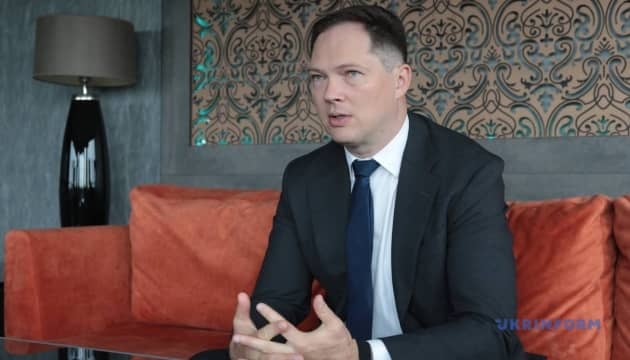
Gabrielius Landsbergis, the Foreign Minister of Lithuania, has forcefully asserted that European nations are obligated to devise a mechanism for utilizing frozen Russian assets to provide sustained financial and material support to Ukraine. This significant declaration was made within the broader framework of long-term strategic planning for aid packages, specifically addressing the period extending beyond the year 2027.
Minister Landsbergis underscored the European Union's profound responsibility to ensure that financial backing for Kyiv remains robust and uninterrupted through this critical timeline. He emphatically stated that any future support mechanism must inherently involve holding Russia financially accountable for its unprovoked military aggression against Ukraine.
“Europe will have to find a way to support Ukraine in 2027 and beyond one way or another,” Landsbergis was quoted as saying, according to reports from the Ukrainian national news agency, Ukrinform. The Lithuanian Foreign Minister further elaborated that the fundamental condition for this future aid paradigm is to ensure that the aggressor state, Russia, bears the full financial brunt of the conflict it initiated. This principle aims to shift the immense cost of war and reconstruction away from international donors and onto the perpetrator.
This assertion by a prominent EU official highlights a discernible and growing political narrative emerging within several EU member states. This narrative centers on the long-term sustainability and viability of the extensive military and economic assistance currently being channeled to Ukraine. The Lithuanian official’s remarks suggest a recognition that the existing models of support, while crucial, may necessitate significant adjustments and innovative approaches to remain effective and sustainable as the conflict potentially extends into the latter half of the 2020s.
Holding Moscow Accountable for War Costs
The core of the Foreign Minister’s comments revolved around the fundamental principle of financial liability in international law. Landsbergis argued that the European bloc has a moral and strategic imperative to compel Russia to pay for its aggression. This payment, he proposed, should come directly through the strategic deployment of its frozen sovereign assets, which are currently immobilized within Western jurisdictions.
This approach signifies a notable conceptual shift in how Western nations are beginning to view these vast, immobilized funds. Traditionally, frozen assets are held static, awaiting potential return or resolution through complex legal processes. However, the proposal put forth by Landsbergis suggests a more active and direct repurposing of these assets. Instead of remaining dormant, these funds would be actively utilized to finance Ukraine’s critical defense needs, support its ongoing governmental functions, and contribute significantly to its eventual recovery and reconstruction efforts following the devastation caused by the war.
Ensuring Ukraine's Long-Term Financial Stability
The declaration made by Minister Landsbergis is not an isolated statement but rather aligns with and reinforces broader, ongoing discussions among Western allies concerning the protracted duration of support required for Ukraine. The explicit mention of a timeline extending past 2027 is particularly telling, indicating a shared concern among international partners about the long-term viability and longevity of current funding streams and mechanisms.
By directly linking future support for Ukraine to the strategic use of Russian assets, the Lithuanian government is actively advocating for the establishment of a more self-sustaining model of aid. This innovative strategy carries a dual objective: firstly, to significantly reduce the direct fiscal burden on European taxpayers, who have contributed substantially to Ukraine's defense and humanitarian needs since the full-scale invasion; and secondly, to maintain and intensify economic and financial pressure on Moscow, effectively making Russia contribute to the very costs it has inflicted upon Ukraine.
Anticipating a Protracted Conflict
This forward-looking statement from Lithuania emerges amid the backdrop of ongoing intense military engagements across Ukraine and complex, often stalled, diplomatic negotiations surrounding the war. The pronounced emphasis on post-2027 support strongly suggests that European leaders and policymakers are not anticipating a swift resolution to the conflict. Instead, they are prudently preparing for a protracted period of sustained assistance, recognizing the long-term commitment required to ensure Ukraine's sovereignty and eventual recovery.
While Minister Landsbergis did not delve into the intricate specifics of the exact legal or financial instruments that would be employed to facilitate the transfer and utilization of these frozen assets, his core message remained unequivocally clear and resolute. Europe, he conveyed, is deeply committed to finding a viable and effective solution that ultimately ensures Russia is compelled to fund its own defeat and contribute to the restoration of the nation it sought to dismantle, through the strategic deployment of its own immobilized financial reserves.