Full story
Mayor Challenges RSS Leader’s Upcoming Madison Square Garden Appearance
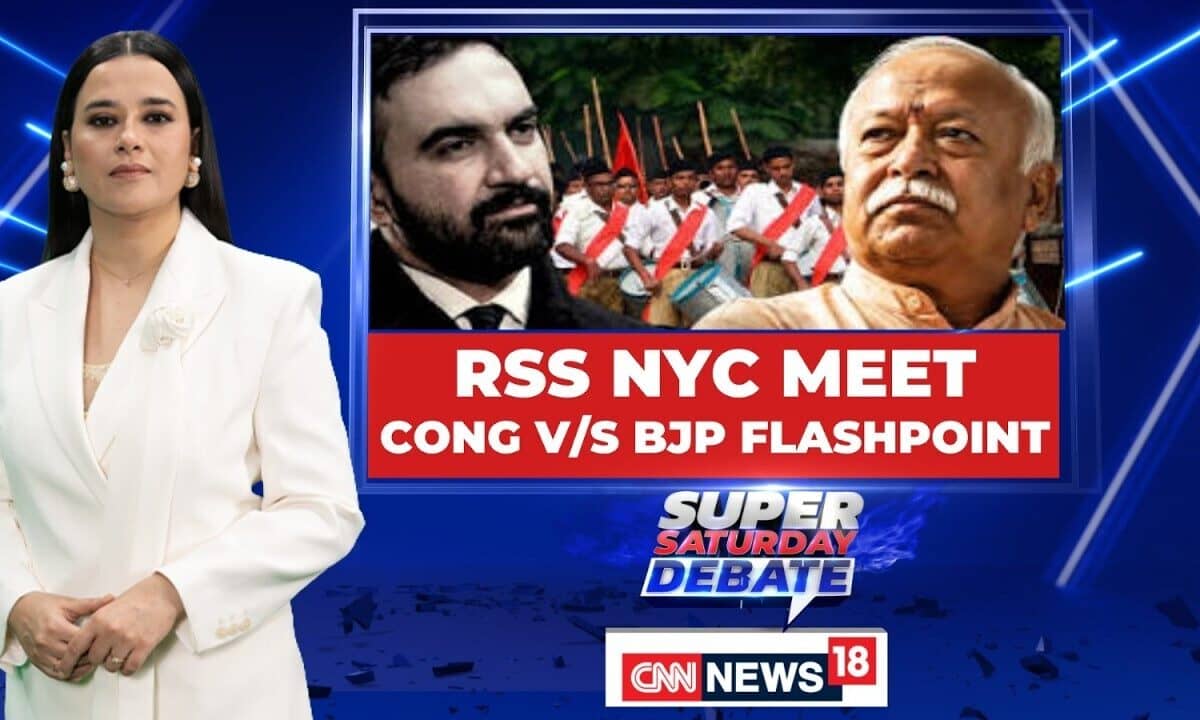
A significant political dispute has emerged in New York City regarding the upcoming visit of Mohan Bhagwat, the chief of the Rashtriya Swayamsevak Sangh (RSS). Bhagwat is scheduled to address a gathering at Madison Square Garden on August 29. The event, titled the "Universal Oneness Celebration," is organized as part of the RSS’s global outreach efforts for its centenary year.
New York City Mayor Zohran Mamdani has publicly voiced opposition to the scheduled appearance. In his critique, Mamdani characterized the ideology of the RSS as being founded on what he described as an "exclusionary vision." He stated that this perspective conflicts with the pluralistic values he believes India should represent. Mamdani’s comments have intensified scrutiny on the organization and its activities within the United States.
Despite his strong public opposition to the event's ideological underpinnings, Mayor Mamdani acknowledged legal limitations regarding municipal intervention. He noted that the city may not possess the legal authority to cancel a privately organized event. This admission highlights the tension between political objection and the legal framework governing public gatherings in New York City.
Divided Reactions Within the Indian-American Community
The announcement of Bhagwat’s address has triggered protests and competing reactions among members of the Indian-American community. The event is expected to host approximately 5,000 attendees from this demographic. The gathering serves as a focal point for broader discussions regarding cultural representation and political ideology.
Supporters of the event have framed the appearance as an opportunity for Hindu cultural and spiritual outreach. They view the "Universal Oneness Celebration" as a platform for sharing religious and cultural traditions with the wider community. For these attendees, the event represents a positive engagement with their heritage and faith.
Conversely, critics have raised concerns regarding the RSS’s ideology and its historical record on minority rights. These objections focus on the organization's political stance and its impact on social cohesion. The debate underscores deep divisions within the community regarding how to interpret the RSS’s role in modern Hindu nationalism.
The RSS’s Position on Intolerance Accusations
In response to the criticism, the RSS has rejected accusations that it promotes intolerance. The organization describes itself as a cultural group focused on Hindu society and national unity. This self-definition stands in contrast to the characterization provided by Mayor Mamdani and other critics who view the group’s ideology as exclusionary.
The RSS maintains that its primary mission is centered on strengthening Hindu societal structures and fostering a sense of national identity. By defining itself through these cultural and unifying lenses, the organization attempts to counter narratives that label it as divisive or anti-minority.
Logistics and Scope of the Centenary Event
The "Universal Oneness Celebration" at Madison Square Garden is a key component of the RSS’s centenary-year activities. The organization has undertaken global outreach efforts to mark its 100th anniversary, with this New York event serving as a major stop in that tour. The scale of the gathering, anticipated to draw around 5,000 participants, indicates significant organizational capacity and interest within the Indian-American diaspora.
The choice of Madison Square Garden, one of the most prominent venues in the United States, underscores the ambition of the event. It provides a high-profile setting for Bhagwat to address the community directly. The timing on August 29 places the event firmly within the ongoing political discourse surrounding immigrant communities and their engagement with homeland politics.
The controversy has drawn attention from media outlets and political observers alike. News18 reported on the eruption of the political row, noting Mamdani’s specific language regarding exclusionary visions. The report highlighted the contrast between the mayor’s objections and the city’s limited legal power to intervene in private bookings.
As the date of the event approaches, the debate continues to evolve. The intersection of cultural celebration, political ideology, and municipal law remains at the center of the discussion. Both supporters and critics maintain their positions, with the RSS continuing to define its mission as one of cultural focus rather than political exclusion.