

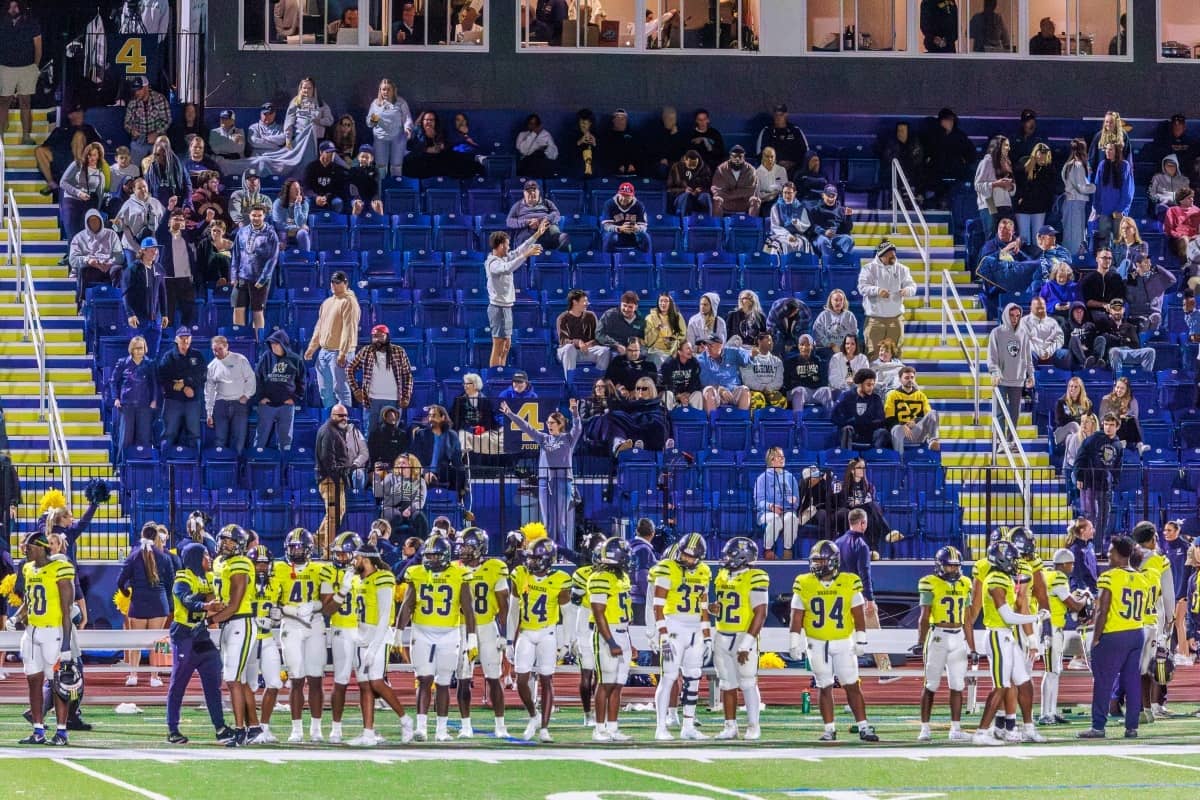

New Varsity Programs Target Student-Athlete Expansion
Merrimack College in North Andover has announced plans to add four Division I varsity sports—women's flag football, acrobatics and tumbling, men's swimming, and men's rowing—by the 2027-28 academic year. The addition of these programs is part of a broader institutional strategy aimed at increasing the college's student-athlete population by more than 40 percent over five years.
The women's flag football program will be the first of its kind in New England, according to reports from the Boston Globe. This launch aligns with a growing national trend; data cited by the Globe from collegiateflagfootball.com indicates that roughly 48 flag football teams are set to begin play in the coming years.
The college also intends to field men's rowing teams with no roster limit, expecting approximately 60 men on the water. Merrimack athletic director Joe Foley stated that athletics can have transformative benefits for student-athletes.
The move comes as Merrimack completes its transition from Division II to Division I competition in 2024. The college has seen significant growth in recent years, with total enrollment rising from 4,000 to 7,500 over the past decade. Higher education consultant Peter Stokes noted that Merrimack is one of a handful of colleges that have grown over the last decade-plus while other institutions struggle.
Campus Infrastructure and Capital Investments
To support the expanded athletic department, Hoodline reported that Merrimack intends to undertake several capital improvements over the next five years. These projects include expanding the football stadium, building a seasonal dome for indoor practice facilities, constructing a new baseball facility, building a gymnasium, and adding a boathouse along the Merrimack River.
The college's "Agenda for the Future" document identifies roughly $50 million to $75 million in capital improvements. However, the specific share of this funding allocated to athletics was not detailed in the documents.
Strategic Growth Amid Regional Higher Education Shifts
The expansion aligns with a trend of using athletics as a recruitment tool in higher education. Alverno College reported a 5 percent increase in new-student enrollment, a 60 percent jump in new undergraduate enrollment, and a 75 percent increase in new student-athletes for the 2026-27 academic year. An Alverno College president described using athletics as a natural strategy to help grow the college.
Peter Stokes added that large-roster sports can increase enrollment without driving down net tuition revenue, providing a financial model that supports such expansion.
Other regional institutions are also adjusting their athletic portfolios. MassLive reported that Stonehill has added women's ice hockey, women's golf, and men's swimming, with men's golf and women's swimming still to come.
This growth strategy stands in contrast to the broader instability facing New England higher education. A Federal Reserve Bank of Boston analysis counted 12 Massachusetts schools shut down or merged since 2015, the most in New England, with Vermont close behind at 11.
Recent Athletic Successes
Merrimack's athletic department has already seen success following its transition to Division I. Hoodline reported that Merrimack men's hockey won its first Hockey East championship this year, while the men's basketball team captured the Metro Atlantic Athletic Conference title.
Additionally, the women's basketball team earned its first invite to the Women's National Invitation Tournament, signaling a competitive rise as the college integrates its new sports programs into the Division I landscape.