

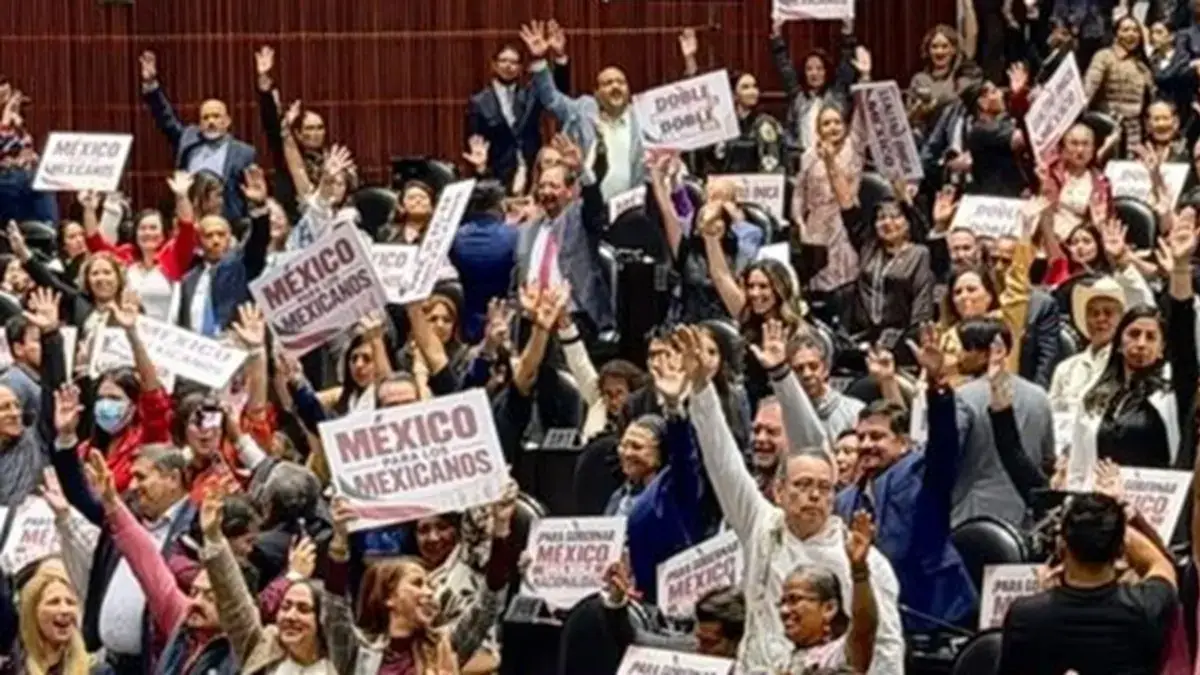

Chamber of Deputies Approves Ban on Dual Citizens Running for Office
Mexico’s Chamber of Deputies approved a bill on Wednesday that amends Articles 82, 116, and 122 of the Mexican Constitution to prohibit dual nationality for candidates seeking the presidency, state governorships, and the head of government of Mexico City. The approval followed nearly 11 hours of debate in the lower house.
The measure was backed by a qualified majority of 334 votes from lawmakers belonging to the National Regeneration Movement (Morena), Labor Party (PT), and Ecologist Green Party (PVEM). The bill was rejected by 109 opposition votes from the Institutional Revolutionary Party (PRI), National Action Party (PAN), and Citizens’ Movement (MC). One lawmaker abstained from voting.
Following the vote, the constitutional reform was sent to the Senate to continue its legislative process.
Governing Coalition’s Security Arguments
The reform was promoted by President Claudia Sheinbaum. Spokespeople for the majority coalition defended the amendment as an essential measure to safeguard national security and independence in the face of geopolitical pressures. Lawmakers holding signs reading “Mexico for Mexicans” were present during the proceedings.
Abelardo de la Espriella, who holds Colombian, U.S., and Italian citizenship, was cited by coalition spokespeople as an example of conflicts of interest arising from dual ties to another state.
Ricardo Monreal, the Morena caucus coordinator, argued that holding two nationalities creates a direct conflict of political commitments in strategic decisions. He described the requirement to voluntarily renounce a second nationality as a legitimate condition for leading the Mexican state.
Opposition Concerns Regarding Legal Viability
Opposition parties questioned the bill's legal viability, specifically regarding the practicalities of renouncing citizenship in other countries. Elias Lixa, coordinator for PAN, warned that renouncing citizenship is not an automatic process in countries such as the United States, Ecuador, or Argentina.
Lixa noted that these procedural delays could potentially result in the de facto disqualification of candidates due to actions by foreign authorities.