

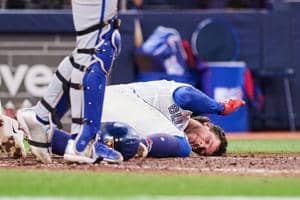

Clement Incident Sparks Discussion on Player Safety Gear
The use of protective equipment in Major League Baseball has come under renewed scrutiny following a recent injury to Toronto Blue Jays player Ernie Clement. On Tuesday, Clement fouled a ball directly into his groin area during a game, an incident that has prompted commentary from team management regarding the prevalence of protective cups among athletes at the highest level of the sport.
The event served as a catalyst for broader questions about safety standards and equipment usage across the league. While protective gear is mandatory in many professional sports, its adoption in baseball remains a subject of debate among players, coaches, and medical staff. The sport, with its unique set of risks, often sees players making individual decisions about what gear is necessary for their performance and well-being.
The Nature of Baseball Injuries
Baseball presents a distinct set of injury risks compared to other sports. Players are constantly exposed to fast-moving projectiles, whether it's a pitched baseball traveling at speeds exceeding 100 miles per hour or a batted ball hit with significant force. While helmets and gloves are standard, other areas of the body, particularly the lower extremities and groin, remain vulnerable.
The trajectory of a foul ball, as experienced by Clement, can be unpredictable. These balls ricochet off the bat at sharp angles and high speeds, making them difficult to avoid even for experienced professionals. The potential for severe injury in such incidents is a significant concern, leading to discussions about whether current protective measures are adequate.
Schneider Estimates Low Adoption Rates
In the wake of Clement's injury, Toronto Blue Jays skipper John Schneider provided an estimate regarding how many players utilize protective cups during official games. Schneider stated that very few players actually wear protection down there during games.
This assessment suggests that the majority of Major League Baseball athletes choose not to wear such guards, despite the inherent risks associated with being struck by a hard baseball traveling at high velocities. The manager's comments highlight a potential gap between player safety concerns and actual equipment usage on the field. It raises questions about the factors influencing these decisions, such as perceived necessity, comfort, and tradition within the sport.
Surprising Prevalence of Unprotected Play
The low adoption rate indicated by Schneider challenges common assumptions about player preparedness for physical contact with the ball. Media outlets reporting on the incident have noted that the answer to how many MLB players wear a protective cup may surprise fans and analysts alike.
According to reports, the prevalence of protective cup usage among MLB players is surprisingly low. This observation underscores a significant aspect of baseball culture where individual comfort and mobility often take precedence over standardized protective measures for specific body parts. Players may prioritize the ability to move freely and comfortably at the plate or in the field, believing that the added bulk or restriction of a cup could negatively impact their performance.
Historical Perspective and Player Choice
The use of protective cups in baseball is not a new topic, but it has historically been a matter of personal choice rather than league mandate. Unlike sports like American football or hockey, where protective gear for the groin is standard and often required, baseball has a different tradition. For decades, players have largely made their own decisions about wearing cups.
This tradition of individual choice may contribute to the current low adoption rates. Younger players entering the league might follow the practices of veteran players they admire or observe, perpetuating a culture where cups are seen as optional. The focus in baseball has often been on skill, strategy, and the physical conditioning required for the demands of the game, with less emphasis on mandating specific types of protective undergarments.
Factors Influencing Player Decisions
Several factors likely contribute to the low number of MLB players wearing protective cups. Comfort is a primary concern; players spend hours in uniform during games and practices, and any discomfort can be a significant distraction. The fit and feel of a cup can vary greatly, and many athletes may find them cumbersome or restrictive.
Performance is another key consideration. Players may worry that a cup could impede their swing, their ability to run the bases, or their agility in the field. The psychological aspect also plays a role; some players may feel that wearing a cup indicates a lack of toughness or confidence in their ability to avoid injury, a perception that might not align with the traditional image of a baseball player.
Furthermore, the specific risks perceived by different players can vary. A power hitter might feel more vulnerable to foul balls than a contact hitter or a pitcher. Similarly, a catcher, who is in a position to block pitches and is more likely to be involved in collisions, might have different considerations than an outfielder.
The Role of Medical Staff and League Oversight
While individual players make the ultimate decision, the conversation around protective cups also involves the league's medical staff and, potentially, future league-wide policy discussions. Medical professionals are aware of the risks associated with groin injuries, which can range from painful contusions to more serious issues requiring extended recovery time.
The incident involving Ernie Clement is likely to keep this issue on the radar. As more data is gathered on player injuries and the effectiveness of various protective measures, the league might reconsider its stance on mandating certain types of equipment. For now, however, the decision remains largely with the individual player, leading to a surprisingly low rate of protective cup usage across Major League Baseball.