


Egyptian Leadership Defines Economic Priorities
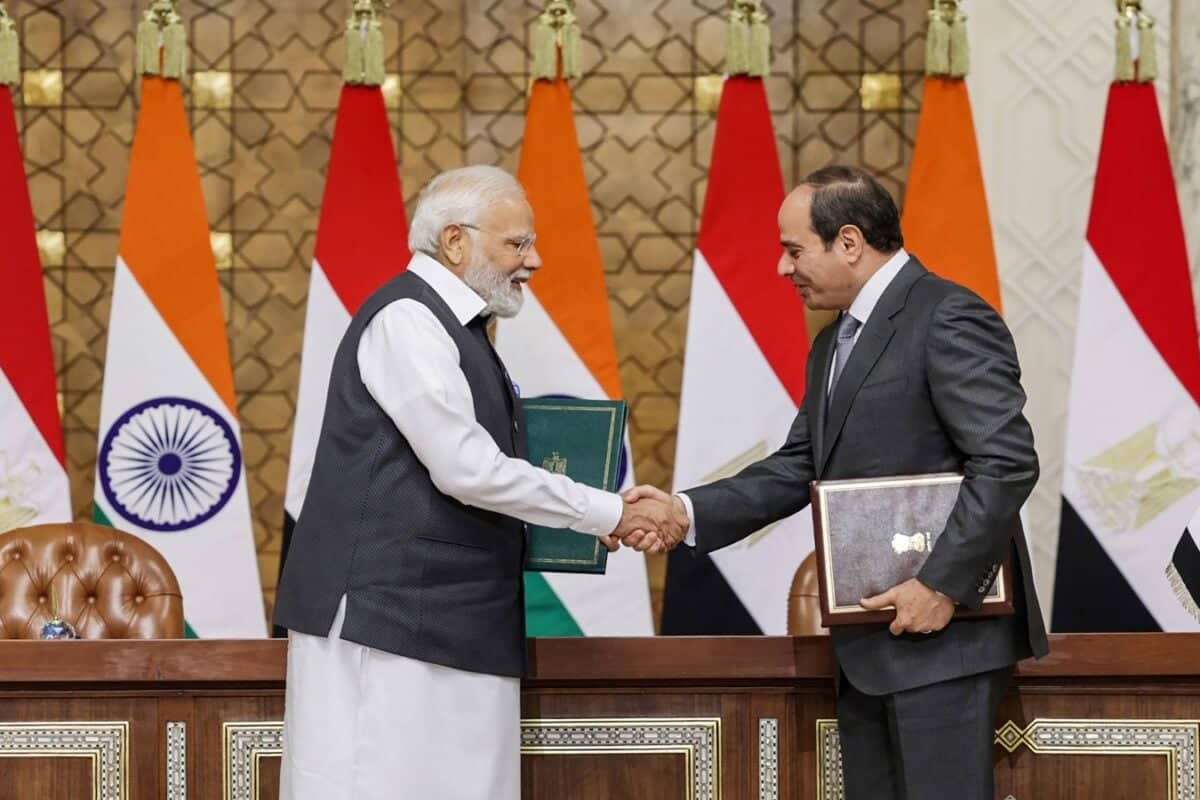
Egyptian President Abdel Fattah el-Sisi has explicitly defined the parameters of his diplomatic engagement with India, focusing on tangible economic outcomes rather than broad strategic alignment alone. According to reporting from News 18, Sisi has "spelt out what he wants from the relationship," establishing a clear agenda for bilateral cooperation that centers on industrial development and logistical infrastructure.
The President’s stated objectives include securing increased financial inflows from Indian entities into the Egyptian economy. This demand for more Indian investment is paired with a specific request for greater cooperation in the manufacturing sector. The emphasis on manufacturing suggests a strategic move to diversify Egypt's industrial base, leveraging India's growing capacity in production and technology transfer.
Furthermore, Sisi aims to leverage Egypt’s geographic position more effectively. The President seeks deeper use of Egypt’s location around the Suez Canal as a central component of this partnership. This focus highlights Cairo’s intent to utilize its unique geographical advantage to facilitate trade and logistics between India and other global markets.
Strategic Convergence at BRICS Forum
These bilateral objectives are being pursued within the broader framework of the BRICS grouping, which includes Brazil, Russia, India, China, and South Africa, with Egypt recently joining as a member. The meeting between Prime Minister Narendra Modi and President Sisi presents what analysts describe as an opportunity for both nations to align their respective regional ambitions.
For India, the engagement in Egypt is part of a wider strategy focused on the African continent. News 18 notes that India has "ambitions in Africa," seeking to expand its economic footprint and diplomatic influence across the region. The partnership with Egypt serves as a critical node in this broader continental strategy.
Conversely, Egypt views its strategic location around the Suez Canal as a key advantage that can be utilized to support India’s African ambitions. The canal remains one of the world's most vital maritime chokepoints, and its integration into Indian trade routes could offer significant logistical efficiencies for New Delhi’s operations in East and North Africa.
Implications for Regional Trade Dynamics
The intersection of India’s African strategy and Egypt’s Suez advantage creates a specific economic corridor that both leaders are seeking to optimize. By combining Indian capital and manufacturing capabilities with Egyptian logistical infrastructure, the two nations aim to create a more robust trade network.
Sisi’s demand for increased investment is not merely a financial request but a structural one. It implies a desire for long-term industrial partnerships rather than short-term aid or loans. The focus on manufacturing cooperation indicates that Egypt is looking to move up the value chain, potentially positioning itself as a manufacturing hub for goods destined for Asian and African markets.
India’s approach in this context appears to be one of strategic diversification. By strengthening ties with Egypt through the BRICS platform, New Delhi can enhance its presence in the Mediterranean and Red Sea regions without relying solely on traditional Western alliances. This aligns with India’s broader foreign policy goal of maintaining strategic autonomy while expanding its global economic reach.
Bilateral Objectives and Regional Goals
The specific goals outlined by Sisi—more investment, manufacturing ties, and canal utilization—are being discussed as mutual benefits. For Egypt, the priority is economic development and industrialization. For India, the priority is securing reliable logistical routes and expanding its market influence in Africa.
News 18 describes the meeting as an "opportunity" for both Modi and Sisi. This characterization suggests that both leaders see potential in their respective strengths: Egypt’s geography and India’s economic scale. The BRICS forum provides the diplomatic setting for these discussions, allowing the two nations to coordinate their efforts within a larger coalition of emerging economies.
The emphasis on the Suez Canal’s location underscores its continued relevance in global trade. As supply chains evolve, control over or access to key transit points like the canal remains a significant geopolitical asset. Egypt’s ability to offer this access is a primary bargaining chip in its negotiations with India.
India’s ambitions in Africa are not new but are being recalibrated through partnerships with established regional powers like Egypt. By integrating Egypt into its African strategy, India can bypass logistical bottlenecks and reduce dependency on other maritime routes. This strategic alignment could reshape trade flows between South Asia and the Mediterranean.
The outcome of these discussions will likely depend on the specific terms of investment and manufacturing cooperation that both sides can agree upon. Sisi’s clear demands provide a baseline for negotiations, while India’s broader African strategy offers the context for why these concessions are valuable to New Delhi.
As BRICS continues to expand and evolve, such bilateral agreements within the group may become more common. The Modi-Sisi interaction serves as a case study in how emerging powers are leveraging regional advantages to achieve national economic goals.