


Rejection of the Proposed Framework
Israeli Prime Minister Benjamin Netanyahu has formally rejected a Gaza plan proposed by former U.S. President Donald Trump. The rejection marks a significant diplomatic development in the ongoing conflict, highlighting the complex relationship between the Israeli leadership and American political figures outside of current administration channels. According to reports from The Mendocino Beacon, Lake County Record-bee, Los Angeles Daily News, and Daily Democrat, the decision underscores Netanyahu's continued resistance to external proposals regarding the governance or restructuring of the Gaza Strip.
The proposal, attributed to Donald Trump, was characterized in media coverage as a strategic initiative that did not align with Netanyahu's current operational goals. The rejection is not an isolated incident but rather part of a broader pattern of behavior exhibited by the Israeli leader. Media outlets have described this action as Netanyahu "reprising a balancing act he has mastered." This characterization suggests that the Prime Minister frequently navigates between domestic political pressures, military objectives, and international diplomatic expectations, often rejecting plans that do not fit his strategic calculus.
The timing of the rejection coincides with heightened scrutiny of Israel's military operations. While specific details of Trump's plan were not fully detailed in the provided source texts, the act of rejection itself signals a refusal to adopt frameworks that may limit Israel's military autonomy or alter the status quo in Gaza without direct Israeli consent.
Strategic Isolation and Military Outcomes
The rejection of the Trump plan occurs against a backdrop of increasing diplomatic challenges for Israel. According to the reporting, Israel’s military campaigns in recent years have left the country "increasingly isolated" on the global stage. This isolation is attributed to the nature and duration of the military engagements, which have drawn criticism from various international actors and strained traditional alliances.
Furthermore, the sources note that these extensive military campaigns have not achieved "decisive victories." The lack of a clear or definitive military conclusion has contributed to the perception of strategic stagnation. The combination of diplomatic isolation and unachieved military objectives creates a difficult environment for Netanyahu’s government as it formulates its response to external proposals.
The description of Netanyahu’s actions as a "balancing act" implies that he is attempting to manage these competing pressures. By rejecting the Trump plan, Netanyahu may be signaling to his domestic base that he will not compromise on military or security matters, even when such proposals come from influential figures in the United States. However, this stance also risks deepening the diplomatic isolation already noted in the reports.
Historical Context of Leadership
The characterization of Netanyahu’s approach as a mastered balancing act refers to his long tenure and political history. The sources indicate that this is not a new phenomenon but a recurring theme in his leadership style. The rejection of the Gaza plan fits into a pattern where Netanyahu prioritizes immediate security concerns and domestic political survival over long-term diplomatic resolutions or external suggestions.
The reporting from multiple outlets, including the Daily Democrat and Los Angeles Daily News, emphasizes that this strategy has defined his response to the current crisis. The narrative presented in these articles suggests that while the specific proposal from Trump is new, the method of rejection—consistent with Netanyahu's established political playbook—is familiar.
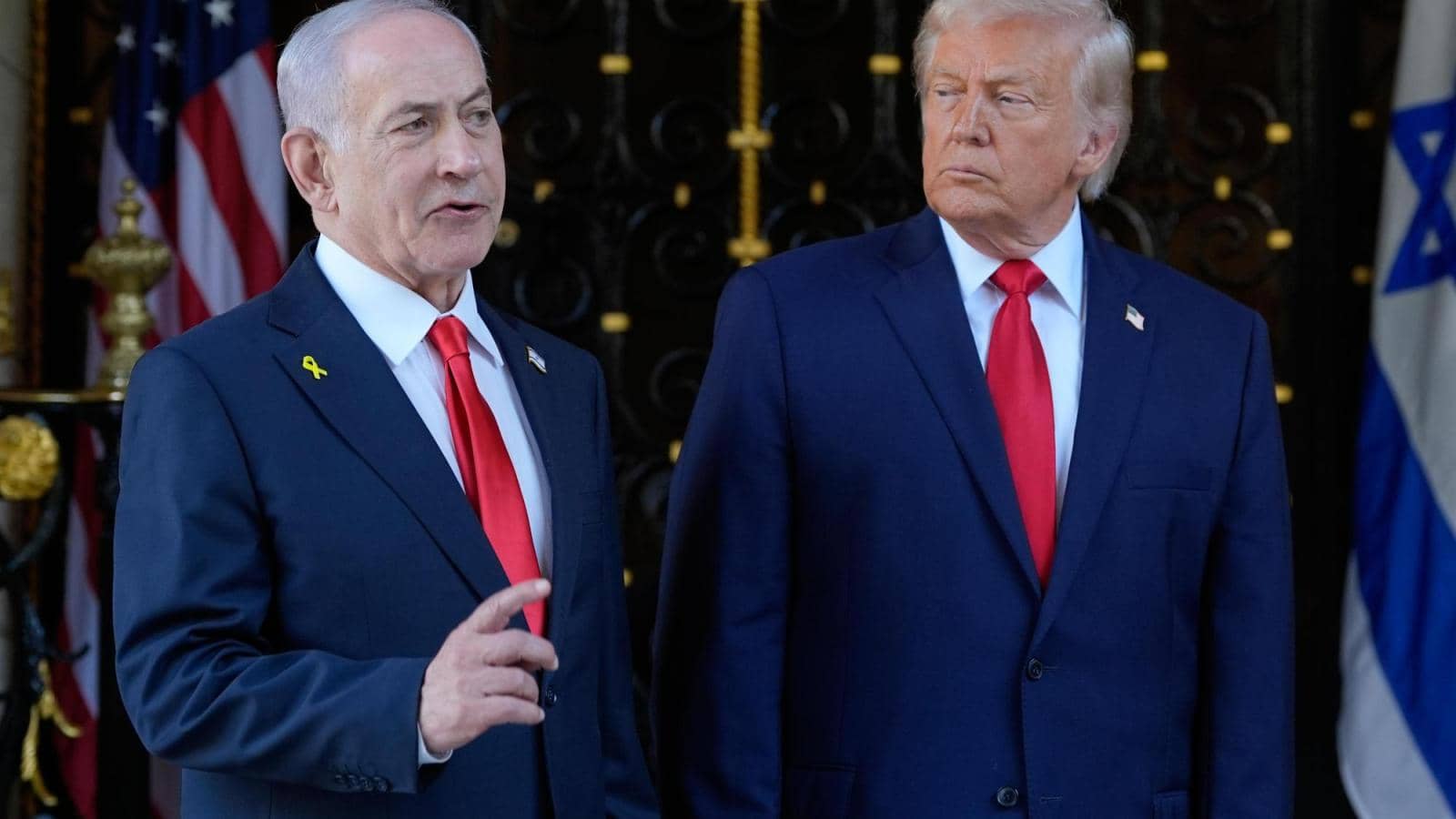
The article also references a file photograph from December 29, 2025, showing President Donald Trump listening as Prime Minister Benjamin Netanyahu speaks at Mar-a-Lago in Palm Beach, Florida. This image serves to illustrate the personal and political history between the two leaders, providing visual context to their past interactions even as they now find themselves on opposing sides of this particular policy dispute.
Implications for Regional Dynamics
The rejection of the plan has immediate implications for the region. With Israel’s military campaigns failing to produce decisive victories and its international standing weakening, the refusal to engage with alternative frameworks like Trump’s proposal may further complicate efforts to stabilize Gaza. The sources do not provide specific predictions on how other nations will react, but they do highlight the growing isolation of Israel as a key factor in the current geopolitical landscape.
Netanyahu’s decision reinforces his reputation for prioritizing Israeli sovereignty and military options over diplomatic compromises. Whether this strategy will ultimately strengthen his position or exacerbate Israel's isolation remains a subject of ongoing analysis, but the immediate effect is a clear rejection of external influence on Gaza policy.